
Art Gallery and Studio SEO: Connecting Asheville Artists with Art Lovers

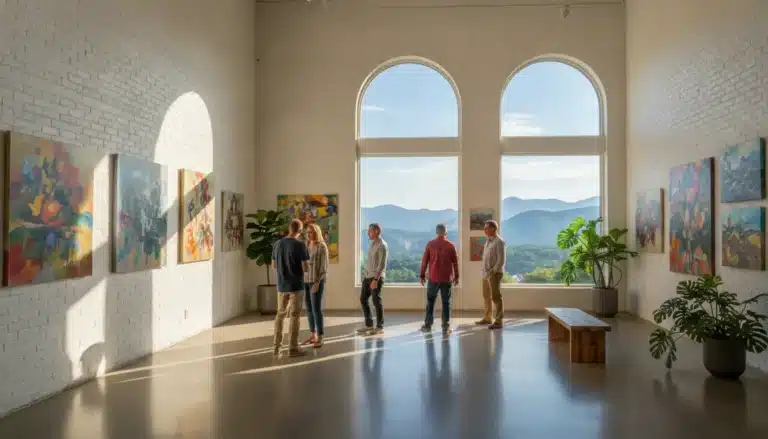
In Asheville’s vibrant arts community, standing out online is as crucial as creating compelling work. Your art deserves to be seen, but without proper visibility in search results, potential collectors and art enthusiasts might never discover your creative vision. At PushLeads, we’ve helped local artists and galleries transform their digital presence into a powerful channel for connecting with art lovers who are actively searching for what you create.
Why Asheville Artists Need Specialized SEO
Want it done for you? See our local SEO services.
Asheville’s art scene is distinctive—and your online strategy should be too. Generic SEO approaches don’t address the unique challenges artists face in connecting with collectors and enthusiasts. You need a strategy that understands both search algorithms and art market dynamics.
In this video
- 0:00 Why Asheville Visibility Gaps Cost Revenue
- 0:20 Who Jeremy and PushLeads Are
- 0:38 Asheville Market Stats That Drive Urgency
- 1:02 Why Generic SEO Fails Asheville Businesses
- 1:28 Local Pack Mechanics Relevance and Prominence
- 1:52 Google Business Profile Optimization Essentials
- 2:21 GBP Features That Separate Ranked Profiles
- 2:49 Citations NAP Consistency and Local Backlinks
- 3:27 Review Strategy for Local Pack Placement
- 4:00 Mobile Speed and Core Web Vitals
- 4:28 ROI Tracking and Monthly Data Sets
- 5:06 What PushLeads Builds for Asheville Businesses
Local artists who invest in targeted SEO see tangible benefits: gallery openings with higher attendance, direct studio sales without middleman fees, and a growing collector base that extends beyond regional boundaries. Our artist clients report not just more website traffic, but meaningful connections with people who genuinely appreciate their work.
How We Help Artists Become Discoverable
Your art tells a story—and search engines need to understand that narrative to connect you with your audience. Our approach focuses on:
Local Art Search Visibility – We target specific queries used by art collectors visiting Asheville, helping them find your gallery or studio during their stay.
Artist Portfolio Optimization – We structure your online portfolio so search engines properly index and showcase your work, with proper image optimization that highlights your unique style.
Art Event Promotion – From gallery openings to studio tours, we ensure your events reach interested attendees through strategic local search visibility.
Art Style-Specific Keywords – Whether you create contemporary sculptures, traditional landscapes, or avant-garde installations, we target keywords specific to your artistic approach.
Real Results for Asheville Artists
When local painters, sculptors, and gallery owners partner with us, they see concrete outcomes. One Asheville-based painter saw studio visits increase by 65% within six months of implementing our SEO strategy. A local pottery collective doubled their direct sales after optimizing their site structure and content around specific ceramic art search terms.
The most satisfying feedback we hear isn’t just about increased traffic—it’s about finding the right visitors. Artists tell us they’re connecting with collectors who truly understand and value their work, leading to more meaningful artistic relationships and sustainable sales.

Our Artist-Focused SEO Process
We’ve refined our approach to address the specific needs of Asheville’s creative community:
Art Market Analysis – We research how art enthusiasts search for work like yours, identifying opportunities to position your creative output.
Competitor Insights – We analyze what successful galleries and artists in your niche are doing online, finding gaps you can fill.
Website Structure Refinement – We ensure your site presents your work beautifully while maintaining technical SEO excellence.
Content Strategy – We help you develop articles, artist statements, and descriptions that resonate with both art lovers and search algorithms.
Local Search Presence – We optimize your Google Business Profile and local citations to attract visitors and collectors to your physical space.
Why Artists Choose PushLeads
Artists partner with us because we understand both the technical aspects of SEO and the unique nature of the art market. We speak your language—both creative and technical—and translate your artistic vision into digital strategy that connects with the right audience.

Our team appreciates that your art is personal, and your online presence should reflect the same care and attention you put into your creative work. We take the time to understand your artistic voice and translate that into effective digital presence.
Want more customers from Google & AI search?
Get a free SEO audit of your site — see exactly what to fix first.
Ready to Connect Your Art with Its Audience?
Your creative work deserves to be discovered by people who will truly appreciate it. Let’s talk about how we can help your Asheville gallery or studio reach art enthusiasts who are actively searching for work like yours.
Call us at 828-333-5965 to discuss how we can enhance your artistic visibility online, or visit our Asheville office to see how we’ve helped fellow artists build sustainable online platforms that generate real connections with art lovers.
PushLeads: Helping Asheville artists turn online visibility into real-world artistic connections since 2012.
Connect Your Art with Art Lovers
Ready to have your creative work discovered by the people who will appreciate it most? Let’s start building your art-focused SEO strategy today.
Contact Our Asheville SEO TeamKey Takeaways
- Collectors search for art in three distinct ways (place, medium, and artist name), and each needs its own page on your site.
- A complete Google Business Profile with accurate appointment-only hours is the fastest way to appear when someone searches for a gallery or studio nearby.
- Every artwork or collection page needs a descriptive title, real text, and compressed, well-named images to rank and to be quoted by AI assistants.
- Event pages for openings, studio tours, and gallery walks bring in visitors only if they have dates, addresses, and a permanent URL.
- Expect early movement in local visibility within roughly 2-4 months and steadier collector inquiries over 6-12 months, depending on your starting point.
How Collectors Actually Search for Art in Asheville
Collectors search by place, by medium, and by artist name, and each pattern points to a different page type. If your site has one “Gallery” page trying to cover all three, it will usually rank for none of them.
Start by sorting the searches you want to capture. The table below shows the most common patterns and the page that should answer each one.
| Search pattern | What the searcher wants | Page that should answer it |
|---|---|---|
| “art galleries near me” or “Asheville art galleries” | A place to visit today or this weekend | Homepage plus your Google Business Profile |
| “handmade pottery Asheville” or “landscape paintings Blue Ridge” | A specific medium or subject, often to buy | A collection page for that medium or subject |
| “[Your name] paintings” | To confirm you are real and see your work | Artist biography and portfolio page |
| “studio tour Asheville” or “gallery opening this weekend” | A dated event they can attend | An individual event page |
| “commission a portrait” or “custom sculpture” | To hire someone and understand the process | A commissions page with steps and a contact form |
| “buy local art gift Asheville” | A price range and an easy purchase | A gifts or small-works collection |
Many of these searchers are visitors planning a trip, not locals. The broader picture of how visitors find businesses here is covered in our guide to Asheville tourism SEO strategy, and it is worth reading alongside this page.
Set Up Your Google Business Profile for a Gallery or Studio
A gallery or studio should claim a Google Business Profile with the right category, honest hours, and photos of both the space and the work. Google’s own Business Profile help states that profiles must reflect real-world details, so accuracy matters more than clever wording.
Work through these steps in order:
- Choose the primary category carefully. “Art gallery” fits a space that shows and sells work by several artists. “Art studio” or a medium-specific category such as a pottery or ceramics option may suit a working studio better. Pick the one that matches what a visitor will find at the door.
- Add secondary categories sparingly. Two or three honest additions are enough. Listing categories for services you do not offer can confuse searchers and put your listing at risk.
- Set accurate hours. If you work by appointment, say so in your business description and on your website instead of listing hours you do not keep. Mark holiday and special event hours in advance.
- Decide how to handle your address. If visitors can walk in, show your address. If your studio is in a home or you only see people by appointment, review Google’s guidelines on service-area and hidden-address listings before you publish.
- Write a description in plain language. Say what you make, where you are, and how visitors can see it. Skip superlatives.
- Upload photos regularly. Include the exterior and entrance (so people can find you), the interior, works in progress, finished pieces, and you at work.
- Link to the right pages. Point the website link to your homepage or a visit page, and use the appointment link if you take bookings.
Once the profile is solid, keep it active with posts about new work and upcoming events. For the full mechanics of local rankings, citations, and reviews, our local SEO guide for Asheville businesses goes step by step.
Appointment-only studios: a common stumbling block
Many working artists are not open to drop-in visitors, and that is fine. Be explicit about it on the profile, on your website, and in your listings on other directories.
A clear “Visits by appointment, book here” message prevents wasted trips and bad reviews from people who arrived to find a locked door. It also filters your inquiries toward serious visitors.
Build Artwork and Collection Pages That Can Rank
Each collection or featured piece needs its own page with a specific title, a written description, and clear purchase or inquiry steps. A grid of images with no text gives search engines almost nothing to understand.
Use this checklist for every collection page:
- Title tag: include the medium, subject, and location when relevant, for example “Blue Ridge Landscape Paintings | Studio Name, Asheville NC.”
- Heading: one clear H1 that names the collection in plain words.
- Opening paragraph: 2-4 sentences on what the collection is, what inspired it, and the materials used.
- Piece details: title, medium, dimensions, year, framing, and price or “inquire for price.”
- Shipping and care: how pieces are packed, what shipping costs and timelines look like, and how to look after the work.
- Next step: a buy button, inquiry form, or appointment link visible without scrolling far.
- Related links: your artist biography, commission page, and a visit page.
Write about 150-300 words per collection. Describe the work in the words a buyer would use, such as “stoneware mug,” “oil on canvas,” or “welded steel garden sculpture,” not only in the vocabulary of art criticism.
Artist statements that help search engines and buyers
An artist statement can serve both audiences if it names concrete facts. Mention where you trained, what materials you use, which techniques define your work, and what part of Western North Carolina informs it.
Avoid statements made entirely of abstract phrases. A line such as “I explore the tension between memory and place” says little to a search engine, while adding “I paint mountain overlooks in oil from sketches made on the Blue Ridge Parkway” gives both people and algorithms something to work with.
Image SEO for Artwork Without Hurting Quality
Art sites depend on large images, and large images slow pages down, so the goal is to compress carefully while naming and describing each file clearly. Slow pages lose visitors, and Google has said page experience is part of how it evaluates sites.
Follow these practices:
- Name files descriptively. Use “blue-ridge-sunrise-oil-painting.jpg” instead of “IMG_4821.jpg.”
- Write useful alt text. Describe what is shown in a sentence: “Oil painting of sunrise over layered Blue Ridge ridgelines, 24 by 36 inches.” Do not stuff keywords.
- Resize before uploading. A web page rarely needs the full resolution of a camera file. Export at the largest size your layout actually displays.
- Use modern formats where your platform allows. WebP and well-compressed JPEG typically cut file size considerably compared with unoptimized originals.
- Lazy-load images below the fold. Most modern site builders offer this setting.
- Offer a zoom view. Let buyers inspect texture on request instead of forcing every visitor to download a huge file.
- Add captions. A short caption with medium and size is often read more than body text and gives search engines additional context.
If your gallery pages feel sluggish on a phone, our website speed guide for tourism businesses explains the fixes in more detail.
Use Structured Data to Describe Your Business and Events
Structured data is code that labels your information so search engines can read it with less guessing. Google Search Central documents several types that suit art businesses, including local business, event, and product markup.
Here is where each type fits:
- LocalBusiness markup on your homepage or contact page: name, address, phone, hours, and links to your social profiles.
- Event markup on each opening, workshop, or studio tour page: name, start date, location, and ticket or RSVP details.
- Product markup on pages where you sell original work or prints directly: price, availability, and images.
Markup does not guarantee special search features, and it must match what visitors can see on the page. Test it with Google’s Rich Results Test before and after publishing, and fix errors before moving on. If your website runs on a common platform, a reputable plugin can handle much of this without custom code.
Promote Openings, Studio Tours, and Gallery Walks Properly
Each event deserves its own permanent page, published several weeks ahead, with the date, time, address, and what visitors can expect. Events listed only as a social media post disappear from search within days.
Build every event page with these elements:
- A title that includes the event name, the type, and the month, such as “Fall Studio Open House, Asheville.”
- The date, start and end times, and a full street address with parking notes.
- Featured artists and a few images of the work on show.
- Whether it is free, ticketed, or RSVP-only, with the way to register.
- A short note on accessibility and whether children and pets are welcome.
- A link back to your main gallery or studio page.
After the event, do not delete the page. Update it with photos and a “see our next event” link so it keeps building authority. For recurring events such as monthly gallery walks, create one evergreen page and update the dates instead of making a new URL every month.
Timeline for event promotion
| When | What to do |
|---|---|
| 4-6 weeks before | Publish the event page, add it to your Google Business Profile, and submit it to local event calendars |
| 2-3 weeks before | Send an email to your list and share on social media with a link to the event page |
| 1 week before | Post a preview of featured pieces and confirm hours on your profile |
| Day of | Post live photos and update any last-minute changes |
| 1-2 weeks after | Add a recap, thank attendees, and invite reviews |
Promotion works best when search, email, and social share one message. Our overview of integrated internet marketing in Asheville shows how those channels support each other.
Plan Around Asheville’s Seasons and Visitor Patterns
Asheville’s visitor traffic rises and falls with the seasons, so your content calendar should lead the demand instead of following it. Publishing a fall studio tour page in the middle of leaf season is too late for most travelers who plan weeks ahead.
A practical seasonal rhythm looks like this:
- Late winter: publish spring event pages and refresh your collection descriptions.
- Spring: promote garden-related and outdoor work, and prepare summer visit information.
- Summer: highlight easy-to-ship small works and gift-sized pieces for travelers.
- Early fall: publish tour and open-house pages well before peak foliage travel.
- Late fall: promote holiday gift collections and commissions with realistic delivery deadlines.
Disruption also matters. If your studio relocated, reopened, or changed hours after Hurricane Helene, make that visible everywhere. Our piece on post-Helene tourism recovery through local search covers how to update listings and messaging so visitors do not arrive at an old address.
Earn Reviews and Local Mentions From Collectors and Peers
Reviews and local mentions tell Google that real people know and trust your business. Ask for them politely and specifically, and never offer payment or discounts in exchange for a positive review.
In this video
- 0:00 Why Asheville Businesses Miss the Map Pack
- 1:19 Hidden Address Suppresses GBP Visibility
- 1:55 Three Google Local Ranking Signals Explained
- 2:29 What Asheville Competitors Are Not Doing
- 2:56 How Long GBP Gains Actually Take
- 3:32 Review Recency Beats Review Volume
- 4:15 How Google AI Reads Your Profile
- 4:49 Six Steps from Position 17 to Top Three
- 6:03 Video Verification and NAP Consistency
- 6:37 GBP vs Website SEO Priority Order
- 7:24 Three Advanced Moves Competitors Skip
Ways to earn them honestly:
- Add a short card to every sale or package with a link to your review page.
- Send a thank-you email a week after purchase or a visit that includes the same link.
- Ask the commissioners of custom work to describe the experience, not just the finished piece.
- Reply to every review, positive or critical, in a calm and personal tone.
For local links, look to organizations that already list artists: arts councils, gallery associations, studio trail maps, neighborhood business groups, and tourism listings. Also consider local press when you have news, such as a new exhibit or a collaboration. A handful of relevant local links usually helps more than dozens of unrelated directory entries.
Keep your name, address, and phone number identical on every listing. Even small differences, such as “Street” versus “St.,” can create confusion across directories.
Gallery or Solo Studio: Where to Focus First
Galleries should focus on foot traffic and artist pages, while solo studios should focus on collection pages and commissions. Both need the same technical basics, but the priorities differ.
| Priority | Multi-artist gallery | Solo artist or studio |
|---|---|---|
| Google Business Profile | Central: hours, photos, events, reviews | Important, especially if visitors come by appointment |
| Page structure | One page per represented artist plus exhibitions | One page per collection plus commissions |
| Content | Exhibition announcements, artist interviews | Process stories, studio updates, care guides |
| Conversion goal | Visit, inquire, or buy online | Buy direct, commission, or book a studio visit |
| Typical bottleneck | Keeping many artist pages current | Finding time to write and photograph consistently |
Common Mistakes Art Websites Make
The most common mistakes are image-only pages, vague titles, and outdated event information. Each is easy to fix once you know to look for it.
- Portfolios built as one scrolling gallery with no text. Break them into collections with written descriptions.
- Using “Untitled” or “Work 12” as page titles. Give every page a descriptive name.
- Hiding prices and contact information. Even a range or “inquire” button helps buyers act.
- Leaving old events live with no update. Mark past events clearly and link to what is next.
- Different business details across the web. Audit your listings once a quarter.
- Uploading uncompressed photos. This is the most common cause of slow gallery pages on phones.
- Ignoring mobile. Many visitors check your hours and directions on a phone while walking or driving.
- Using stock copy. Copied descriptions add no value and make it harder for you to stand out.
A 90-Day Starter Plan
A focused 90-day plan can fix the basics without taking over your studio schedule. Most artists can complete the early steps with a few hours per week.

- Weeks 1-2: Audit and claim. Claim or correct your Google Business Profile, check your name, address, and phone on major directories, and list your top 10 pages by importance.
- Weeks 3-4: Fix the foundations. Rewrite title tags, compress images, and make sure your site loads comfortably on a phone.
- Weeks 5-8: Build collection pages. Write or revise pages for your two or three strongest collections, with full details and clear next steps.
- Weeks 9-10: Add events and a visit page. Publish your next event and a page explaining how to visit, with parking and accessibility notes.
- Weeks 11-12: Request reviews and measure. Ask recent buyers and visitors for reviews, then check your search and profile data.
Timing varies. A brand-new site or an unclaimed profile may take longer to show results, while a site that already has some history may see changes sooner. Results are never guaranteed, so judge progress by trends over several months, not weeks.
Measure What Matters
Track actions that signal real interest instead of raw traffic. A smaller number of visitors who call, request directions, or send an inquiry is worth more than a large number who bounce.
- Google Business Profile: calls, direction requests, website clicks, and appointment bookings.
- Google Search Console: which searches show your pages, and which pages earn clicks.
- Website analytics: inquiries submitted, purchases, event RSVPs, and newsletter signups.
- Sales notes: ask every new buyer how they found you and record the answer.
Review these monthly in a simple spreadsheet. After a few months you will see which collections, events, and pages actually bring in collectors, and you can put more effort there.
Get a Second Set of Eyes on Your Plan
If you want help deciding what to fix first, we can review your profile, site, and listings and tell you where the biggest gaps are. You can also see what our SEO Services Asheville include before you decide anything. When you are ready to talk, contact the PushLeads team and tell us about your gallery or studio.
Frequently Asked Questions
How long does SEO take to work for an art gallery or studio?
Most galleries and studios see early movement in local visibility within about 2-4 months and more consistent inquiries after 6-12 months. The timeline depends on your starting point, your competition, and how often you publish new pages. Fixing a Google Business Profile usually shows results faster than building new content.
Do I need a website if I already sell through Etsy or Instagram?
Yes, a website you own gives you a stable place that search engines can index and that you control. Marketplaces and social platforms can change their rules, fees, or visibility without notice. Many artists keep selling there while using their own site for commissions, events, and direct sales.
Should I list my home studio address publicly?
Only if you are comfortable with visitors knowing where you work. Google allows businesses that serve customers by appointment to hide their address in some cases, so review its Business Profile guidelines before choosing. Whatever you choose, state clearly on your site and profile how visitors can arrange a visit.
How many words should an artwork or collection page have?
Aim for roughly 150-300 words per collection page, plus details such as medium, size, and price. That is enough to explain the work in terms buyers use without padding. Longer pages make sense for commissions or process explanations where buyers have more questions.
Does alt text on artwork images really matter?
Yes, alt text helps search engines understand what an image shows and helps visitors who use screen readers. Write one clear sentence describing the piece, including medium and subject. Avoid repeating keywords, which reads poorly and does not help.
How do I get my events to show up in search results?
Give each event its own page with the date, time, address, and details, and add Event structured data that matches the visible content. Also list it on your Google Business Profile and local event calendars. Google does not guarantee that events will appear in special results, but clear pages give you the best chance.
Can AI assistants like ChatGPT or Perplexity recommend my gallery?
They can, if your business information is clear and consistent across your website and trusted listings. Assistants draw from public sources, so accurate hours, descriptions, reviews, and well-written pages all help. No one can guarantee a recommendation, but clean and consistent information makes you easier to quote.
Want more customers from Google & AI search?
Get a free SEO audit of your site — see exactly what to fix first.
Your path · Asheville Tourism SEO
3 articles. About 45 minutes.
 Up nextAsheville Tourism SEO: Dominating Search in a Competitive Market
- You’re hereArt Gallery and Studio SEO: Connecting Asheville Artists with Art Lovers

Want this done for you?
Scan your site. See the gaps. Decide with numbers.
- Rankings, Google Business Profile and site-speed teardown
- Report lands in your inbox in about a minute
- No obligation · 4.9 from 67 Google reviews
 Continue to Part 1
