
0:00 Slow Season Is a Retention Problem
0:47 The Four-Month Forgetting Window
1:53 Why Past Customers Convert at 60 to 70 Percent
3:08 Proactive Outreach vs Paid Ads by the Numbers
4:18 Seasonal Triggers That Actually Get Responses
5:36 Membership Plans and Pre-Booked Agreements
7:53 Local SEO and Google Business Profile Year-Round
9:11 AI Tools for Customer Reactivation
9:56 Build the System in September Not January
11:18 The Math on Any Size Customer List
Full transcript
0:00 Slow Season Is a Retention Problem
In this video, we are going to show you the exact system that keeps contractors booked in January, not by running desperate winter discounts, but by working a customer reactivation engine that fires before December ever arrives. If you already know the basics of contractor marketing, skip them. This is built for operators who want the advanced lever most are leaving completely untouched. Hey, I’m Jeremy with PushLeads. I help local business owners get more leads without struggle or frustration. PushLeads has been at this since 2012, and I was ranking sites five years before that. What we’re doing in this video is slow season ideas for contractors, why winter revenue dips are a retention problem.
0:47 The Four-Month Forgetting Window
You see, here is the uncomfortable truth behind every slow January. 88 % of your past customers have completely forgotten you exist by month four. That is not a market problem. That is a communication problem. Pipe still freeze, roof still leak, furnaces still fail in winter. The question is never whether the demand is there. The question is who gets the call when it is right now, because you went silent. That call is going to whoever stayed in touch. The conversion rate gap between existing customers and cold prospects should immediately change how you allocate your slow season budget. 60 to 70 % close rate with past customers, five to 20 % with a new prospect. That is not a marginal difference. That is a fundamental mismatch in where most contractors spend their marketing dollars. And it gets more dramatic when you factor in lifetime value. A $300 maintenance visit from a repeat customer carries roughly $900 in lifetime spend over 18 months, plus referrals you never had to pay for.
1:53 Why Past Customers Convert at 60 to 70 Percent
Why does the four month gap do so much damage? By month four, a past customer has mentally reclassified you. You are no longer their contractor. You are that contractor they used once. The next time something breaks, they open Google and search fresh, putting you in direct competition with every business paying for ads that day at full click cost with zero trust advantage. One well time message before that four month mark keeps you on their short list at near zero cost. Most contractors let 200 completed jobs sit idle while paying to reach cold strangers who have never seen their work. Your existing customer database is a revenue engine most contractors have never actually turned on. A properly message reactivation text or email to 200 past customers outperforms a $2 ,000 cold ad spend almost every time. The reason is straightforward. These people watched you work in their home. They signed off on your invoice. That trust is already banked and it makes your message land in a completely different category than any ad. And unlike paid advertising, this asset compounds every job you complete this year makes the next slow season easier to handle.
3:08 Proactive Outreach vs Paid Ads by the Numbers
Let’s put the two approaches side by side with real numbers proactive outreach to past customers converts at 60 to 70 percent paid advertising for home services averages two to five percent cost per contact on outreach is near zero cost per click on Google or meta runs 15 to 80 dollars depending on your trade. Trust level with outreach is high. They already hired you trust level with a cold ad is zero paid ads also require ongoing spend to stay visible. The moment your budget stops. So does your exposure your customer list grows with every truck roll and never resets three retention statistics should permanently change your slow season budget math 82 % of businesses confirm retention costs less than acquisition yet most contractors spend 90 % of their marketing budget chasing cold strangers. A five percent increase in customer retention can grow profits by 25 to 95 % and contractors in the top 20 % of local search visibility maintains 73 % of their peak season revenue year round. That last number is not about budget. It is about consistency.
4:18 Seasonal Triggers That Actually Get Responses
Not every follow up message gets a response. The ones that do share one trait they feel timely and helpful not like a sales pitch. The three highest converting triggers are the seasonal maintenance reminder. The weather or news event hook and the 12 month anniversary check in the seasonal reminder works because you are a known contractor referencing their specific system not a cold stranger. The weather hook works because urgency is already built in by the news. The anniversary check in works because it signals memory and genuine care. 80 % of buyers say personalized attention is what keeps them coming back HVAC contractors who send pre -season maintenance reminders to past customers report booking rates of 35 to 40 % from that list alone according to the service titan industry report. Compare that to roughly 12 % from inbound only approaches and 4 % from cold paid advertising. A roofing company with 150 past customers converting 30 % into a $400 inspection visit generates $18 ,000 in booked work from a handful of text messages. The outreach cost to produce that result is nearly zero. The highest performing slow season promotions among top home service companies share one trait. They are tied to a specific reason to act right now.
5:36 Membership Plans and Pre-Booked Agreements
Pre -season tune up bundles with a rate lock create urgency without discounting your labor. Limited slot service windows work because the scarcity is real and the customer already trusts your quality. Referral incentives for existing customers generate new leads who arrive with a warm recommendation already attached. The goal not to train them to wait for the next sale. Reactivation calls fill empty weeks. Membership plans and pre -booked maintenance agreements fill empty months before they happen. A service membership does three things simultaneously. It gives customers a reason to call you first when something breaks. It gives you predictable monthly revenue in the slow season and it increases average customer lifetime value significantly. 69 % of buyers say the availability of a loyalty or membership plan influences their purchasing decision. The pitch is simple. Instead of calling us when something breaks, let us check it before it does. We schedule it now, lock in this year’s rate, you do not think about it again. Josh Smith at Smith Plumbing and Heating in Columbus, Ohio is running this exact model. His January used to be the month he dreaded. Now it is half booked in November. The calls filling those slots are not coming from ads. They are coming from people already in his system who pre -booked service months earlier. That shift from reactive slow -season panic to proactive system execution is available to any contractor with a maintained customer list and three well -written messages. The difference between maintenance agreement offers that convert and offers that get ignored comes down to specificity, timing and rate protection. Join our maintenance club gets ignored two inspections per year and priority scheduling during peak demand months at $19 monthly billed annually gives a customer something concrete to say yes to. Send it in September or October before cold weather anxiety sets in. Rate Lock creates urgency without a discount and customers who already trust you from a completed job convert on this offer at dramatically higher rates than new prospects seeing it for the first time.
7:53 Local SEO and Google Business Profile Year-Round
Most contractors advertise harder in slow months and go quiet online during busy months. That is exactly backwards. Your Google Business Profile, consistent directory listings and a steady stream of fresh reviews all work together year round. They keep you visible when a past customer searches for you again and when a new prospect searches during a slow month. Contractors who maintain their local SEO through the off -season show up at the top when the phone starts ringing in spring instead of spending weeks clawing back lost position while competitors who stayed consistent dominate the results. Businesses in the top 20 percent of local visibility maintain 73 percent of their peak season revenue year round. The contractors at the bottom ride the revenue roller coaster every single year. The gap is not marketing budget. It is consistency. A business that posts updates, collects reviews and maintains accurate listing data across directory stays relevant to Google’s local ranking system even in slow months. Schema markup and structured data also help your listing surface in AI generated search responses, meaning your digital presence acts as outreach even when you are not actively sending messages.
9:11 AI Tools for Customer Reactivation
AI tools have made customer reactivation faster and more scalable for small contracting businesses without requiring a marketing team. An AI assisted CRM can automatically flag customers who have not been contacted in 90 days, segment a 300 person list by service type and job value, draft personalized messages referencing the customer specific system in an incoming local weather event and flag open but not replied contacts for a follow -up sequence. The setup takes roughly two hours. What that replaces is the equivalent of a full -time admin manually tracking and writing to every lapsed customer. You write the three template messages per trigger. The system handles the rest.
9:56 Build the System in September Not January
The worst time to build a reactivation system is January when you are already slow and stressed and every decision is made under financial pressure. Build it in September or October when you still have cash flow and time to think clearly. Pull every job from the past 18 months. Flag anyone who has not heard from you in 90 days. Write three short trigger messages. Send them by the channel they prefer. Text for time sensitive triggers at 98 % open rates. Email for longer maintenance plan explanations. Track who responds and books. Then update your Google Business Profile and send review requests to every reactivated customer. Fresh reviews in October and November build your local visibility going into your slowest months. The math on list size is more accessible than most contractors realize. Even 50 past customers is enough to make a meaningful difference. At 30 % conversion and $250 per visit, that is $3 ,750 in booked work from a handful of text messages and zero ad spend. At 200 customers with the same conversion rate, you are looking at $15 ,000 in booked work before you spend a dollar on advertising. The system scales directly with your list, which means adding every completed job with a service category and completion date is the single most important daily habit you can build starting today.
11:18 The Math on Any Size Customer List
Your slow season is not caused by demand disappearing. It is caused by 88 % of your past customers forgetting you exist while you wait for the phone to ring. The fix is a reactivation system built on the customer list you already have using seasonal triggers, maintenance agreements, and pre -book service plans that generate revenue before the slow month ever starts. Contractors who run this system consistently maintain 73 % of peak season revenue year -round proactive outreach converts at 60 to 70 % versus 2 to 5 % for cold ads, cost near zero, and builds a compounding asset that makes every future slow season easier. Stop blaming the calendar, start working your database, the revenue is already there, sitting in jobs you already completed, waiting for a follow -up, get your free local visibility teardown at the link in the description or call 828 -348 -7686.
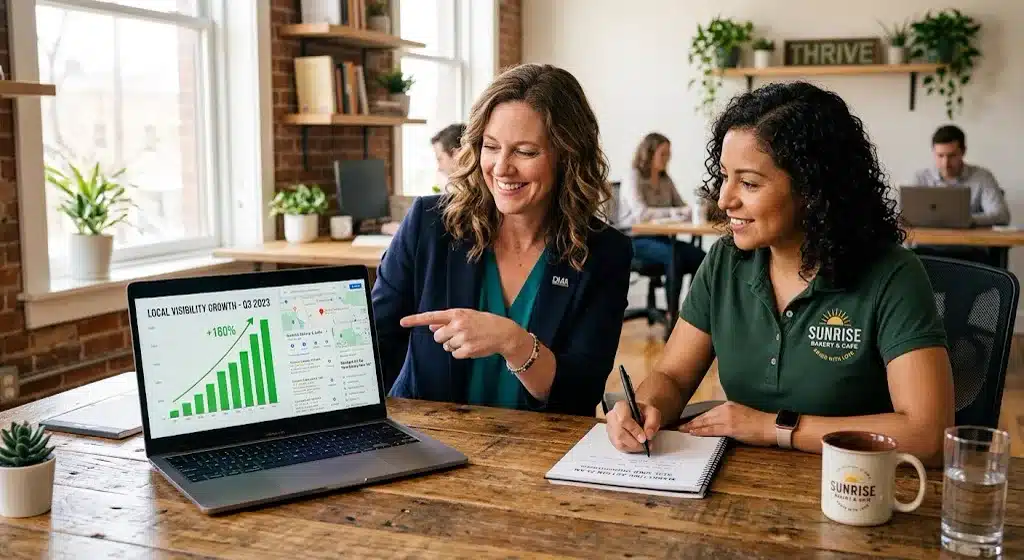

Most home service business owners are great at what they do. They know their trade. They know how to show up, do the work, and keep customers happy. What they’re often not prepared for is the question that keeps coming up every slow week: Why isn’t the phone ringing?
That’s where digital marketing coaching for local service businesses comes in. Not generic business coaching, not a seminar about goal-setting. Specific, practical guidance on how to get found by local customers when they search online for exactly what you offer.
In this video
- 0:00 What Digital Marketing Actually Costs
- 0:52 Four Pricing Models Agencies Use
- 2:15 Retainer vs Project Which Fits You
- 3:25 Local SEO Pricing Breakdown
- 4:06 Full Service Category Price Table
- 5:26 Three Factors That Move Your Quote
- 6:14 Freelancer vs Agency Tradeoffs
- 7:00 How to Compare Proposals Fairly
- 7:49 PPC Management Fees Explained
- 8:26 Link Building Costs and Red Flags
- 9:12 Web Design Tiers and Maintenance
- 9:53 Four Agency Red Flags to Avoid
- 10:41 Set Goals Before You Set a Budget
- 11:18 Content and Social Media Pricing

This guide breaks down what digital marketing coaching actually covers for service businesses, who it’s designed for, and how to know if it’s the right move for your company.
What Is Digital Marketing Coaching for Local Service Businesses?
Want it done for you? See our SEO coaching.
Digital marketing coaching for local service businesses is a structured program that teaches service contractors how to market themselves online. The goal is simple: more calls, more booked jobs, and a pipeline that doesn’t dry up when referrals slow down.
This kind of coaching is fundamentally different from working with a marketing agency that just does things for you without explaining the strategy. A coach walks you through why things work, what to prioritize first, and how to make decisions about your marketing without needing to hire someone every time a question comes up.
According to BrightLocal’s 2024 Local Consumer Review Survey, 98% of consumers used the internet to find information about local businesses. If your business isn’t visible online, you’re invisible to nearly every potential customer in your service area.
Digital marketing coaching for local service businesses covers the specific channels that actually drive phone calls: search engine optimization, Google Business Profile, content strategy, and paid advertising basics. It doesn’t waste time on tactics that work for e-commerce brands or national companies but have no practical application for a service van and a territory map.
How Digital Marketing Coaching Differs from General Business Coaching
General business coaching covers a wide range of topics: leadership, team management, financial planning, mindset, and operations. That kind of coaching has real value, but it’s not going to tell you why your Google Business Profile isn’t showing up in the local map pack.
Digital coaching for local service businesses is narrower on purpose. It focuses on one outcome: getting found online by customers who are ready to hire someone. Everything covered in the coaching connects back to that outcome.
Here’s the practical difference:
- A business coach might help you set a revenue goal of $500,000 for the year.
- A digital marketing coach helps you work backward from that goal to figure out how many calls you need per week, what your closing rate needs to be, and what your online visibility has to look like to generate that volume.
General coaching rarely accounts for the fact that a missed call from a water damage lead at 2 a.m. can cost you a $4,000 job. Digital marketing coaching for local service businesses is built around that reality. It covers the hidden ROI of how you handle your calls, not just how you attract them.
Want more customers from Google & AI search?
Get a free SEO audit of your site — see exactly what to fix first.
What Digital Marketing Coaching Covers for Service Businesses
A quality marketing coaching program for local service businesses covers four core areas. Each one builds on the next, and skipping any of them leaves a gap that limits your results.
Local SEO: Getting Found in Your Service Area
Local SEO is the process of making sure your business appears in Google searches when people in your service area search for what you offer. If someone in West Asheville “HVAC repair near me,” local SEO determines whether your company appears in the results or one of your competitors does.
According to Moz’s 2024 Local Search Ranking Factors report, proximity, relevance, and prominence are the three core signals that drive local search rankings. Coaching helps you understand how each one applies to your business and what specific actions move the needle.
Digital marketing coaching for local service businesses covers:
- How to identify the right keywords for your specific services and geography
- How to build out service area pages that actually convert visitors into calls
- Why content depth and topical authority matter for service company websites
- How to compete against larger franchises and national lead aggregators
For home service contractors, local SEO is the foundation. It’s the difference between a website that sits there doing nothing and one that generates calls every week. Understanding how to establish local SEO mastery for your specific market is a core coaching outcome.
One point coaching makes clear early on: SEO takes time. According to Ahrefs, most new pages take three to six months to rank competitively. Knowing the timeline up front helps business owners set realistic expectations and stay consistent, rather than giving up too early. The SEO timeline for a service business depends heavily on your market’s competitiveness and the extent of foundational work already done on your site.
Google Business Profile Optimization
Your Google Business Profile is often the first thing a customer sees when they search for your service. It shows up in the map pack and displays your reviews, phone number, and service hours. For many service businesses, it drives more direct calls than the website does.
Coaching covers how to properly complete your profile, use the services and products sections, post regularly, and get reviews systematically without violating Google’s guidelines. It also covers how to handle the predefined services feature in Google Business Profile that is now actively influencing local rankings in 2025 and into 2026.
Leveraging Google Business Profile for local service companies is one of those areas where small improvements compound quickly. Getting even 10 more reviews than your nearest competitor while maintaining a higher rating can meaningfully shift who gets the call.
PPC Basics: When and How to Use Paid Ads
Digital coaching for local service businesses includes pay-per-click advertising basics, not because every service company should run ads, but because knowing how paid search works helps you make better decisions about when to use it.
The short version: SEO builds long-term organic visibility that compounds. Paid ads can generate calls faster, but they stop the moment you stop paying. For most service businesses, the right decision between SEO vs. paid ads depends on how established your organic presence is and what your budget looks like.
Coaching covers Google Local Service Ads (LSAs), which are pay-per-lead ads that appear at the very top of Google search results for service-based searches. For contractors in competitive markets, LSAs can fill gaps in organic lead flow while SEO builds up momentum. According to WordStream, home services industries see average Google Ads conversion rates between 3% and 5%, making paid search a viable channel when managed correctly.
The key point in digital coaching for local service businesses is that paid ads work best as a complement to organic strategy, not a replacement for it. Understanding the math behind your customer acquisition cost is essential before you put any money into paid advertising.
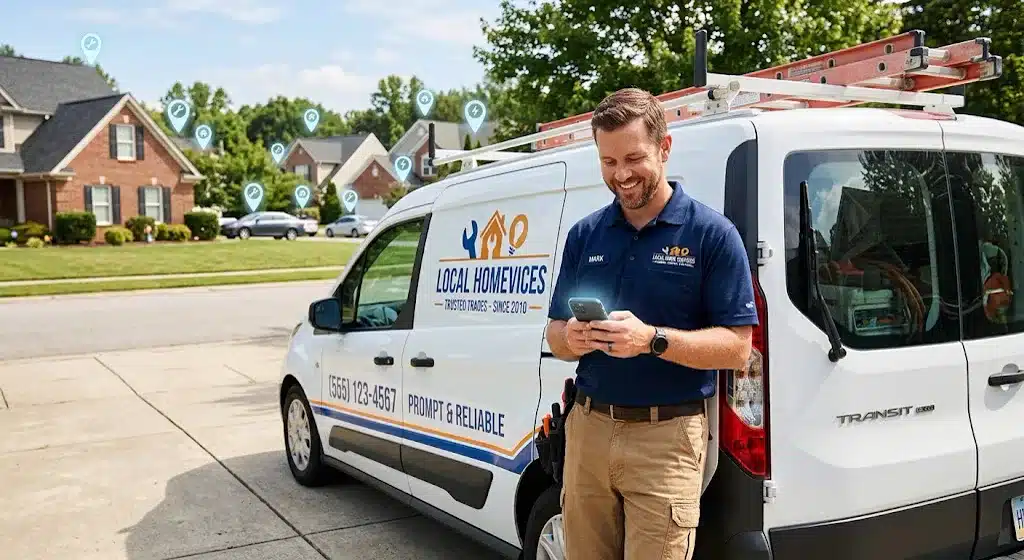
Who Benefits Most from Digital Marketing Coaching
Marketing coaching for local service businesses is not a fit for everyone. It works best for specific types of businesses and owners.
You’re a good fit if:
You own a trades business (HVAC, plumbing, electrical, pest control, restoration, roofing, landscaping) and have been operating for at least 1 or 2 years. You have a website, or you’re willing to build one. You’re not looking for someone just to take over your marketing entirely. You want to understand what’s being done and why, so you can make smarter decisions going forward.
You’re generating some revenue, but you know your lead flow isn’t consistent. Some weeks are packed, some are slow, and you can’t quite explain why. You suspect the internet should be helping more than it is, and you want guidance on where to start.
You might not be a good fit if:
You’re brand new to business and still figuring out your services and pricing. Digital coaching for local service businesses works best when you have something real to market. Or you want someone to manage your marketing with no involvement from you. That’s an agency engagement, not coaching.
The competitive analysis for service businesses is often one of the first things coaching covers, because understanding who you’re competing with online determines how much work is needed to gain visibility.
What Results Look Like and How Long It Takes
Digital marketing coaching for local service businesses is not a quick fix. Anyone who promises overnight results from SEO is not being honest with you.
A realistic timeline looks like this:
- Months one and two: Foundation work. Google Business Profile is fully optimized, the website structure is reviewed, technical issues are identified, and content gaps are mapped.
- Months three and four: Early organic traction. New content pages start getting indexed, local search rankings begin to improve for some keywords, and GBP visibility increases.
- Months five and six: Measurable lead flow from organic search. Phone calls and form submissions from Google start to climb. Paid ads, if running, are now informed by real data about which keywords convert.
- Month seven and beyond: Compounding returns. Each new piece of content and each new review adds to the momentum. Lead volume grows without a corresponding growth in ad spend.
Businesses that work through a 30-day marketing campaign blueprint at the start of coaching typically see faster early results because they’re not spending the first month figuring out where to begin.
According to BrightLocal, businesses that actively manage their online presence see 70% more location visits than those that don’t. For service companies, that translates to calls.
The businesses that get the most from marketing coaching for local service businesses are those that treat it as an investment with a payoff timeline, not an expense with an immediate return. The math works when you stick with it long enough to see it compound.
How AI Search Is Changing Local Service Marketing

Something has changed significantly in how customers find service businesses online, and digital marketing coaching for local service businesses needs to address it directly.
AI-powered search tools like Google AI Overviews, ChatGPT, and Perplexity are now answering questions that previously drove clicks to websites. When someone asks, “Who are the best HVAC companies in Asheville?” an AI might answer that question directly, pulling from structured content on service websites, Google Business Profile data, and review information.
The underlying principles are the same ones that drive traditional SEO. Content that directly answers specific questions, a complete and active Google Business Profile, consistent business information across the web, and a track record of positive reviews all contribute to AI visibility. But the formatting and structure of content matter more than they used to.
Schema markup is one of those tactics that most service business websites completely ignore. Still, it directly helps search engines and AI tools understand what your business does and where you operate. Digital marketing coaching covers it because it’s a genuine competitive advantage.
The Difference Between Doing It Yourself and Getting Coaching
Most business owners who attempt digital marketing on their own hit a wall at some point. They set up a Google Business Profile but aren’t sure what to do with it. They publish a few blog posts, but can’t tell if they’re helping. They try Google Ads and watch money disappear without clear results.
The problem isn’t effort. It’s the sequence.
Digital marketing for local service businesses has a specific order of operations. You don’t run ads before your website is optimized. You don’t write blog posts before your service pages are working. You don’t chase backlinks before your Google Business Profile is complete. Getting the sequence wrong means spending money and time on things that don’t move the needle.
Digital coaching for local service businesses gives you the sequence, explains the reasoning behind it, and adjusts the plan as results come in. It’s the difference between following a map and wandering in the general direction of your destination.
One area coaching consistently addresses is emergency service SEO. When someone has a burst pipe at midnight, they search immediately and call the first credible option they see. Being visible for those high-urgency, high-value searches is a direct result of consistent digital marketing work.
Frequently Asked Questions
How is digital marketing coaching different from hiring a marketing agency?
An agency typically manages your marketing for you. Coaching teaches you how it works, what to prioritize, and how to make informed decisions. Many business owners use coaching to build internal knowledge before hiring an agency or to hold an existing agency accountable. The two are not mutually exclusive.
What does digital marketing coaching cost?
Coaching programs vary depending on the format, the provider, and the depth of support included. Contact PushLeads for current pricing. What matters most is understanding the return relative to the investment. If coaching helps you add two additional jobs per week at an average ticket of $400, the math works very quickly.
What makes PushLeads different from other digital marketing coaches?
PushLeads works specifically with home service contractors and local businesses. The coaching is built around real-world results in markets like Asheville, Buncombe County, and Western North Carolina, and the methods have been tested across industries, including HVAC, plumbing, restoration, pest control, and roofing. Every recommendation comes with a reason, and every strategy connects back to phone calls.
How to Get Started with Digital Marketing Coaching
The first step is understanding where your business currently stands online. That means looking at your Google Business Profile completeness, your local search rankings for key service terms, your website’s technical health, and how you compare to your top two or three local competitors.
PushLeads offers a free consultation for local service businesses in Asheville and across Western North Carolina. In that conversation, you’ll get a clear picture of your current visibility, the specific gaps costing you leads, and a realistic plan for what digital marketing coaching would cover in your situation.
There’s no obligation and no pitch. Just a straight look at where you are and what it would take to get more calls coming in consistently.
Contact PushLeads to schedule your free consultation.
Want more customers from Google & AI search?
Get a free SEO audit of your site — see exactly what to fix first.
Your path · Digital Marketing Coaching for Local Service Businesses
2 articles. About 50 minutes.
 You’re hereDigital Marketing Coaching for Local Service Businesses: Get More Calls and Customers Online
- Up nextWhat Does a Digital Marketing Coach Actually Do for a Small Business?

Want this done for you?
Scan your site. See the gaps. Decide with numbers.
- Rankings, Google Business Profile and site-speed teardown
- Report lands in your inbox in about a minute
- No obligation · 4.9 from 67 Google reviews
 Continue to Part 2
