
Community Marketing for Small Businesses: Building a Local Brand in Asheville
What Makes Community Marketing Different in Asheville
Want it done for you? See our local SEO services.
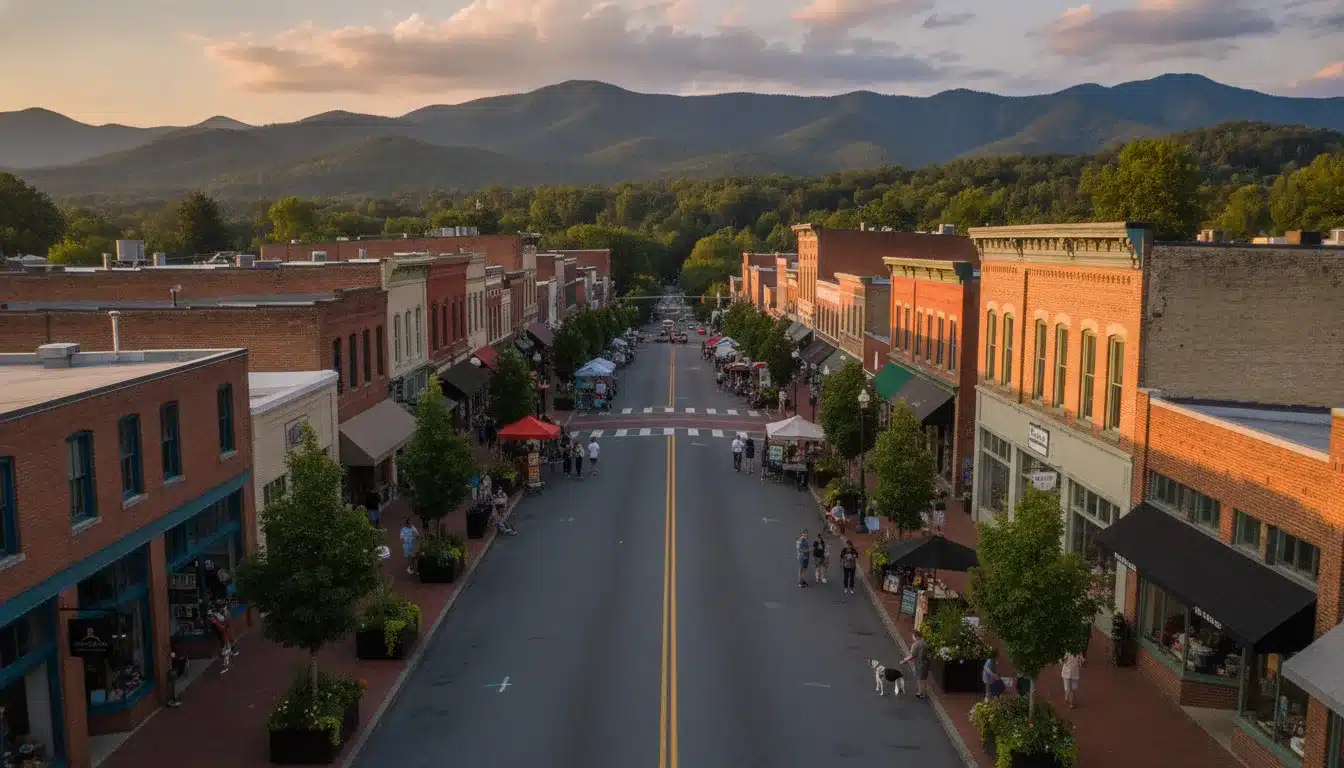
In a city as distinctive as Asheville, community marketing isn’t just a nice-to-have strategy—it’s essential for small business success. Unlike traditional marketing that focuses solely on promoting products or services, community marketing builds meaningful relationships with the people who matter most to your business. Asheville residents are known for their fierce loyalty to local businesses that authentically contribute to the community’s unique culture and values. When you connect with customers on a deeper level by supporting local causes, participating in neighborhood events, and creating spaces for genuine interaction, you’re not just selling—you’re becoming part of the fabric of Asheville itself. This approach creates customers who don’t just buy from you once but become enthusiastic advocates who bring friends, family, and visitors to your doorstep.
The Foundations of Community-Centered Marketing
Before diving into tactics, you need to establish what your business stands for in the Asheville community. Start by identifying your core values and how they align with local concerns and interests. Are you passionate about environmental sustainability, supporting local artists, or preserving Asheville’s unique character? Your authentic connection to these values will resonate with customers who share them.
In this video
- 0:00 Why Asheville Visibility Gaps Cost Revenue
- 0:20 Who Jeremy and PushLeads Are
- 0:38 Asheville Market Stats That Drive Urgency
- 1:02 Why Generic SEO Fails Asheville Businesses
- 1:28 Local Pack Mechanics Relevance and Prominence
- 1:52 Google Business Profile Optimization Essentials
- 2:21 GBP Features That Separate Ranked Profiles
- 2:49 Citations NAP Consistency and Local Backlinks
- 3:27 Review Strategy for Local Pack Placement
- 4:00 Mobile Speed and Core Web Vitals
- 4:28 ROI Tracking and Monthly Data Sets
- 5:06 What PushLeads Builds for Asheville Businesses
Full transcript: How do Asheville businesses dominate local SEO rankings?
Take time to listen to what matters to Asheville residents. What challenges does the community face? What celebrations bring people together? Which causes generate the most passion? Understanding these dynamics helps you position your business as a solution provider and community supporter, not just another company trying to make a sale.
Remember that Asheville customers can spot insincerity from miles away. Your community involvement must come from a genuine desire to contribute, not just as a marketing tactic. When you truly care about Asheville’s well-being, it shows in everything from your social media posts to how your staff interacts with customers.
Practical Strategies for Building Your Local Brand
Create Meaningful Local Partnerships
Collaborating with complementary local businesses creates a network effect that benefits everyone involved. A coffee shop partnering with a local bakery, an outdoor gear store working with local hiking guides, or a bookstore hosting events with Asheville authors—these partnerships amplify your reach while strengthening the local economy. Look for businesses that share your values but don’t compete directly with your offerings.
Participate in (and Create) Community Events
Asheville’s calendar is filled with festivals, markets, and gatherings that showcase local businesses. Beyond simply setting up a booth, find creative ways to enhance these events. Offer workshops related to your expertise, provide a useful service to attendees, or sponsor an activity that creates memorable experiences associated with your brand. Don’t see an event that fits your business? Create one! A simple gathering that brings people together around a shared interest can become a signature community contribution.

Leverage Local Stories in Your Content
Your marketing content should reflect Asheville’s unique character and your place within it. Share stories about local customers, highlight neighborhood history connected to your business location, or showcase how your products are inspired by the region. These narratives create emotional connections that generic marketing messages simply can’t match.
Support Local Causes With More Than Money
Financial contributions to local nonprofits are valuable, but lending your expertise, facilities, or platform can make an even bigger impact. A restaurant might host fundraising dinners where staff donate their time, a retail shop could offer space for community meetings after hours, or a service business might provide pro bono work for organizations making a difference in Asheville.
Measuring Community Marketing Success
Community marketing generates both tangible and intangible returns. Track metrics like referral business, social media engagement on community-focused content, and attendance at your events. But also pay attention to qualitative feedback—stories customers share about why they chose your business, mentions in local media, and invitations to participate in community initiatives. These indicators often signal the deep connections that lead to long-term business sustainability.
Ready to Become an Integral Part of Asheville’s Business Community?
At PushLeads, we understand what makes Asheville special because we’re part of this community too. Our team can help you develop a community marketing strategy that authentically connects your business with local customers while driving real growth. Contact us today to discuss how we can help your business become a beloved local brand that customers enthusiastically support and recommend.
Schedule Your Community Marketing Strategy SessionWant more customers from Google & AI search?
Get a free SEO audit of your site — see exactly what to fix first.
Key Takeaways
- Community marketing works best in Asheville when every activity leaves a trail you can measure, such as a review, a local link, a referral, or a repeat visit.
- Your community work also feeds local search, because mentions, links, photos and reviews from real neighbors support the same signals Google uses to rank local businesses.
- Different parts of the Asheville area respond to different approaches, so pick one or two neighborhoods or audiences and go deep before you spread out.
- A realistic first effort takes about 3 to 5 hours a week and little or no cash, and you should expect to wait 3 to 6 months before the pattern is clear.
- The most common failure is one-off sponsorships with no follow-up, so plan the follow-up before you say yes to anything.
How Community Marketing Feeds Your Local Search Visibility
Community involvement and local SEO are not separate projects. The people you work with online and offline create the reviews, links, mentions and branded searches that help your business show up when someone nearby searches for what you sell.
Google does not “see” your goodwill directly. It sees evidence of it, and that evidence usually takes four forms:
- Reviews that mention specifics. A customer who writes about your involvement in a neighborhood event gives Google and future customers context that a generic five-star rating does not.
- Links from local websites. Event pages, nonprofit partner lists, neighborhood association sites and local news mentions are links that a competitor outside Asheville cannot easily copy.
- Consistent business details. Every event listing, sponsor page and directory that names you should use the same business name, address and phone number.
- Branded searches. When people hear your name at a market or a fundraiser and search for you afterward, that behavior reflects real-world prominence.
If you want the broader framework behind these signals, our guide to local SEO strategies for small businesses covers how they fit together. This article focuses on how to generate them through community work.
Connect each activity to your Google Business Profile
Your Google Business Profile is the easiest place to show community activity to people who are already searching. Post about events you host or join, add photos from them, and keep your hours and attributes accurate when you operate off-site.
Use the profile’s posts, photos and Q&A as a running record of what you are doing locally. If you are not sure your profile is fully set up, work through our Google Business Profile optimization checklist first, so community attention lands on a complete listing.
Choosing Your Community: Neighborhoods and Audiences
You get better results by picking a specific slice of Asheville to serve than by trying to be known to everyone. Asheville is a set of overlapping communities with different habits, and a small business rarely has the time to reach all of them well.
Start by asking who actually buys from you. Then look at where those people spend time, whom they trust, and what they already attend. The table below shows how different audiences tend to call for different approaches. Treat it as a starting point and adjust it to what you see in your own customer list.
| Audience or area | What tends to matter to them | Community tactics that fit |
|---|---|---|
| Residents in neighborhoods such as West Asheville, Montford or Kenilworth | Walkability, familiar faces, neighborhood identity | Neighborhood association involvement, block-level events, local newsletters, school and youth-sport support |
| Downtown and South Slope workers and regulars | Convenience, quality, a sense of the local scene | Cross-promotions with nearby shops, after-work events, collaborations with local makers |
| Arts-minded customers, including the River Arts District crowd | Authenticity, craft, connection to local artists | Studio-walk participation, artist features, shared exhibits or pop-ups |
| Visitors and seasonal tourists | Recommendations, easy discovery, local flavor | Partnerships with lodging and tour providers, strong Google Business Profile, clear visitor-friendly hours and info |
| Nearby towns such as Black Mountain, Weaverville and Hendersonville | Convenience and a reason to make the trip | Joint events, service-area content, referral relationships with neighboring businesses |
How to pick your first focus

- Pull your last 50 to 100 customers and note where they live or work, if you have that information.
- Identify the top one or two areas or groups, and note which are growing and which are shrinking.
- List the three to five organizations, events or gathering places those groups already care about.
- Commit to showing up consistently in just those places for the next 90 days.
This sounds restrictive, but it is how a business becomes recognizable. Someone who sees you at three things in one neighborhood remembers you. Someone who sees you once at ten different things usually does not.
Turning Community Involvement Into Local Links and Mentions
Every community activity should leave behind something that lives online, ideally on a local website that links to yours. This is one of the most overlooked benefits of community work, because most owners stop at the event itself.
Use this process each time you take part in something:
- Before the event: Ask the organizer how sponsors and participants are listed. Find out whether there is a web page, a newsletter or a social post, and confirm they have your correct business name, address and website.
- During the event: Take photos with permission, collect a few customer comments, and note names of people you met who run websites, newsletters or local groups.
- Within a week afterward: Publish a short recap on your site with photos and a thank-you to partners. Send the link to the organizer and any partners you mentioned.
- Within a month: Check that the organizer’s page lists you correctly and links to your site. If it does not, politely ask for an update.
Local sources that commonly link to community-minded businesses
- Event and festival sponsor or vendor pages
- Nonprofit partner and donor lists
- Neighborhood association and business association websites
- Chamber of commerce member directories
- School, club and youth-league sponsor pages
- Local newsletters, blogs and community calendars
- Local news features when you have a genuinely newsworthy story
Do not pay for links or ask for them in bulk. Links that come from real involvement look natural and last, while links bought from lists of unrelated sites can cause problems. Google Search Central’s guidance on link spam is clear about this, and the safest approach is the one that also builds real relationships.
Building a Review Habit That Reflects Your Community
The most effective way to gather reviews is to ask at the moment a customer is already feeling good about you, and to make it easy. Community events create many of those moments, but only if you have a simple system for following up.

Here is a practical approach that does not feel pushy:
- Keep a short link and QR code ready. Use your Google Business Profile review link on a small card, a receipt or a table sign.
- Ask in person first. A quick “if you enjoyed today, a Google review helps neighbors find us” works better than a mass message.
- Follow up once. A short, personal message within a day or two is enough. Repeated reminders annoy people.
- Respond to every review. Thank people by name, mention something specific, and keep replies short and sincere.
- Never offer rewards in exchange for reviews. Google’s policies restrict incentivized reviews, and it also undermines the trust you are trying to build.
Sample wording you can adapt
“Thanks for stopping by our table today. If you have a minute, a quick Google review about your experience helps other Asheville neighbors find small businesses like ours. Here’s the link.”
Keep it conversational and drop anything that does not sound like you. A review request that sounds like a script tends to get skipped.
Using Social Media to Support Community Relationships
Social media works best for community marketing when you use it to connect with people and promote others, not just to advertise yourself. A good rule is that most of what you post should be about the neighborhood, your partners, your customers, or something useful, with a smaller share about your own offers.
Some formats that work well for small local businesses:
- Partner spotlights: A short post introducing a nearby business or nonprofit and why you admire their work.
- Behind-the-scenes posts: How an event was set up, who helped, and what you learned.
- Local resource posts: Useful roundups, such as seasonal events or neighborhood happenings your customers care about.
- Thank-you posts: Public thanks to volunteers, customers and organizers, with tags where appropriate.
- Customer features: Stories or photos shared with permission.
Tag partners and use location tags so your posts reach people who already follow those accounts and places. For more on choosing platforms and building a posting rhythm for this market, see our overview of social media marketing for Asheville businesses.
A 90-Day Community Marketing Plan You Can Start This Month
A simple 90-day plan keeps you from drifting into random sponsorships. The aim is to run a few well-chosen activities, capture the results, and decide what deserves more of your time.
Days 1-30: Get set up and listen
- Choose your one or two target neighborhoods or audiences.
- Check that your Google Business Profile, website and main directory listings show consistent information.
- Make a list of 10 to 15 local organizations, events and businesses that fit your values.
- Attend two or three events as a guest, with no booth and no pitch, and introduce yourself.
- Set up a simple tracking sheet for referrals, reviews, links and event leads.
Days 31-60: Show up and contribute
- Commit to one event or cause where you can offer something concrete, such as time, space or expertise.
- Propose one small joint activity to a complementary business, such as a shared promotion or a co-hosted evening.
- Publish a recap post for each activity, with photos and partner thanks.
- Ask satisfied customers for reviews and respond to the ones you receive.
Days 61-90: Review and double down
- Check which activities produced new customers, reviews, links or invitations.
- Drop what produced little and increase your commitment to what worked.
- Reach out to the organizers and partners who were easiest to work with and propose something ongoing.
- Write down what you will do for the next quarter, with a realistic weekly time budget.
What Community Marketing Costs: Time and Budget Ranges
Community marketing can be done with very little money, but it always costs time. The ranges below are typical for a small local business and will vary with your size, staff and how much you outsource.
| Activity | Typical cash cost | Typical time per month | When you may see results |
|---|---|---|---|
| Attending local events as a guest | $0 to $50 per event | 2 to 6 hours | Relationships in 1 to 3 months |
| Vendor booth at a market or festival | Roughly $50 to several hundred dollars, plus supplies and staffing | 6 to 15 hours per event | Same-day sales; follow-up leads in 1 to 3 months |
| Hosting a small event at your location | $100 to $500 for supplies and promotion | 6 to 12 hours | Reviews and referrals within weeks |
| Donating time or services to a cause | Mostly staff time | 2 to 8 hours | Goodwill and mentions in 2 to 6 months |
| Local content and social posts | $0 if in-house; varies if outsourced | 3 to 8 hours | Engagement in weeks; search impact in 3 to 6 months |
| Sponsorships | Highly variable, from small donations to several thousand dollars | 1 to 3 hours to manage | Depends on how well you follow up |
Before paying for any sponsorship, ask what the sponsor actually receives: a link, a logo placement, a mention in communications, or speaking time. Sponsorships that include a web mention and a way to meet attendees are usually worth more than those that only place a logo on a banner.

Balancing Locals and Visitors
You can serve both residents and visitors, but your community identity should be built on locals first. Asheville draws a lot of tourism, and visitors often find businesses through search and recommendations. Residents, however, are the ones who return all year and refer friends.
Practical ways to serve both without confusing your message:
- Keep your brand voice rooted in the neighborhood, since visitors tend to value authenticity too.
- Make sure your Google Business Profile, website and signage are easy for first-time visitors to understand, including hours, parking and directions.
- Plan quieter-season activities for residents, when you have more time and customers have more attention.
- Build relationships with lodging, tour and event providers whose guests fit your offerings.
- Reflect seasonal rhythms in your content, and adjust staffing and promotions around them.
For a broader look at how local visibility works in this market, including how people find businesses through map results, see our guide to local SEO for Asheville businesses.
Common Community Marketing Mistakes to Avoid
Most community marketing failures come from inconsistency or from treating involvement as a transaction. These are the mistakes we see most often, and each has a simple fix.
- Saying yes to everything. Spreading yourself across too many causes dilutes your message. Pick two or three that match your values.
- Sponsoring without following up. A logo on a banner rarely changes behavior. Ask for a web mention, thank the organizer publicly, and meet people at the event.
- Disappearing after the event. Relationships fade quickly. Send a thank-you, share a recap, and stay in touch.
- Posting only about yourself. A feed made entirely of promotions feels like an advertisement. Mix in partner, customer and neighborhood content.
- Ignoring your online listings. If your hours or address are wrong, community-driven interest turns into frustration.
- Tracking nothing. Without a simple log, you cannot tell which efforts are worth repeating.
- Using a cause for attention. Community members notice quickly when involvement is superficial. If you are not prepared to commit, do not announce it.
A Quick Checklist Before You Commit to Any Community Activity
Run each opportunity through the checklist below before you say yes. If you cannot answer most of these, wait.
- Does it match our values and the audience we most want to serve?
- Can we contribute something real, such as time, skills, space or product?
- Will our business name, address and website be listed accurately online?
- Is there a way to meet attendees or partners and follow up?
- Do we have the staff and time to do it well?
- Who will take photos, write the recap and ask for reviews?
- How will we record the result in our tracking sheet?
When to Get Outside Help
Outside help makes sense when you know your community work is valuable but cannot keep up with the online side, such as listings, reviews, content and tracking. A good partner should handle those tasks and leave the relationships, which are yours to build, in your hands.
If you are comparing providers, our article on how to find small business marketing companies near you explains what to ask and what to watch for. If your main gap is search visibility, you can also look at our Asheville SEO services to see how that work is organized.
If you would rather talk through your situation first, you can contact the PushLeads team and we will help you work out which community activities and online foundations make sense for your business.
Frequently Asked Questions
How long does community marketing take to work in Asheville?
Expect early signs, such as new relationships, referrals and reviews, within one to three months. Measurable effects on search visibility and steady referral business more often take three to six months or longer. Consistency matters more than the size of any single event.
Do I need a big budget to do community marketing?
No, many of the most effective activities cost little beyond time. Attending events, partnering with nearby businesses, donating expertise and writing local content can all be done on a small budget. Spend money only when you know what you will receive in return, such as a web mention or direct access to your target audience.
Does community involvement help my Google rankings?
It can help indirectly. Community work tends to generate local reviews, links from local websites, consistent mentions and branded searches, all of which support local visibility. It does not replace a well-built Google Business Profile and website, so you need both.
Should I sponsor events or partner with other businesses first?
Start with partnerships and small contributions, because they are cheaper and build stronger relationships. Sponsorships are worth it when they include a web mention, a link and a chance to meet attendees. If a sponsorship offers only a logo, consider donating your time or products instead.
How do I know which causes to support?
Choose causes that connect to your business values and your customers’ interests, and that you can support over time. Two or three long-term commitments are better than many one-time gifts. Ask yourself whether you could talk about the cause comfortably with a customer in person.
How should I track whether community marketing is paying off?
Keep a simple sheet that records each activity, the time and money spent, and what came out of it. Note new customers who mention it, referrals, reviews, links and invitations to other events. Ask new customers how they heard about you, and review the sheet every quarter.
Can a service business without a storefront do community marketing?
Yes, and it often works well because your reputation travels by word of mouth. Join neighborhood groups, offer your skills to local organizations, partner with complementary trades and make sure your service area is clear on your Google Business Profile. Photos and recaps of your work in the community help show people who you are.
Keep Reading
Want more customers from Google & AI search?
Get a free SEO audit of your site — see exactly what to fix first.
Your path · The Complete Small Business Guide to Dominating Your Local Market
4 articles. About 65 minutes.
 The Complete Small Business Guide to Dominating Your Local Market
- What Are the Best Local SEO Strategies for Small Businesses?
- You’re hereCommunity Marketing for Small Businesses: Building a Local Brand in Asheville
- Up nextHow to Find Small Business Marketing Companies Near Me


Want this done for you?
Scan your site. See the gaps. Decide with numbers.
- Rankings, Google Business Profile and site-speed teardown
- Report lands in your inbox in about a minute
- No obligation · 4.9 from 67 Google reviews
 Continue to Part 4
