
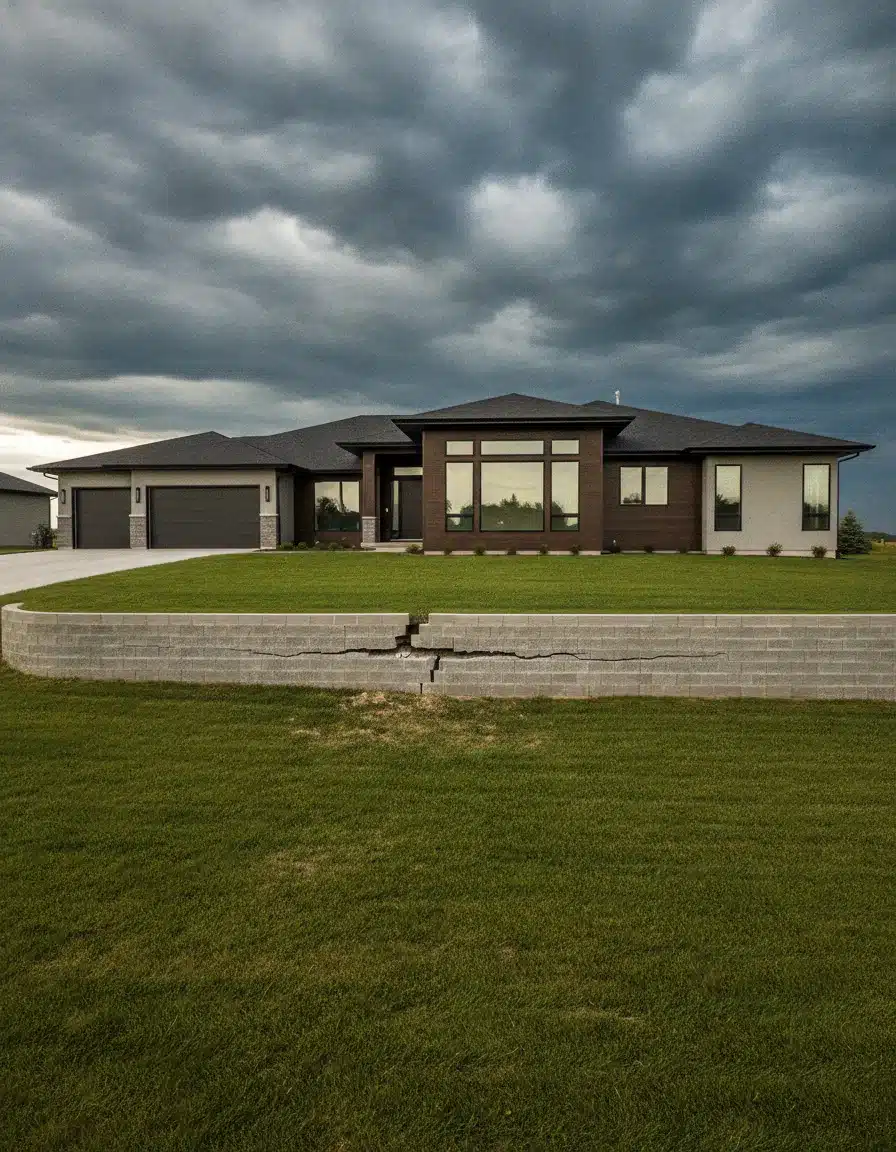
Emergency foundation repair marketing targets homeowners who discover cracks, bowing walls, or water intrusion and need immediate help. Because foundation jobs average $5,000 to $30,000 per project, a single well-placed campaign can generate more revenue in one week than most small contractors see in a month. The contractors who consistently win these jobs combine fast local search visibility with a content strategy built for urgent, high-stakes decisions.
Foundation repair is one of the highest-value emergency verticals with almost no dedicated agency competition. That gap will not last forever. Here is how to build your marketing presence now.
In this video
- 0:00 Paid Search Cost Range Overview
- 0:23 Who Is Jeremy and PushLeads
- 0:41 Ad Spend vs Management Fee Split
- 1:08 Three Factors That Drive Cost
- 1:39 Pricing Tiers Entry to Competitive
- 2:19 Quality Score as a Cost Control
- 2:49 Cost Per Click by Industry
- 3:21 Management Fee Structures Explained
- 3:55 Cost Per Click vs Cost Per Lead
- 4:23 When Campaigns Optimize and What to Expect
Full transcript: How much does paid search marketing cost in 2026?
Full transcript
Section 1
You cannot rank the national franchise down the street with the right page structure and zero extra ad spend. Here’s exactly how that works. The nationals have brand budgets. They have domain authority. They have websites with strong reputations. They have teams running ads around the clock. And still, local foundation repair companies beat them in search results every week. Not by outspending them, but by building pages the nationals are too big to build.
Section 2
this approach actually comes from a company called geek powered studios an agency that figured out
Section 3
that the page type formula consistently wins locally i’m going to walk you through every
Section 4
piece of it why nationals can’t own every local search a national franchise has just one website
Section 5
that website tries to serve every city every state every foundation problem type and every customer
Section 6
question. And that’s their weakness. They build broad pages that rank for broad terms. But you,
Section 7
however, build specific pages that rank for specific searches. And specific searches are
Section 8
where the real buyer is. Someone typing foundation repair near me is probably still in research mode.
Section 9
Someone typing peer and beam foundation repair Tampa, Florida is ready to call you right now.
Section 10
Now, the nationals just can’t go that deep for every market.
Section 11
You can, and you’re only in that market.
Section 12
That asymmetry is your entire advantage.
Section 13
The Four Page Types That Win
Section 14
Geek Power Studios mapped out the page structure that makes this work.
Section 15
You create four types of pages, each doing a different job.
Section 16
You create symptom pages, service pages, cost pages, and city pages.
Section 17
And you need to create all four, and they all work together.
Section 18
other. One type alone just won’t do it. Let me walk you through each one. Symptom pages. Catch
Section 19
them before they know what they need. Most homeowners don’t search foundation repair.
Section 20
They search the thing they’re seeing. Cracks in brick wall above door. Door won’t close all the
Section 21
way. Floor sloping in one corner of the house. Gap between wall and ceiling getting bigger.
Section 22
These are symptom searches. The person doesn’t know that they have a foundation problem yet.
Section 23
they just know something looks wrong. You build a page for each of these symptoms.
Section 24
The page explains exactly what causes it, why it usually points to a foundation issue,
Section 25
and what to do next. You become the answer to the question they’re actually asking.
Section 26
The national franchise is nowhere near that search. They’re waiting for someone to actually
Section 27
know that they need foundation repair. But you can catch the buyer one step earlier.
Section 28
service pages one problem one page a lot of local companies make one mistake here they put every
Section 29
service on one single page on their website pier and beam repair slab repair crawl space and
Section 30
capitalization basement waterproofing helical peers push peers and they put this all under
Section 31
one page called our services and that page ranks for nothing specific because it covers everything
Section 32
loosely. But you need one page per service, not a paragraph, a full page. So Peer and Beam
Section 33
Foundation Repair gets its own URL, its own headline, its own content, its own images,
Section 34
case studies, videos, and its own frequently asked questions section. The same for slab repair,
Section 35
the same for crawlspace work, the same for every distinct thing that you offer.
Section 36
each page becomes a focus target for a focus search term and Google rewards
Section 37
specificity the nationals aren’t set up to go this granular cost pages the
Section 38
search everyone does this one surprises people how much does foundation repair
Section 39
cost is one of the most searched questions in this category look at the
Section 40
search data foundation repair SEO Tampa ranks at an average position of 63
Section 41
meaning that even a targeted local SEO search like that is barely being contested.
Section 42
That’s an open lane.
Section 43
People want to know what they’re walking into before they call anyone,
Section 44
but they’re not trying to get a quote yet.
Section 45
They want a ballpark so they don’t feel ambushed.
Section 46
You give them that page.
Section 47
You explain the factors that change price, soil type, foundation type, extent of damage, access.
Section 48
You give them honest ranges without committing to a number.
Section 49
you end with a clear path to get their specific estimate the national franchise is scared of this
Section 50
page they don’t want to publish cost information because it varies by region and they don’t want
Section 51
to anchor expectations nationally that fear is your opportunity so write the cost page rank for
Section 52
the cost question and this also helps with ai searches as well because ais love to see cost
Section 53
pages even if you put price ranges in their website so you can own the conversation at the
Section 54
the moment the homeowner is deciding whether to call. City pages. Your geography is your moat.
Section 55
This is the page size that most directly beats the franchise model. The model has a city landing
Section 56
page for your metro, maybe two or three for the biggest suburbs, but they’re thin pages with very
Section 57
few content and generic copy. The same template, maybe they’re just swapping out the city name in
Section 58
the pages. These pages are way too generic for Google to even rank, so they won’t even help the
Section 59
franchise anyway. But what you do, on the other hand, is build real city pages. Not just Foundation
Section 60
Repair Asheville, you build Foundation Repair in Asheville, and Pier and Beam Repair in West
Section 61
Asheville, and Crawl Space Repair in Weaverville, and Saab Foundation Repair in Swannanoa. Each one
Section 62
covers what makes that specific area relevant. Local soil conditions, common foundation types
Section 63
in that neighborhood, how weather patterns in that area affect foundations, actual knowledge,
Section 64
not templated copy. And you can write this yourself or you get an AI to write the content
Section 65
for you. The point is that you have super specific content that is super hyper local.
Section 66
A national can’t write that kind of content for every suburb of every city they serve,
Section 67
But you write it once for your market and it works for years.
Section 68
Long-tail keywords were the real buyer’s search.
Section 69
The search data we’re pulling includes terms like foundation repair, long-tail keywords, SEO optimization.
Section 70
People are actively looking for the strategy, and here’s why long-tail wins.
Section 71
Short keywords have high volume, high competition, and the national brands are dominating there.
Section 72
but long-tail keywords have lower volume, lower competition, and real buying intent.
Section 73
Foundation repair is a short keyword.
Section 74
Hundreds of websites are fighting for that, local businesses and national brands.
Section 75
But does insurance cover foundation repair is a long-tail search.
Section 76
One search in the data ranks at an average position of two.
Section 77
So that’s just near the top of Google, and the page is barely even built out yet.
Section 78
And whoever searches for that is very close to making a decision.
Section 79
You build pages around these specific questions such as,
Section 80
does homeowner’s insurance cover foundation cracks?
Section 81
What foundation damage is covered after a flood?
Section 82
FEMA foundation requirements after a disaster?
Section 83
That last one shows up in the search data,
Section 84
real people searching for that exact term in Google.
Section 85
A page targeting that question captures a homeowner in an urgent situation,
Section 86
again with zero competition. That’s what long tail pages do. AI overviews and answer engine
Section 87
optimization. This is newer, but it matters right now. The searches include Google AI overview
Section 88
optimization for foundation repair and foundation repair answer engine optimization. People are
Section 89
asking how to show up now in AI generated answers. And here’s what it shows up in AI overviews.
Section 90
pages that answer one specific question clearly, pages that use plain language, pages that are
Section 91
structured so that the answer appears in the first paragraph and the detail follows below.
Section 92
Your symptom pages and cost pages are naturally built for this if you write them right. Ask a
Section 93
clear question in the heading and answer it in the first two sentences, then expand. That structure
Section 94
Structure serves both the traditional search result and the AI-generated search box above
Section 95
it.
Section 96
The national franchise is not nimble enough to rewrite hundreds of pages for this format,
Section 97
but you write your pages this way from the start.
Section 98
A worked example.
Section 99
Picture a foundation repair company doing a moderate volume of calls a month in a mid-sized
Section 100
metro.
Section 101
Right now they have 5 pages on their website and a blog that
Section 102
it hasn’t been updated in two years so they’re invisible for every symptom search they have no
Section 103
cost page their one services page ranks for nothing specific they have one city page for
Section 104
the main metro here’s what changes they build 10 symptom pages one per visible sign of foundation
Section 105
trouble cracks in the drywall sticking doors uneven floors bowing walls each page is 400 to
Section 106
600 words specific and helpful. They split their services page into six individual service pages.
Section 107
Each one targets a specific service with its own search demand. They build one cost page explaining
Section 108
what affects price in their region. They build city pages for the top seven suburbs they actually
Section 109
serve. So that’s 24 new pages. Each one targets the search the nationals aren’t winning. Each one
Section 110
serves a buyer at a different stage of the decision over time those pages compound the
Section 111
ones that rank bring the calls the ones that bring calls tell google the pages are valuable
Section 112
google ranks more of them that’s the compounding effect of the structure you build it once and it
Section 113
keeps on working what about paid search the search data includes foundation repair ppc at 68 average
Section 114
position and google ads for foundation repair at 54 these are real searches with real commercial
Section 115
intent paid search works for foundation repair but organic pages built this way reduce what you
Section 116
actually need to spend so if you have a cost page ranking organically you’re not paying per click
Section 117
for every time someone searches for how does foundation repair costs in a search if your
Section 118
symptom pages rank you get traffic before the person even knows that they need to call anyone
Section 119
one. Paid search and this page structure work together. Organic handles the top of the funnel
Section 120
and the informational searches. Paid handles the high intent terms when you need the volume fast.
Section 121
Build both, but build the pages first. Common mistakes to avoid. Thin city pages. Swapping
Section 122
the city name in the same paragraphs is not a city page. Write genuinely local content or the
Section 123
the page ranks for nothing. One services page. I said it once, I’ll say it again. Split up every
Section 124
service into one page per service. No exceptions. Another mistake is skipping the cost page because
Section 125
you’re worried about price anchoring. If you don’t answer the cost question, the competitor next to
Section 126
you will. Write that page. Ignoring symptom searches. Your best buyer often doesn’t start
Section 127
with foundation repair. They start with the crack they found. Meet them there. No internal linking
Section 128
between page types your symptom page should link to the relevant service page
Section 129
your service page should link to the relevant city page your cost page should
Section 130
link to your content page build the path don’t make them hunt how to prioritize
Section 131
what to build first you can’t build 24 pages this week but here’s the order and
Section 132
what to build one build the cost page it targets a question nearly every buyer
Section 133
ask. It goes live and starts accumulating impressions immediately. Two, build city pages
Section 134
for your top three revenue zip codes. Not just your whole service area, just where your best
Section 135
jobs come from. Three, build symptom pages for your top five things your customers describe
Section 136
when they call you. Use their words, not technical words. Four, split your services page. Take what
Section 137
you already have and expand each section to its own page. Five, add long tail question pages that
Section 138
as you identify searches coming in through your Google Search Console data.
Section 139
That order gets your most important pages live first
Section 140
and builds momentum through the ones most likely to rank quickly.
Section 141
Your next step.
Section 142
You now have the full structure, symptom pages, service pages, cost pages, city pages,
Section 143
long tail, keyword targeting, AI overview formatting, priority,
Section 144
and a priority order to build them.
Section 145
The page structure is the word.
Section 146
But if you want to know where you stand right now,
Section 147
how visible you are in both regular search and AI generated searches you can
Section 148
get your free AI visibility check go to push leads comm slash check or call 8 to
Section 149
8 3 4 8 7 6 8 6 and we’ll show you exactly where the gaps are so you can
Section 150
know what pages to build first I’m Jeremy Ashburn with push leads thanks
Why Foundation Repair Demands a Different Marketing Approach
Part of our Emergency Service Marketing for Home Service Contractors: How to Win High-Value Urgent Calls. Want it done for you? See our local SEO services.
Foundation problems are uniquely terrifying to homeowners. A burst pipe can be fixed in a day. A foundation issue raises questions about the entire structural integrity of the home, the property value, and whether the family can safely stay inside. Homeowners searching for “emergency foundation repair” are not comparing prices. They are looking for the most trustworthy, credible company they can find quickly.
According to the Foundation Repair Network, approximately 25% of all homes in the US will experience some form of significant foundation damage in their lifetime. The annual market for foundation repair in the US exceeds $2.7 billion (IBISWorld, 2024), and demand is accelerating in clay-heavy soils across Texas, Oklahoma, Missouri, and the Southeast.
Your marketing has to lead with credibility and expertise. This is not a job where the lowest bid wins.
Building a Foundation for Your Digital Presence

Your Website Is Your Credibility Document
Foundation repair customers spend more time researching before calling than almost any other home service customer. They read reviews, check credentials, look for before-and-after photos, and compare multiple companies. According to BrightLocal’s 2024 survey, 78% of homeowners searching for foundation repair contractors visited at least three websites before making contact.
Your website needs to answer these questions immediately:
- How long have you been doing foundation repair specifically?
- Are you licensed and insured for structural work in this state?
- What methods do you use and why?
- What does the process look like from assessment to completion?
Every service page should follow an answer-first structure. Put the most important information in the opening 40-60 words of each section, then support it with details. AI search platforms including Google’s AI Overviews, ChatGPT, and Perplexity all favor this structure when recommending contractors for high-stakes searches.
Your emergency service SEO setup should treat foundation repair as its own pillar, not a footnote in a general structural services page.
Local SEO Fundamentals for Foundation Contractors
Foundation repair is intensely local. Homeowners want someone who knows their region’s soil conditions, typical failure patterns, and local permit requirements. Your Google Business Profile should include foundation repair as a specific service category, not just general contracting.
Key local SEO actions:
- Create separate service pages for each foundation issue type (bowing walls, sinking foundation, crack injection, waterproofing, pier installation)
- Build service area pages for each county and major city you serve
- Collect reviews that mention specific foundation problems and repair methods, since keyword-rich reviews improve local ranking
Want more customers from Google & AI search?
Get a free SEO audit of your site — see exactly what to fix first.
Paid Search Strategy for Emergency Foundation Calls
Google Search Ads: The Front Door for Emergency Leads
Google Search is the primary channel for emergency foundation repair leads. When a homeowner notices a new crack after heavy rain or their door suddenly stops closing, their first move is a Google search. According to WordStream’s 2025 home services benchmarks, foundation repair keywords carry some of the highest intent scores in the home services category.
Target these keyword clusters:
Urgent / Emergency:
- “emergency foundation repair [city]”
- “foundation crack after rain”
- “bowing basement wall repair”
- “sinking foundation fix”
Research / Evaluation:
- “foundation repair cost [city]”
- “how serious is a foundation crack”
- “foundation repair companies near me”
Set up call-only campaigns for mobile users during business hours. Most emergency foundation calls come from mobile searches because homeowners are standing in their basement taking photos when they decide to call.
Budget guidance: foundation repair campaigns typically cost $80-$180 per lead on Google Ads (SearchLight Digital, 2025), but average job values of $10,000-$25,000 make even a $500 monthly ad budget worth running.
Local Service Ads for Foundation Contractors
Google Local Service Ads (LSAs) appear above paid search results and include a “Google Screened” or “Google Guaranteed” badge that carries significant weight for high-ticket structural work. According to Google, LSA businesses see a 13% higher conversion rate compared to standard search ads for home services.
Getting verified for foundation repair LSAs requires proof of licensing, insurance, and background checks. That process takes two to four weeks, so start it now if you have not already.
Content Marketing That Builds Trust Before the Crisis
Educational Content Converts High-Anxiety Customers
Foundation repair customers do extensive research before calling. Content that helps them understand what they are seeing, how serious it is, and what the repair process involves converts better than any sales page.
“The homeowners who call us after reading our educational content close at nearly twice the rate of homeowners who just found us through an ad,” says David Thrasher, co-founder of Groundworks, one of the largest foundation repair networks in the US. “They already trust us before they pick up the phone.”
Build content around the questions foundation customers actually search:
- What do different types of foundation cracks mean?
- How do I know if my foundation crack is serious or cosmetic?
- What is the difference between foundation settling and foundation failure?
- Does homeowners insurance cover foundation repair?
- How long does foundation repair take?
Each of these topics deserves its own 1,000-1,500 word page built with AI search optimization in mind. AI platforms like Perplexity and ChatGPT are increasingly answering these questions by pulling from contractor websites that have clear, well-structured answers.
Video Content for Before-and-After Trust
Before-and-after videos of foundation repair projects perform exceptionally well for this trade. Homeowners who can see a visually dramatic repair, from a severely bowing wall to a stabilized, waterproofed basement, understand both the problem severity and the solution quality in a way that text cannot match.
Post these on YouTube with descriptive titles that include your city and the specific repair type. Video SEO for foundation repair is almost entirely uncontested at the local level, meaning even a short smartphone video with a good description can rank in local searches.
High-Value Lead Sources Beyond Search
Insurance Adjusters and Property Inspectors
Foundation repair contractors who build referral relationships with homeowners insurance adjusters and real estate inspectors create a pipeline of pre-qualified, high-ticket leads that requires almost no ad spend. Real estate transactions frequently surface foundation issues that must be resolved before closing, and the timeline pressure is real.
Target your networking efforts at:
- Home inspectors (they find foundation problems at every inspection)
- Real estate agents (they need problems solved fast)
- Insurance adjusters (especially in storm-belt states after heavy rain events)
- Property management companies (commercial foundation issues are even higher ticket)
Referral Program for Past Customers
Foundation repair companies have some of the highest net promoter scores in home services when jobs go well, because the emotional relief customers feel after a serious structural problem is resolved is intense. A simple referral program that offers a $200-$500 gift card for each referred job that closes can generate significant revenue at very low cost.
Track your customer acquisition cost by channel so you know exactly how referrals compare to paid search in terms of cost per closed job.
In this video
- 0:00 What Digital Marketing Actually Costs
- 0:52 Four Pricing Models Agencies Use
- 2:15 Retainer vs Project Which Fits You
- 3:25 Local SEO Pricing Breakdown
- 4:06 Full Service Category Price Table
- 5:26 Three Factors That Move Your Quote
- 6:14 Freelancer vs Agency Tradeoffs
- 7:00 How to Compare Proposals Fairly
- 7:49 PPC Management Fees Explained
- 8:26 Link Building Costs and Red Flags
- 9:12 Web Design Tiers and Maintenance
- 9:53 Four Agency Red Flags to Avoid
- 10:41 Set Goals Before You Set a Budget
- 11:18 Content and Social Media Pricing
Full transcript: Cost of Digital Marketing Services: 2026 Pricing Guide
Regional Opportunities for Foundation Repair Marketing

Foundation repair demand concentrates in specific soil types and weather patterns. The highest-opportunity markets for targeted digital marketing are:
Expansive clay soil markets: Dallas-Fort Worth, Houston, Oklahoma City, Kansas City, Chicago. Clay soils expand when wet and contract when dry, creating constant foundation movement.
High water table markets: New Orleans, Miami, Tampa, Memphis, Nashville. Water intrusion and hydrostatic pressure are the primary failure modes.
Freeze-thaw markets: Minneapolis, Detroit, Chicago, Boston. Frost heave and winter soil expansion cause annual foundation stress.
Building location-specific content for these markets, combined with location-based service area pages, gives foundation repair contractors a significant SEO advantage over competitors who only target their home city.
Frequently Asked Questions
What digital marketing channels work best for foundation repair companies?
Google Search Ads and local SEO deliver the highest-intent leads for foundation repair. Educational content marketing builds trust with customers who research before calling. Google Local Service Ads add credibility through the Google Screened badge, which matters for high-ticket structural work.
How much should a foundation repair company spend on marketing?
Foundation repair companies in growth mode typically allocate 5-8% of revenue to marketing. For a company generating $1 million annually, that is $50,000-$80,000 per year, or roughly $4,000-$6,500 per month. Google Ads should be the first channel funded, followed by content and local SEO.
How do I get foundation repair leads from insurance jobs?
Build relationships with public adjusters, claims adjusters, and homeowners insurance agents in your area. Sponsor local adjuster association meetings. Create content specifically explaining the foundation repair claims process from the homeowner’s perspective, which positions you as a resource before the adjuster even makes a recommendation.

Does foundation repair need its own landing page or can I use a general contractor page?
It needs its own dedicated page, ideally its own content silo. Foundation repair customers are doing specific research, and a generic contractor page will not answer their specific questions or rank for their specific searches. Build separate pages for each repair method and each geographic market you serve.
How long does it take to see results from foundation repair SEO?
Paid search delivers leads within days of launch. Local SEO typically takes four to six months to show meaningful ranking improvement for competitive markets, according to Ahrefs research. Content marketing builds compounding traffic over 12-18 months. Running paid search while building SEO is the most effective approach for foundation repair contractors.
The Window Is Open Now
Foundation repair marketing is one of the clearest blue-ocean opportunities in home services digital marketing. Competing agencies have almost no content or ranking presence in this vertical, and the average job value justifies serious marketing investment. The contractors who build their digital presence now will own this space when competition eventually arrives.
If you want help building out a foundation repair marketing strategy, contact PushLeads for a free consultation.
Keep Reading
Want more customers from Google & AI search?
Get a free SEO audit of your site — see exactly what to fix first.
Your path · Emergency Service Marketing for Home Service Contractors
Keep going: read these next
 You’re hereEmergency Foundation Repair Marketing: How to Win High-Ticket Jobs Before Competitors Show Up
- Up nextEmergency Plumbing Marketing: How 24/7 Plumbers Capture High-Value Midnight Calls
- Storm Damage Marketing Strategy for Contractors: How to Win Roofing, Restoration, and Repair Jobs After Every Storm
- Emergency Chimney and Fireplace Marketing: How Chimney Sweep and Repair Companies Get More Calls Year-Round


Want this done for you?
Scan your site. See the gaps. Decide with numbers.
- Rankings, Google Business Profile and site-speed teardown
- Report lands in your inbox in about a minute
- No obligation · 4.9 from 67 Google reviews
 Continue reading
