


A homeowner in Powdersville dealing with a leaking roof or planning a full replacement usually starts the same way: a quick Google search, a glance at the map pack, and a call to whoever looks credible and close by. Powdersville roofing contractors who show up in that moment get first shot at the job. The ones who don’t are stuck competing for whatever’s left after a homeowner has already called two or three other companies.
This playbook walks through what actually moves the needle for a roofing contractor trying to win more calls in Powdersville specifically, not generic advice that could apply to any town in the Upstate. It covers the Google Business Profile setup, review strategy, website structure, and local content that together determine whether a roofing company shows up when it matters.
Key Takeaways
Want it done for you? See our roofing marketing agency.
In this video
- 0:00 Price Competition Is a Positioning Failure
- 1:13 What Discounting Actually Costs Your Margins
- 1:58 Why the Asheville Market Works in Your Favor
- 2:48 AI Discovery Is Changing How Buyers Find Contractors
- 3:31 Premium vs Price-Competing Contractor Side by Side
- 4:06 Three Moves to Reposition Before Your Next Estimate
- 5:02 Value-Based Pricing Formula and Margin Targets
- 6:21 Google Business Profile and Schema Markup Signals
- 7:43 Two Questions That Qualify Premium Buyers Fast
- 8:32 How Holding Price Compounds Your Reputation
Full transcript: Why Your Best Clients Never Ask About Price (And How to Get More)
In this video
- 0:00 Why One Channel Hands Jobs to Competitors
- 0:36 The Revenue Math Contractors Never Run
- 1:31 Local SEO as the Foundation Channel
- 2:11 Six Month Local SEO Roadmap
- 2:57 Google Business Profile Optimization Habits
- 4:09 How Long Each Channel Takes to Produce Leads
- 5:20 Local Services Ads Placement and Performance
- 6:57 Getting Cited by AI Answer Engines
- 8:17 Reviews as a Ranking Signal Across All Channels
- 9:02 Five Monthly Metrics That Reveal What Works
- 9:52 Why Multi-Channel Protects Your Pipeline
Show transcript
If you rely on one marketing channel, you hand jobs to competitors every week. This video breaks down the four-channel system that fills a contractor’s pipeline year round — local SEO, Google Business Profile, Local Services Ads, and AI answer engines — and exactly how to run them as one coordinated machine instead of four separate tactics.
Quick pause for context. I’m Jeremy with PushLeads, and helping local business owners win in search is what I do all day. My first sites hit Google’s first page back in 2007, and I never stopped.
What we’re covering in this video is how to coordinate multi-channel marketing as a contractor.
Here is the math most contractors never run. A single inbound call in roofing, HVAC, plumbing, or restoration can produce $3,000 to $15,000. Miss two or three calls weekly because a competitor occupies a channel you don’t, and you’re looking at a six-figure annual revenue gap — not from bad work, but from being invisible where buyers look.
Buyers don’t search in one place. Before calling, they might scan organic results, check the map pack, click a paid ad, and ask an AI assistant — sometimes in the same session. A roofing company ranking organically but lacking an LSA badge, an incomplete Google Business Profile, and zero AI mentions is invisible to buyers who never scroll past the top positions. You need to own all four surfaces.
Local SEO is the foundation. Every other channel performs better on strong organic signals. Each service page needs a GEO-modified title tag — something like "Water Damage Restoration in Asheville, North Carolina" — an H1 matching search intent, and 400 to 700 words covering the service and local landmarks. Schema markup using local business and service types from schema.org is not optional. Pages without it miss rich results and give AI engines nothing to cite. Locally relevant backlinks — three to five per month from chambers, suppliers, and regional news — outperform generic national links every time.
Here’s a six-month roadmap. Month one: run a full local SEO site audit before building anything new. Broken pages and missing schema markup drag down new content. Month two: publish city pages for your top two or three revenue service areas — 600 words minimum, local schema, and an embedded Google map. Month three: secure three to five locally relevant backlinks. Months four and five: expand to eight to twelve GEO-targeted pages per quarter, targeting medium-competition keywords in surrounding neighborhoods. Month six: check Google Search Console. Medium-competition keywords should show page-one movement. Contractors who skip the month-one audit consistently see slower results because weak existing pages suppress new ones.
Google Business Profile is free, yet most contractors update their listing fewer than four times per year. That is a mistake measured in map pack real estate handed to competitors. GBP optimization typically lifts map pack impressions and direction requests within 30 to 60 days.
On reviews: a contractor with 40 reviews in the last 90 days typically outranks a competitor with 200 older ones. Recency beats volume. Aim for four to eight new reviews per month through a consistent post-job request process.
Three habits separate map pack dominators from the rest. First, post and upload weekly. Fresh photos of completed work, team, and vehicles signal active management, which Google factors into local rank. Second, respond to every review within 48 hours — positive and negative. Google’s GBP documentation ties responsiveness to ranking. Third, complete every attribute: primary category, two to three related categories, full service area, current hours, a 500-word GEO-modified description, and a booking link. Leaving any of those blank leaves rank on the table.
This chart shows how long each channel takes to produce its first lead. Local Services Ads and Google Ads deliver calls within two to three days of launch. Google Business Profile optimization moves map pack impressions within 30 to 60 days. AI answer visibility through structured content typically surfaces a contractor within 30 to 90 days of consistent publishing. Local SEO takes the longest — 60 to 120 days for measurable ranking improvements — but it is the only channel that keeps producing leads after you stop paying. Paid channels stop the moment the budget stops.
This table gives a clear head-to-head across all channels for setting budget expectations. Local SEO and Google Business Profile build long-term equity that compounds. Local Services Ads and Google Ads produce immediate call volume but carry no residual value after a pause. AEO content sits in the middle — citations persist as long as the content ranks. The strategic goal: no single channel should ever account for more than 50% of total lead volume. That protects revenue from algorithm updates, LSA policy changes, or seasonal slowdowns.
Local Services Ads sit above standard Google Ads and organic results, showing a Google Guaranteed badge, star rating, and phone number. You pay per verified lead, not per click, and can dispute charges for out-of-area or off-category leads. Three things drive LSA performance: placement above everything else on the page, the ability to dispute bad leads to keep cost per real lead low, and — this surprises contractors — response speed. Response speed is the single strongest predictor of LSA rank after review score. Delayed callbacks don’t just lose one job. They degrade LSA rank for every crew under the same account. Build call response accountability into operations, not just marketing.
With a $3,000 monthly marketing budget, here is the split that produces both immediate and long-term returns. Roughly 40%, or $1,200, goes to Local Services Ads for verified lead volume. About 20%, or $600, goes to Google Ads targeting high-intent emergency keywords. The remaining 40%, or $1,200, goes to local SEO and GBP management to build compounding equity that makes paid cheaper over time. As organic rankings mature over six to twelve months, the paid share shrinks and cost per lead drops. Solo operators can run this at $800 per month. Regional contractors covering a 50-mile radius might invest $5,000 to $8,000 monthly. The channel logic stays identical at every budget level.
AI assistants — including ChatGPT, Perplexity, and Google AI Overviews — now answer contractor questions directly. A homeowner typing "who is the best water damage restoration company near Asheville" receives a named business in the response, pulled from indexed web content, review signals, and structured data. Search Engine Land has tracked this shift since 2023, noting AI Overviews appear for a growing share of local queries. Contractors getting cited are publishing clear, factual, well-structured content that directly answers questions buyers actually ask.
Four moves get you cited by AI engines. First, put the direct answer in the first two sentences of every section. AI crawlers skip pages that bury the answer in paragraph three. Second, use schema.org FAQPage and HowTo markup so AI engines can parse and attribute your content correctly. Third, publish at least two FAQ pages per month with 100 to 200-word answers per question, building a citable content footprint AI engines draw from consistently. Fourth, restructure existing service pages to lead with the answer. That is the fastest path to AI visibility without creating new content, and it strengthens organic ranking simultaneously.
98% of consumers read online reviews for local businesses, according to BrightLocal. Reviews are not just a reputation signal — they are a ranking signal across every channel. Review velocity and sentiment influence GBP map pack rank. LSA ads display star ratings directly in the unit. AI engines cite businesses with strong review profiles more often. A thin review profile loses ground on all four channels simultaneously.
The fix: send a text review request within two hours of job completion, when satisfaction is highest. A message under 40 words with a direct link to your Google Business Profile review form converts at 25 to 40% in most trades. Automate it through your CRM so no completed job goes without a request.
A multi-channel strategy without tracking is just spending. Five numbers tell the real story monthly. Cost per booked job by channel — not cost per lead, because non-converting leads are pure expense. GBP map pack impression share from GBP Insights, showing whether visibility grows or shrinks. LSA lead dispute rate, because disputing non-qualifying leads lowers cost per real lead. Organic click-through rate from Google Search Console, showing whether title tags earn their clicks. And review velocity — new reviews per month. A plateau in new reviews predicts a GBP rank plateau within 60 to 90 days. Watch it as a leading indicator. If all five move in the right direction, the strategy works. If one stalls, fix it before it drags the others down.
A single-channel contractor faces real risk. One algorithm update. One policy change. Or one seasonal slowdown wipes out the entire pipeline overnight, while leaving you invisible to every buyer searching the map pack, clicking a paid ad, or asking an AI. The multi-channel contractor is present on every surface. Channels reinforce each other. Strong reviews lift GBP rank and LSA impression share simultaneously. Organic and GBP equity compounds over 12 to 24 months, pulling cost per lead down while single-channel competitors’ costs stay flat or rise. The goal is a portfolio where no single channel carries more than half the load.
Every channel covered today — local SEO, Google Business Profile, Local Services Ads, and AI answer visibility — performs better when managed as one coordinated system. PushLeads builds and manages multi-channel contractor marketing programs with a single point of contact, unified call tracking, and monthly reporting showing cost per booked job across every channel. You will know exactly what is working and exactly where to put the next dollar.
Get a free visibility teardown showing where your local SEO, GBP presence, LSA standing, and AI citations stand right now. Grab the link in the description or call 828-348-7686.
- Powdersville roofing contractors compete with companies based in both Greenville and Anderson, making town-specific visibility more valuable than broad regional targeting.
- Separate website pages for repair, replacement, and storm damage tend to outperform one general roofing services page.
- Review recency matters as much as review count for local map pack rankings.
- A Google Business Profile with accurate categories and real job photos is often the fastest lever for improving visibility.
- Meaningful ranking movement for competitive roofing terms typically takes three to six months of consistent effort.
Why Powdersville Roofing Searches Are Won or Lost in the Map Pack
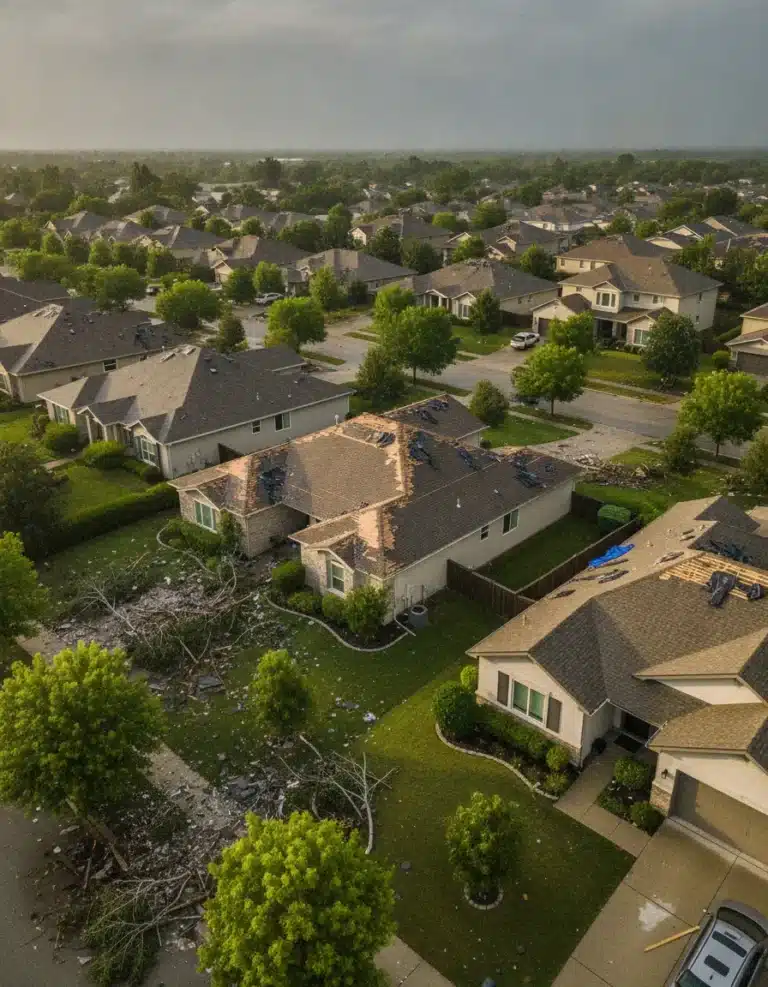
Roofing problems tend to create urgency. A leak after a storm or a missing shingle noticed during a walk around the yard doesn’t usually wait for careful research. Homeowners search, see three businesses in the map pack with ratings and a call button, and start dialing.
The Map Pack Decides Who Gets Called First
If a Powdersville roofing contractor isn’t in that top three for relevant searches, they’re relying on homeowners scrolling further down the results, which happens less often than most business owners assume. Winning that map pack spot is often the single highest-leverage move available to a roofing company with limited marketing time and budget.
Want more customers from Google & AI search?
Get a free SEO audit of your site — see exactly what to fix first.
Setting Up a Google Business Profile Built for Roofing Searches
The Google Business Profile is free, and it’s usually the fastest lever a roofing contractor has for improving visibility, but it needs ongoing attention rather than a one-time setup.
Categories and Services That Match Real Searches
Roofing contractor should be the primary category, with secondary categories added if the business also handles gutters, siding, or storm damage restoration. Listing individual services, roof repair, roof replacement, storm damage roofing, gutter installation, inside the profile helps Google match the listing to specific searches rather than a vague general match. The setup process is covered in more depth in the guidance around choosing the right Google Business Profile categories, since this is one of the more common mistakes contractors make when first claiming a profile.
Photos From Actual Powdersville Jobs
Real before-and-after photos from completed jobs build far more trust than stock roofing images. A homeowner deciding who to call wants to see evidence of real, local work, not a generic photo that could belong to any roofing company anywhere.
Reviews and Why Recency Matters as Much as Volume
A roofing contractor with a large stack of reviews from several years ago looks less active to both Google and homeowners than a competitor with fewer reviews, most of them recent.
Building a Consistent Review Habit
Requesting a review shortly after the final walkthrough, while the new roof or repair is still fresh in the homeowner’s mind, works better than asking in person and hoping they remember later. A steady trickle of new reviews each month tends to outperform a large batch collected once a year. The ethical review generation strategies that help any business earn more five-star local reviews cover timing and wording that make this request feel natural rather than pushy.

Responding to Every Review
A thoughtful reply to a negative review often reassures future customers more than the complaint itself concerns them. It shows an actively managed business, not a listing that was set up once and forgotten.
Building Website Pages That Match Search Intent
A single “Roofing Services” page trying to cover repair, replacement, and storm damage all at once tends to underperform compared to dedicated pages built for each.
Separate Pages for Repair, Replacement, and Storm Damage
Someone searching “roof leak repair Powdersville” has different intent than someone searching “roof replacement cost Powdersville SC.” Building individual pages for each core service, written specifically for that job type, allows content to address the actual questions a homeowner has at that stage of the decision.
A Powdersville Page With Real Local Detail
If Powdersville is a core service area, the page representing it should reference real details: nearby neighborhoods, tree cover and weather patterns common to the area, the kind of homes typically found there. A page that reads the same as one built for any other Upstate town does little for local search relevance. This is the same idea behind hyperlocal keyword research that finds terms national brands miss, the specificity itself becomes the advantage.
Local Citations and Why Consistency Matters
Citations, listings of business name, address, and phone number across directories and industry sites, help Google confirm a business’s legitimacy and location.
Fixing Old Listings Before Building New Ones
Roofing companies that have changed addresses, phone numbers, or gone through a rebrand often have old citations still floating around with outdated information. Correcting these first, rather than only adding new listings, often produces a faster improvement in local rankings. The complete local citation building strategy covers both the cleanup process and where to build new citations once existing ones are accurate.
Content That Builds Trust Before the Call
Homeowners facing a significant roofing expense often research before they call: what affects the cost of a roof replacement, how long a repair typically takes, whether their homeowners insurance covers storm damage. Addressing these questions honestly on the website, without needing to publish exact pricing, builds trust and keeps a visitor on the site long enough to reach out.
Explaining Cost Drivers Without Publishing Firm Numbers
Explaining what affects roofing costs, material choice, roof pitch and size, extent of damage, permit requirements, helps homeowners understand pricing without the contractor needing to commit to numbers that vary by job.
Why Powdersville Sits in a Uniquely Competitive Spot
Powdersville sits close enough to both Greenville and Anderson that roofing companies based in either city often compete for jobs here too, which makes broad terms like “roofing company near me” genuinely difficult to win. The opportunity is in being specifically known as a Powdersville roofer.
Homeowners who search with the town name attached have usually already decided they want someone local rather than a larger company based twenty minutes away in either direction. Building strong visibility specifically around Powdersville, through a dedicated location page, accurate service area settings, and local citations, tends to outperform trying to compete broadly across the whole Upstate at once. A broader look at what roofing website design needs to include covers layout and trust elements that support this kind of local positioning.
Common Mistakes Keeping Powdersville Roofers Off the Map Pack
- A Google Business Profile with missing service categories or outdated hours.
- One catch-all services page instead of dedicated pages for repair, replacement, and storm damage.
- Inconsistent review requests, leading to a thin, outdated review profile.
- Citation information that doesn’t match across directories.
- Websites that aren’t easy to call from on a phone, losing urgent searchers who won’t hunt for a phone number.

Realistic Timelines for Roofing SEO in Powdersville
Cleaning up a Google Business Profile and fixing citation inconsistencies can show early movement within a few weeks. Meaningful ranking gains for competitive terms like “roofing company Powdersville SC” generally take three to six months of steady work: consistent reviews, dedicated service pages, and regular profile activity. Storm season often accelerates visibility gains since search volume spikes, making groundwork done beforehand pay off faster when it matters most. Tracking whether that groundwork is paying off is covered in measuring the key performance indicators of a roofing website, rather than just watching rankings shift without context.
Frequently Asked Questions
How long does it take for a Powdersville roofing company to start ranking in the map pack?
Basic profile and citation cleanup can show small improvements within a few weeks. Competitive map pack rankings usually take three to six months of consistent effort across reviews, website content, and profile activity.
Should a roofing website have separate pages for each service?

Yes. Repair, replacement, and storm damage each involve different homeowner questions and different levels of urgency, so dedicated pages tend to perform better than one combined services page.
How many reviews does a roofing contractor need to compete locally?
There’s no fixed number that guarantees success, but a steady stream of recent reviews tends to outperform a larger stack of old ones. Consistency over time matters more than hitting a specific total.
Is it worth targeting Powdersville specifically instead of the broader Upstate?
Yes, especially for a smaller company with limited marketing resources. Building strong visibility in one town first tends to produce better results than spreading thin trying to rank everywhere in the region at once.
What’s the fastest first step for a Powdersville roofing company just getting started?
Auditing the Google Business Profile for accurate categories, current hours, and real job photos. It costs nothing but time and often produces the quickest visible improvement in local visibility.
Keep Reading
Want more customers from Google & AI search?
Get a free SEO audit of your site — see exactly what to fix first.
Your path · Emergency Service Marketing for Home Service Contractors
Keep going: read these next
 You’re herePowdersville Roofing: The Local SEO Playbook for Contractors
- Up nextLocal Service Ads for Emergency Contractors: The Complete Setup and Optimization Guide
- Nextdoor Marketing for Emergency Contractors: How to Win Neighborhood Trust and Generate Local Leads
- Storm Damage Marketing Strategy for Contractors: How to Win Roofing, Restoration, and Repair Jobs After Every Storm



Want this done for you?
Scan your site. See the gaps. Decide with numbers.
- Rankings, Google Business Profile and site-speed teardown
- Report lands in your inbox in about a minute
- No obligation · 4.9 from 67 Google reviews
 Continue reading

