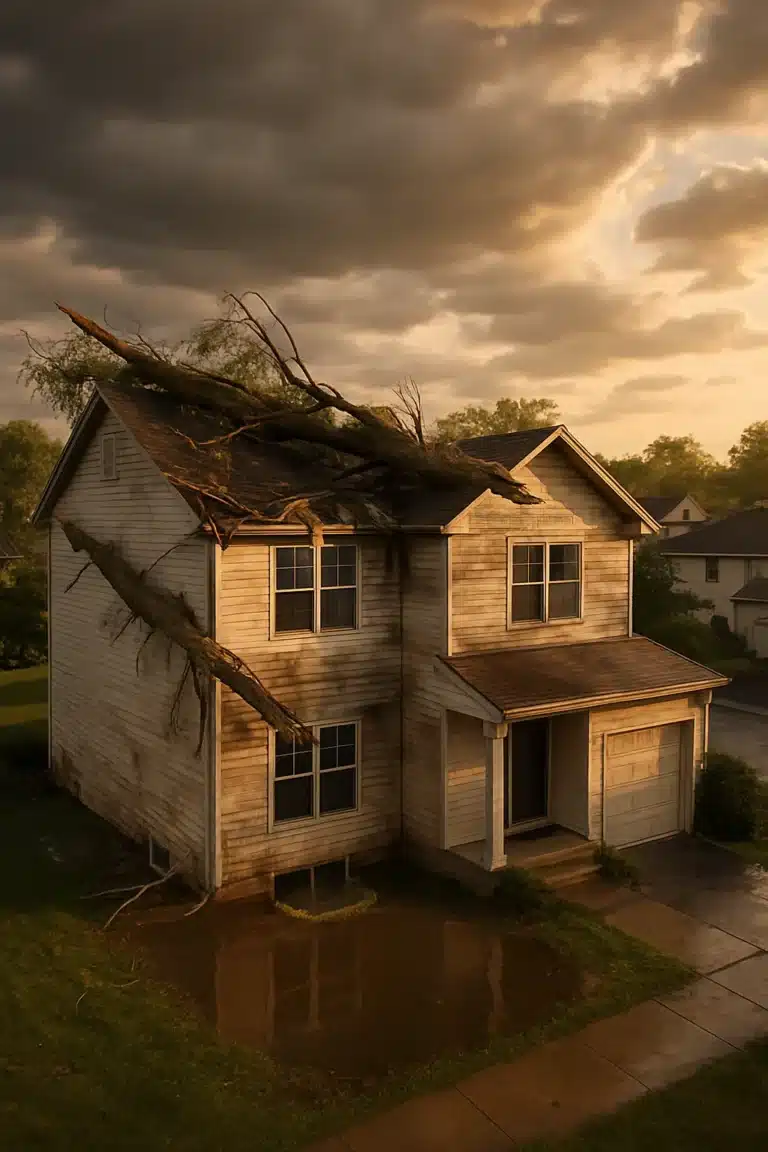
Short answer
Fire damage restoration costs range from $3,000 for minor smoke cleanup to over $100,000 for severe structural damage. The national average sits around $20,470, with most homeowners paying $4 to $7 per square foot. Severity, materials burned, suppression water, and response speed all drive the final number. Waiting more than 72 hours raises costs 20% to 40%.
By Jeremy Ashburn, founder of PushLeads, an Asheville, NC SEO and digital marketing agency for contractors and home-service businesses.
Watch the video version
Part of our Restoration SEO: The Complete Restoration Company SEO Guide. Want it done for you? See our restoration SEO and marketing agency.
0:00 Fire Restoration: Myths Homeowners Believe
0:33 The Real National Average
1:03 The Myth vs Reality of Fire Costs
1:38 Where Soot Actually Goes
2:08 Four Soot Types, Four Price Points
2:43 The 72-Hour Rule That Changes Everything
3:15 Restoration Cost by Severity Level
3:50 Per Square Foot: What You Actually Pay
4:28 Fire Damage Cost by Room
5:03 Six Phases That Build Your Bill
5:46 What Insurance Actually Covers
6:19 Commercial Fires: Bigger Bills, Hidden Costs
6:59 Three Policy Details That Change Your Payout
7:41 Four Steps to Estimate Before the Adjuster
8:24 See Exactly Where Your Restoration Company Stands
Full transcript
0:00 Fire Restoration: Myths Homeowners Believe
Most homeowners have no idea what a fire restoration bill actually looks like — until one lands on their kitchen table. In this video, we're going to break down the real numbers, expose the most dangerous myths about fire damage costs, and show you exactly what drives the final bill from three thousand dollars all the way past one hundred thousand. Whether you're a homeowner facing a claim or a restoration contractor trying to reach more customers, this is the data you need.
0:33 The Real National Average
The national average for fire damage restoration sits at twenty thousand four hundred seventy dollars. That number catches most homeowners completely off guard. Minor fires start at three thousand dollars. Severe fires with structural damage push past one hundred thousand. The range is wide because no two fires are the same — the materials burned, how fast crews respond, and how much suppression water soaked into your framing all change the final number dramatically.
1:03 The Myth vs Reality of Fire Costs
Here's the core myth: a small fire means a small bill. What actually happens is very different. Soot doesn't stay in the room where the fire started. It travels through HVAC ducts and open doorways, coating surfaces in rooms you never expected to clean. And the clock starts immediately — waiting even a few days raises costs by twenty to forty percent. Insurance doesn't just pay automatically either. Your deductible applies, and whether your policy pays actual cash value or replacement cost value changes your settlement significantly.
1:38 Where Soot Actually Goes
Think the damage stops at the burned wall? It doesn't. Smoke enters ductwork within minutes of a fire. Restoration technicians find soot on ceilings, inside closets, and on surfaces three rooms away from the char marks. Every affected surface needs individual treatment. That's why restoration pros tell homeowners to photograph every room — including rooms that look fine — before any cleanup begins. Adjusters need to see the full extent, not just the obvious damage.
2:08 Four Soot Types, Four Price Points
Not all soot is the same, and that matters a lot for cost. The IICRC identifies four main soot types, each with its own cleaning protocol and price point. Protein soot from kitchen fires is nearly invisible but discolors paint and varnish across every surface it contacts. Wet smoke from smoldering fires smears on contact, making it the most expensive to clean. Chemical soot from plastics and synthetics requires specialized equipment. Fuel oil soot from furnace malfunctions creates thick, sticky deposits that resist standard methods entirely.
2:43 The 72-Hour Rule That Changes Everything
Seventy-two hours. That's the window before soot begins permanently staining surfaces, according to IICRC guidelines. Smoke residue is acidic — it etches glass within days and pits metal surfaces within weeks. The IICRC confirms that waiting even a few days increases cleaning difficulty and total cost by twenty to forty percent compared to an immediate call. Speed is the single biggest factor a homeowner controls after a fire, and it directly affects how large your insurance claim needs to be.
3:15 Restoration Cost by Severity Level
Here's how the three severity levels break down. Minor fires — small kitchen incidents, contained appliance fires, single-outlet electrical fires — run three thousand to ten thousand dollars. Fires that spread beyond one room but stay in one section of the home land in the moderate range: ten thousand to thirty-five thousand dollars. Severe fires that compromise structural integrity or require partial demolition push past thirty-five thousand, with the NFPA reporting that fires spreading beyond the room of origin average three to five times the standard property loss figure.
3:50 Per Square Foot: What You Actually Pay
Most homeowners get one number from a contractor and don't know how to evaluate it. Understanding the per-square-foot layers helps. Smoke and soot cleaning alone runs four to seven dollars per square foot. If firefighters used water — and they almost always do — add three to seven fifty per square foot for extraction and structural drying. Full moderate restoration across all phases runs ten to twenty-five dollars per square foot. A fifteen-hundred-square-foot home with forty percent moderate damage hits six thousand to fifteen thousand dollars for cleaning and drying alone, before any reconstruction.
4:28 Fire Damage Cost by Room
Where the fire started shapes your entire estimate. Kitchen fires are the most common, but they're often the cheapest to restore when caught fast — protein soot and cabinet replacement are the main cost drivers. Attic fires are the most expensive. Fire burns upward and damages roof decking directly, then suppression water cascades downward through every floor below. Basement fires trap soot in enclosed spaces with limited ventilation, making odor removal especially difficult and expensive. Every room in the table here has its own cost logic.
5:03 Six Phases That Build Your Bill
Fire restoration happens in six distinct phases, and each one adds to the final number. Emergency board-up and securing runs five hundred to twenty-five hundred dollars and happens the moment firefighters leave. Water extraction and structural drying adds three to seven fifty per square foot — industrial dehumidifiers run for three to five days on average. Soot cleaning runs four hundred to seventeen hundred per room. Odor removal takes multiple treatments at two hundred to one thousand dollars each. Content restoration runs one thousand to ten thousand or more. And structural repairs — drywall, framing, electrical, flooring — are often the largest single line item on the entire estimate.
5:46 What Insurance Actually Covers
Here's what most homeowners miss about their insurance policy. Standard HO-three policies do cover fire restoration — soot removal, smoke cleanup, cabinet replacement, structural repairs. But the detail that actually changes your settlement is whether your policy pays actual cash value or replacement cost value. Actual cash value deducts depreciation from older materials. Replacement cost value pays what it costs to replace them today. On a kitchen with ten-year-old cabinets, that difference can be several thousand dollars on a single line item.
6:19 Commercial Fires: Bigger Bills, Hidden Costs
Commercial fire restoration operates at a completely different scale. A small retail or office fire affecting one thousand to three thousand square feet typically runs fifteen thousand to seventy-five thousand dollars — and that's before business interruption losses. Code upgrades triggered by the permit process can add five thousand to thirty thousand dollars on top of direct restoration costs. Lost revenue during closure is a real cost too. A restaurant closed for sixty days loses real income that a standard commercial property policy may not fully replace, depending on the waiting period written into the business interruption clause.
6:59 Three Policy Details That Change Your Payout
Three policy details have the biggest impact on your final payout. First, your deductible — most fire claims involve deductibles between one thousand and five thousand dollars, which comes straight off the top before insurance pays anything. Second, actual cash value versus replacement cost value coverage, which we covered a moment ago — that single detail can shift your settlement by thousands. Third, additional living expense coverage, sometimes called loss of use — this pays for your hotel and meals while your home is uninhabitable, but it has its own sub-limit and time cap buried in the policy. Know all three before your adjuster arrives.
7:41 Four Steps to Estimate Before the Adjuster
You don't need to wait for an adjuster to understand your exposure. Restoration pros use a four-step field method. First, measure every affected square foot — include rooms with soot smell or water staining, not just char damage. Second, multiply by four to seven dollars for cleaning, then add three to seven fifty if water was used. Third, layer in room-specific reconstruction costs from the cost table. Fourth, add one thousand to ten thousand for content pack-out depending on how much furniture and personal property was affected. If the adjuster comes in significantly lower than your calculation, that's your signal to push back or bring in a public adjuster.
8:24 See Exactly Where Your Restoration Company Stands
You now have the real two thousand twenty-six cost numbers for every phase of fire damage restoration. For homeowners, this means you can walk into your adjuster meeting informed and ready to document your full claim. For restoration contractors, the homeowners searching these exact numbers are your best leads — and they're searching right now, right after a fire hits. PushLeads works with restoration companies to build the search visibility that captures those searches at exactly the right moment. See where your visibility stands today with a free teardown. Find the link in the description, or call eight two eight, three four eight, seven six eight six.
At a glance
| Room | Typical Cost Range | Key Cost Driver |
|---|---|---|
| Kitchen | $3,000 to $25,000 | Protein soot, cabinet replacement |
| Garage | $5,000 to $35,000 | Chemical soot, vehicle damage |
| Basement | $8,000 to $40,000 | Enclosed soot, structural exposure |
| Attic | $10,000 to $50,000 | Roof damage, cascading water |
| Bathroom | $2,000 to $10,000 | Tile, cabinetry, ventilation |
Fire damage restoration costs range from $3,000 for minor smoke cleanup to over $50,000 for severe structural damage. The national average sits around $20,470, with most homeowners paying $4 to $7 per square foot. Severity, materials burned, suppression water, and response speed all drive the final number.
What does fire damage repair cost?
Fire damage repair costs are driven by severity, location inside the home, and how quickly work begins. Soot that is not removed promptly stains permanently, which converts a cleaning cost into a replacement cost. Acting within the first 24 to 48 hours is the single most controllable factor in keeping repair costs lower.
What does it cost to repair a fire damaged house?
The cost to repair a fire damaged house ranges from minor repairs in the low thousands to full structural rebuilds that take three to six months to complete. Severe structural damage is the costliest category. Insurance documentation, contractor estimates, and adjuster coordination all affect the final out-of-pocket figure for the homeowner.
How much does fire damage cleanup cost?
Fire damage cleanup cost is shaped by how much soot, char, and smoke residue must be removed before any structural repairs begin. Soot that is not addressed immediately stains permanently, converting cleanable surfaces into surfaces that require full replacement. Early action on cleanup is the most direct way to limit total restoration spending.
How do I estimate fire damage costs before the adjuster arrives?
Document every affected room with photos before anything is moved or cleaned. Gather your insurance policy and any receipts or records for damaged items. Note which rooms show smoke odor even without visible char, because smoke spreads beyond the fire origin and creates separate remediation costs the adjuster must account for in the estimate.
How much does fire damage repair cost for a house?
House fire repair costs swing widely based on severity and materials affected. Kitchen fires alone average 40% higher material costs than comparable fires in other rooms. Cabinet work alone ranges from $3,000 to $8,000 for refinishing up to $40,000 or more for full replacement, a gap of roughly five times.
What does fire damage restoration cost per square foot?
Per-square-foot costs rise sharply when structural repairs, ductwork cleaning, and cabinet replacement are combined. Kitchen grease fires drive the highest per-square-foot figures because smoke travels through exhaust ducts and wall cavities. Grease buildup exceeding two millimeters in exhaust ducts creates a secondary fire hazard requiring professional ductwork remediation.
What are fire damage restoration estimates based on?
Estimates are based on residue type, materials affected, and how far smoke traveled. Solid wood cabinets may be refinished for $3,000 to $8,000, while particle board and MDF almost always require full replacement. Thermofoil cabinets have no salvage path. Thorough photo documentation and substrate testing protect against insurance underpayment.
What is the cost of fire damage to a business?
Commercial fire damage costs follow the same material and contamination logic as residential fires but at larger scale. Grease-laden smoke travels through ductwork and behind surfaces far beyond the visible burn zone. A full kitchen fire restoration typically runs three to eight weeks from emergency stabilization through final insurance documentation and sign-off.
How much does fire damage repair cost?
Fire damage repair costs range from $3,000 for a contained appliance or single-outlet electrical fire up to $100,000 or more when structural integrity is compromised. The national average lands at $20,470. Waiting even a few days before calling a restoration crew raises total costs by 20 to 40 percent.
How much does it cost to repair a fire damaged house?
Repairing a fire damaged house costs $3,000 to $100,000-plus depending on severity. Total losses run three to five times the standard property loss figure. On a per-square-foot basis, full moderate restoration across all phases runs $10 to $25, before room-specific reconstruction costs are added to the estimate.
How much does smoke damage restoration cost?
Smoke and soot cleaning alone runs $4 to $7 per square foot. Soot cleaning per room costs $400 to $1,700, and odor removal takes multiple treatments at $200 to $1,000 each. Wet smoke from smoldering fires is the most expensive type to clean because it smears on contact and resists standard methods.
How much does fire cleanup cost?
Fire cleanup costs $3,000 to $100,000-plus depending on severity. Emergency board-up runs $500 to $2,500. Water extraction adds $3 to $7.50 per square foot. Soot cleaning runs $400 to $1,700 per room, and content restoration adds $1,000 to $10,000 or more. Structural repairs are typically the largest single line item on the estimate.
What is fire restoration cost per square foot?
Smoke and soot cleaning runs $4 to $7 per square foot. If firefighters used water, add $3 to $7.50 per square foot for extraction and structural drying. Full moderate restoration across all phases costs $10 to $25 per square foot. A 1,500-square-foot home with 40 percent moderate damage hits $6,000 to $15,000 for cleaning and drying alone.
What are the average costs associated with hiring a restoration service for a house fire?
Restoration services for a house fire average $20,470 nationally. Costs break down across six phases: board-up ($500–$2,500), water extraction ($3–$7.50 per sq ft), soot cleaning ($400–$1,700 per room), odor removal ($200–$1,000 per treatment), content restoration ($1,000–$10,000-plus), and structural repairs, which are often the largest single line item on the entire estimate.
How much does it cost to repair fire damage to a business?
A small retail or office fire affecting 1,000 to 3,000 square feet typically costs $15,000 to $75,000 before business interruption losses. Code upgrades triggered by the permit process can add $5,000 to $30,000 on top of direct restoration costs. Lost revenue during closure may not be fully covered depending on the business interruption clause waiting period.

Which Trusted Homeowners Policies Pay for Smoke Cleanup and Cabinet Replacement After a Small Kitchen Fire?
Most standard homeowners insurance policies cover smoke cleanup and cabinet replacement after a small kitchen fire. Fire damage coverage is a core benefit in virtually every HO-3 policy, and it extends to smoke remediation, soot removal, and replacement of damaged materials including kitchen cabinets.
Coverage kicks in after you meet your deductible. A typical HO-3 deductible runs $500 to $2,500. Your insurer will assign an adjuster to inspect the damage and produce a scope of loss. That document drives the settlement amount. If the adjuster's estimate feels low, you can hire a public adjuster to negotiate on your behalf.
Three policy details matter most for a small kitchen fire. First, check your dwelling coverage limit (Coverage A). Cabinet replacement counts as a structural element, so it draws from this bucket. Second, confirm whether your policy pays actual cash value or replacement cost value. Replacement cost value pays full replacement without depreciation deductions. Third, look at your Loss of Use limit (Coverage D). If smoke makes part of your home uninhabitable during restoration, this covers temporary housing and meals.
What if the smoke spread beyond the kitchen?
Smoke travels through HVAC ducts and open doorways fast. Even a small kitchen fire can push soot through an entire home. Document every affected room with photos before cleanup begins. Your adjuster needs to see the full extent of damage, not just the char marks on the cabinets. BrightLocal data shows homeowners who file detailed photo documentation receive higher initial settlements and fewer supplement disputes.
Do commercial policies work the same way for a small business?
No. Commercial property policies cover the building and contents, but business interruption coverage, which pays for lost revenue during restoration, is a separate line item. A small business fire in Charlotte typically costs $10,000 to $50,000 depending on severity, square footage, and suppression water. Water extraction, structural drying, soot removal, odor treatment, and equipment restoration all appear on the estimate. Business owners should also check whether their policy covers SBA loan assistance gaps if insurance falls short.
What Determines Fire Damage Restoration Costs
No two fire jobs look the same. The biggest cost drivers are the area affected, the materials that burned, suppression water, and how fast restoration starts.
Fires that burn synthetic materials like plastics, foam, and treated wood create chemical residues that need specialized cleaning. The Institute of Inspection, Cleaning and Restoration Certification (IICRC) identifies four main soot types, each with its own cleaning protocol and price point. Protein fires from kitchen incidents produce invisible residue that discolors paint and varnishes. Fuel oil soot from furnace malfunctions creates thick, sticky deposits that resist standard dry-cleaning methods. Wet smoke from smoldering fires smears on contact, making surface-by-surface cleaning slow and expensive.
Response speed affects the bill directly. Soot begins permanently staining surfaces within 72 hours. Waiting even a few days increases cleaning difficulty and cost by 20% to 40% compared to immediate response, according to the IICRC.
How does location inside the home change the cost?
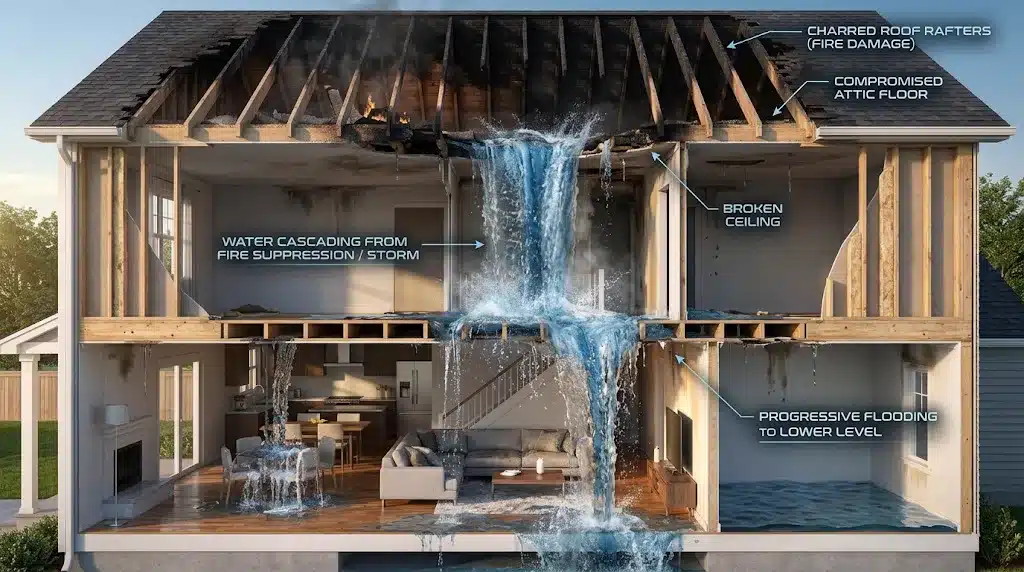
Fire burns upward. An attic fire damages roofing and lets suppression water cascade through every floor below. A basement fire traps heat and soot in an enclosed space with limited ventilation, making odor removal harder. A kitchen fire is usually caught fast but involves grease-based protein soot that smears during cleaning. Where the fire started shapes both the cleaning method and the total hours billed.
How do I estimate fire damage costs before getting a quote?
Start with square footage. Multiply your affected area by $4 to $7 for a rough restoration estimate, then add $3 to $7.50 per square foot if firefighters used water. Add room-specific costs from the table below. Most restoration companies offer free on-site assessments. Get at least two written estimates before signing a work authorization.
Fire Damage Restoration Cost by Severity

Minor fire damage: $3,000 to $10,000
Small kitchen fires, electrical outlet fires, and contained appliance fires fall here. The fire may stay on one wall or countertop, but smoke and soot travel through HVAC ducts and open doorways fast. Typical line items include soot removal ($400 to $1,700), smoke odor treatment ($200 to $1,000), and repainting affected rooms ($500 to $3,000). The Restoration Industry Association reports that minor fires make up roughly 60% of residential restoration jobs but only 15% of total industry revenue. That ratio shows how much more labor-intensive moderate and severe fires are per project.
Moderate fire damage: $10,000 to $35,000
Fires that spread beyond the room of origin but stay contained to one section of the home land here. Expect partial drywall replacement, structural drying from suppression water, flooring removal and replacement, and HVAC duct cleaning. The hidden cost at this level is almost always water. Fire departments use 500 to 2,000 gallons per minute during active suppression, per the National Fire Protection Association (NFPA). That water saturates framing, insulation, subfloors, and drywall. Professional extraction and structural drying adds $3 to $7.50 per square foot to the total.
Severe fire damage: $35,000 to $100,000+
Large fires that compromise structural integrity, destroy multiple rooms, or require partial demolition push costs above $35,000. At this level you're dealing with engineering assessments, permit requirements, debris removal, and full reconstruction beyond restoration. The NFPA puts average residential property loss per fire at $21,325 in 2023, with fires spreading beyond the room of origin averaging three to five times that amount. Rebuilding a house after a total loss can run $150 to $300 per square foot depending on your region and material choices.

Fire Restoration Cost Per Square Foot: What the Numbers Mean
The $4 to $7 per square foot figure covers cleaning, odor control, and light surface repairs for a home with light to moderate smoke exposure. It does not include structural reconstruction, content pack-out, or water damage drying. Here's how the per-square-foot rates stack up across service types:
You may also find this useful: Crawl space encapsulation cost.
- Smoke and soot cleaning only: $4 to $7 per square foot
- Water extraction and structural drying: $3 to $7.50 per square foot
- Drywall replacement: $2 to $5 per square foot (material and labor)
- Flooring replacement: $3 to $15 per square foot depending on material
- Full restoration (all phases): $10 to $25 per square foot for moderate damage
A 1,500-square-foot home with moderate fire damage affecting 40% of the floor plan would land at roughly $6,000 to $15,000 for cleaning and drying alone, before any reconstruction costs.
How does fire restoration cost per square foot compare to rebuild cost?
Restoration is almost always cheaper than full rebuild. A full rebuild runs $150 to $300 per square foot. Restoration of a moderately damaged home runs $10 to $25 per square foot for the affected area. Insurance carriers know this math. That's one reason adjusters push restoration over replacement when the structure is salvageable.
Cost Breakdown by Restoration Phase
Fire restoration happens in six distinct phases. Each has its own pricing structure. Knowing these phases helps you read estimates accurately and compare quotes line by line.
Emergency board-up and securing: $500 to $2,500. This is the first step after firefighters leave. Crews board windows, tarp damaged roofing, and secure the structure from weather and unauthorized entry. Insurance covers this under emergency mitigation in most policies.
Water extraction and structural drying: $3 to $7.50 per square foot. If firefighters used water (they almost always do), water damage restoration runs parallel to the fire work. Industrial dehumidifiers and air movers run for three to five days on average. Moisture meters confirm when structural materials reach safe dryness levels before restoration crews close walls.
Soot and smoke cleaning: $400 to $1,700 per room. Technicians use dry sponges, chemical cleaners, and HEPA vacuums to remove soot from surfaces. Wet smoke from smoldering fires is the most expensive to clean because it smears rather than wipes. Protein soot from cooking fires is nearly invisible but requires enzyme-based cleaners on every painted surface.
Odor removal: $200 to $1,000 per treatment. Professional fire odor removal uses ozone generators, hydroxyl generators, or thermal fogging to break down smoke molecules embedded in porous materials. Most projects need multiple treatments. Porous materials like drywall, carpet, and upholstered furniture hold odor longest and may need replacement if treatments fail.
Content cleaning and restoration: $1,000 to $10,000+. Furniture, clothing, electronics, and personal belongings can often be restored rather than replaced. Ultrasonic cleaning handles hard goods. Ozone chambers treat soft goods. Specialty techniques cover artwork and documents. Insurance carriers prefer restoration over replacement because it reduces claim costs. A restored item that costs $300 to clean beats a $1,200 replacement line item every time.
Structural repairs and reconstruction: $10,000 to $50,000+. Drywall replacement, framing repairs, electrical rewiring, plumbing repair, and finish work (painting, flooring, trim) make up the largest single cost category for moderate to severe fires. Permit fees add $500 to $3,000 depending on the scope and your municipality.

Smoke Damage Restoration Cost: What Changes When There's No Char
Smoke damage without visible fire char is common after small contained fires, neighboring-unit fires in multi-family buildings, and wildfire smoke intrusion. Smoke damage restoration costs less than full fire restoration but still runs $2,000 to $15,000 depending on the size of the affected area and the type of smoke involved.
The main cost drivers for smoke-only jobs are surface area, soot type, and HVAC contamination. A home where smoke circulated through the HVAC system for hours before the fire was discovered will cost significantly more to clean than one where the system was off. HVAC duct cleaning alone runs $300 to $1,000 for a standard residential system, per industry averages. Homes with extensive ductwork or high-velocity systems cost more.
How much does it cost to clean up smoke damage in a single room?
Smoke cleanup for a single room runs $400 to $1,700 for soot removal plus $200 to $500 for odor treatment. Add repainting at $500 to $1,500 per room and you're typically at $1,100 to $3,700 per room for a complete smoke cleanup. Rooms with more porous surfaces (carpet, wood paneling, fabric window treatments) cost more because each surface needs individual treatment.
Does smoke damage get worse if you wait?
Yes. Smoke residue is acidic. It etches glass within days, pits metal surfaces within weeks, and permanently yellows painted walls over time. The IICRC notes that smoke odor compounds also bond more deeply to porous materials the longer they sit. Early response keeps smoke damage in the cleanable range. Delayed response often pushes items into the replacement category, raising the total claim cost.
Fire Damage Costs by Room
Where the fire started significantly affects the total cost because of the materials involved and access difficulty.
| Room | Typical Cost Range | Common Causes | Key Cost Driver |
|---|---|---|---|
| Kitchen | $3,000 to $25,000 | Cooking accidents, grease fires | Protein soot, cabinet replacement |
| Garage | $5,000 to $35,000 | Flammable liquids, electrical | Chemical soot, vehicle damage |
| Basement | $8,000 to $40,000 | Furnace, electrical, dryer | Enclosed soot, structural exposure |
| Bedroom | $5,000 to $20,000 | Electrical, candles, smoking | Contents loss, flooring |
| Attic | $10,000 to $50,000 | Electrical, lightning | Roof damage, cascading water |
| Bathroom | $2,000 to $10,000 | Electrical, candles | Tile, cabinetry, ventilation |
| Living Room | $5,000 to $30,000 | Electrical, fireplace, candles | Furniture contents, flooring |
Kitchen fires are the most common but often the cheapest to restore because they're typically caught fast. Attic fires are the most expensive because fire burns upward, heat damages roofing, and suppression water cascades down through every floor. For homes with chimneys, proper chimney maintenance reduces the risk of attic-level fire damage significantly.
Fire Damage Restoration Cost for Businesses
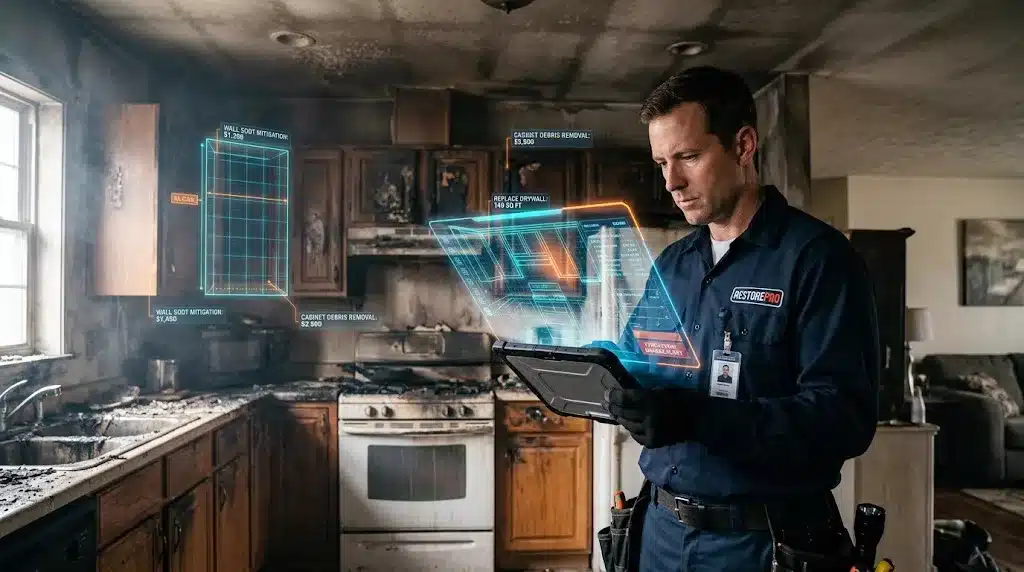
Commercial fire restoration costs more than residential work at every severity level. Larger square footage, more complex electrical and mechanical systems, code upgrade requirements, and business interruption losses all push the total higher.
A small retail or office fire affecting 1,000 to 3,000 square feet typically runs $15,000 to $75,000 for restoration, not counting business interruption losses. A mid-size commercial building fire can easily exceed $200,000. The NFPA reports that commercial fires cause roughly $3.3 billion in direct property damage annually in the U.S.
Three cost factors are unique to commercial restoration. First, code upgrades. When restoration triggers a building permit, local codes may require bringing the entire affected area up to current electrical, sprinkler, or accessibility standards. That can add $5,000 to $30,000 to a project. Second, equipment and inventory losses. Standard commercial property policies cover business personal property, but policy limits vary widely. Third, business interruption. Lost revenue during closure is a real cost. A restaurant closed for 60 days loses real income that insurance may or may not replace depending on the business interruption waiting period in the policy.
How do I get an accurate estimate for a commercial fire?
Hire a restoration company with commercial experience. Residential crews don't always know commercial electrical codes, ADA compliance requirements, or how to coordinate with commercial building inspectors. Get a written scope of work before signing any work authorization. Ask specifically whether the estimate includes code upgrades, permit fees, and equipment restoration or replacement.
How to Estimate Fire Damage Costs Before the Adjuster Arrives
You don't need to wait for an adjuster to get a rough handle on your costs. Here's a working method restoration pros use in the field.
Step one: measure the affected area in square feet. Include every room with visible soot, smoke smell, or water staining from suppression, not just the room of origin. Step two: multiply by $4 to $7 for cleaning. Add $3 to $7.50 if water was used. Step three: add room-specific reconstruction estimates from the table above. Step four: add content pack-out and cleaning at $1,000 to $10,000 depending on how much furniture and personal property was affected.
This gives you a working range before you sit down with your adjuster. If the adjuster's estimate comes in significantly lower than your calculation, that's a signal to push back or hire a public adjuster.
What documents should I gather before the adjuster's visit?
Photograph every affected surface before any cleaning starts. Make a written inventory of damaged contents with approximate values. Pull receipts or credit card statements for major items if you have them. Note the time and date the fire started and when suppression ended. Search Engine Land has noted that homeowners who document early get faster claim resolutions. The more evidence you present, the less room for dispute.
Quick Recap: Fire Damage Restoration Cost in 2026
- Fire restoration costs range from $3,000 for minor damage to $100,000+ for severe structural loss
- National average is around $20,470 per project
- Most homeowners pay $4 to $7 per square foot for cleaning and light repairs
- Water damage from suppression adds $3 to $7.50 per square foot
- Response speed matters: waiting more than 72 hours raises costs 20% to 40%
- Six phases drive the bill: board-up, water extraction, soot cleaning, odor removal, content restoration, structural repairs
- Room location shapes cost: attic fires cost the most, bathroom fires the least
- Commercial fires add code upgrades and business interruption losses on top of restoration
- Standard homeowners insurance (HO-3) covers most fire and smoke damage after your deductible
Frequently Asked Questions
How much does fire damage restoration cost?
Fire damage restoration costs $3,000 to $100,000+ depending on severity. Minor fires average $3,000 to $10,000. Moderate fires run $10,000 to $35,000. Severe fires with structural damage exceed $35,000. The national average is $20,470. Most homeowners pay $4 to $7 per square foot for cleaning and surface repairs, with water damage from suppression adding another $3 to $7.50 per square foot on top of that.
Does homeowners insurance cover fire damage restoration?
Yes. Standard HO-3 homeowners policies cover fire damage restoration including soot removal, smoke cleanup, cabinet replacement, and structural repairs. Coverage draws from your dwelling limit (Coverage A) for structural items and personal property limit (Coverage C) for contents. Your deductible applies before insurance pays. Contact your agent to confirm replacement cost value versus actual cash value coverage, since that difference affects your settlement significantly.
See also our guide on Lead Paint Removal Cost.
What's the most expensive part of fire restoration?
Structural repairs and reconstruction typically cost the most, running $10,000 to $50,000+. This includes drywall replacement, framing repairs, electrical rewiring, flooring, and finish work. Water damage from fire suppression is the second largest hidden cost, adding $3 to $7.50 per square foot to the total. Together, these two categories account for 60% to 75% of most moderate and severe fire restoration bills.
How quickly does soot stain permanently?
Soot begins permanently staining surfaces within 72 hours, per IICRC guidelines. Smoke residue is acidic and etches glass within days and pits metal within weeks. Waiting more than a few days increases cleaning difficulty and cost by 20% to 40% compared to immediate response. Fast response is the single biggest factor a homeowner controls after a fire, and it directly affects what your insurance claim needs to cover.
Why is attic fire damage more expensive than kitchen fires?
Attic fires are expensive for three reasons. Fire burns upward and damages roof decking, rafters, and roofing materials directly. Structural framing becomes exposed to weather until repairs close the roof. And firefighter suppression water flows downward through every floor, creating cascading water damage throughout the entire home. A kitchen fire caught in two minutes stays local. An attic fire that burns for 20 minutes before discovery can damage three floors simultaneously.
How much does smoke damage cleanup cost without visible fire damage?
Smoke-only cleanup runs $2,000 to $15,000 depending on affected area and soot type. A single room costs $1,100 to $3,700 including soot removal, odor treatment, and repainting. Whole-home smoke exposure from a neighboring fire or wildfire smoke intrusion runs higher because every surface needs treatment. HVAC duct cleaning adds $300 to $1,000 for a standard residential system. Standard homeowners policies typically cover smoke damage even without direct fire contact.
Can furniture and belongings be restored after a fire?
Yes, many items can be restored rather than replaced. Ultrasonic cleaning handles hard goods like lamps, electronics housings, and small appliances. Ozone chambers treat soft goods like clothing and upholstery. Specialty restoration covers artwork and documents. Insurance carriers prefer restoration over replacement because it reduces claim costs. A $300 cleaning job beats a $1,200 replacement line item. Pack-out and content restoration typically runs $1,000 to $10,000 depending on volume and item complexity.
What is the average cost of fire damage repair per square foot for businesses?
Commercial fire damage repair runs $15 to $40 per square foot for moderate damage, higher than residential because of code upgrade requirements, complex electrical and mechanical systems, and commercial-grade finish materials. A 2,000-square-foot commercial space with moderate damage runs $30,000 to $80,000 before business interruption losses. Permit fees and mandated code upgrades triggered by the restoration work can add $5,000 to $30,000 on top of direct restoration costs.
See Exactly Where Your Restoration Company's Visibility Stands
You now have real 2026 cost numbers for every phase of fire damage restoration. Whether you're a homeowner estimating your claim or a restoration contractor trying to reach more customers, accurate information wins. PushLeads works with restoration companies to build search visibility that matches the way real customers search after a fire. PushLeads tracks keyword rankings, local map pack positions, and lead volume so you see exactly what's working.
See exactly where your visibility stands with a free teardown at seo.pushleads.com/audit or call 828-348-7686.
Watch: Fire Damage Restoration Cost in 2026: Real Numbers by Severity
What this video covers
- 0:00 — Fire Damage Restoration Cost Overview
- 0:51 — National Average and Cost Range
- 1:18 — Biggest Myths About Fire Damage Bills
- 2:24 — Soot Types and Why They Drive Cost
- 3:00 — The 72-Hour Window That Changes Everything
- 3:32 — Cost by Severity Level Minor to Severe
- 4:06 — Per Square Foot Cost Breakdown
- 4:43 — Where the Fire Started Shapes the Estimate
- 5:13 — Six Restoration Phases and Their Costs
- 5:56 — What Insurance Actually Covers
- 7:08 — Three Policy Details That Change Your Payout
- 7:51 — How to Estimate Your Own Exposure
Full video transcript
Most homeowners have no idea what a fire restoration bill actually looks like until one lands on their kitchen table. In this video we're going to break down the real numbers, expose the most dangerous myths about fire damage costs, and show you exactly what drives the final bill from $3,000 all the way past $100,000. Whether you're a homeowner facing a claim or a restoration contractor trying to reach more customers, this is the data you need.
So you know who's talking — I'm Jeremy, founder of PushLeads. I spend my weeks in the trenches with homeowners facing fire damage and the contractors who serve them. My first sites hit Google's first page back in 2007, and I never stopped. Today we're covering what fire damage restoration costs by severity, what drives the number, and what insurance typically covers.
The national average for fire damage restoration sits at $20,470. That number catches most homeowners completely off guard. Minor fires start at $3,000. Severe fires with structural damage push past $100,000. The range is wide because no two fires are the same. The materials burned, how fast crews respond, and how much suppression water soaked into your framing all change the final number dramatically.
Here's the core myth: a small fire means a small bill. What actually happens is very different. Soot doesn't stay in the room where the fire started. It travels through HVAC ducts and open doorways, coating surfaces in rooms you never expected to clean. And the clock starts immediately. Waiting even a few days raises costs by 20 to 40 percent. Insurance doesn't just pay automatically either. Your deductible applies, and whether your policy pays actual cash value or replacement cost value changes your settlement significantly.
Think the damage stops at the burned wall? It doesn't. Smoke enters ductwork within minutes of a fire. Restoration technicians find soot on ceilings, inside closets, and on surfaces three rooms away from the char marks. Every affected surface needs individual treatment. That's why restoration pros tell homeowners to photograph every room — including rooms that look fine — before any cleanup begins. Adjusters need to see the full extent, not just the obvious damage.
Not all soot is the same, and that matters a lot for cost. The IICRC identifies four main soot types, each with its own cleaning protocol and price point. Protein soot from kitchen fires is nearly invisible but discolors paint and varnish across every surface it contacts. Wet smoke from smoldering fires smears on contact, making it the most expensive to clean. Chemical soot from plastics and synthetics requires specialized equipment. Fuel oil soot from furnace malfunctions creates thick, sticky deposits that resist standard methods entirely.
72 hours. That's the window before soot begins permanently staining surfaces. According to IICRC guidelines, smoke residue is acidic. It etches glass within days and pits metal surfaces within weeks. The IICRC confirms that waiting even a few days increases cleaning difficulty and total cost by 20 to 40 percent compared to an immediate call. Speed is the single biggest factor a homeowner controls after a fire, and it directly affects how large your insurance claim needs to be.
Here's how the three severity levels break down. Minor fires — small kitchen incidents, contained appliance fires, single-outlet electrical fires — run $3,000 to $10,000. Fires that spread beyond one room but stay in one section of the home land in the moderate range of $10,000 to $35,000. Severe fires that compromise structural integrity or require partial demolition push past $35,000, with total losses running three to five times the standard property loss figure.
Most homeowners get one number from a contractor and don't know how to evaluate it. Understanding the per square foot layers helps. Smoke and soot cleaning alone runs $4 to $7 per square foot. If firefighters used water — and they almost always do — add $3 to $7.50 per square foot for extraction and structural drying. Full moderate restoration across all phases runs $10 to $25 per square foot. A 1,500 square foot home with 40 percent moderate damage hits $6,000 to $15,000 for cleaning and drying alone, before any reconstruction.
Where the fire started shapes your entire estimate. Kitchen fires are the most common, but they're often the cheapest to restore when caught fast. Protein soot and cabinet replacement are the main cost drivers. Attic fires are the most expensive. Fire burns upward and damages roof decking directly, then suppression water cascades downward through every floor below. Basement fires trap soot in enclosed spaces with limited ventilation, making odor removal especially difficult and expensive. Every location has its own cost logic.
Fire restoration happens in six distinct phases, and each one adds to the final number. Emergency board-up and securing runs $500 to $2,500 and happens the moment firefighters leave. Water extraction and structural drying adds $3 to $7.50 per square foot — industrial dehumidifiers run for three to five days on average. Soot cleaning runs $400 to $1,700 per room. Odor removal takes multiple treatments at $200 to $1,000 each. Content restoration runs $1,000 to $10,000 or more. And structural repairs — drywall, framing, electrical, flooring — are often the largest single line item on the entire estimate.
Here's what most homeowners miss about their insurance policy. Standard HO-3 policies do cover fire restoration: soot removal, smoke cleanup, cabinet replacement, structural repairs. But the detail that actually changes your settlement is whether your policy pays actual cash value or replacement cost value. Actual cash value deducts depreciation from older materials. Replacement cost value pays what it costs to replace them today. On a kitchen with ten-year-old cabinets, that difference can be several thousand dollars on a single line item.
Commercial fire restoration operates at a completely different scale. A small retail or office fire affecting 1,000 to 3,000 square feet typically runs $15,000 to $75,000 — and that's before business interruption losses. Code upgrades triggered by the permit process can add $5,000 to $30,000 on top of direct restoration costs. Lost revenue during closure is a real cost too. A restaurant closed for 60 days loses real income that a standard commercial property policy may not fully replace, depending on the waiting period written into the business interruption clause.
Three policy details have the biggest impact on your final payout. First, your deductible. Most fire claims involve deductibles between $1,000 and $5,000, which come straight off the top before insurance pays anything. Second, actual cash value versus replacement cost value coverage — that single detail can shift your settlement by thousands. Third, additional living expense coverage, sometimes called loss of use. This pays for your hotel and meals while your home is uninhabitable, but it has its own sub-limit and time cap buried in the policy. Know all three before your adjuster arrives.
You don't need to wait for an adjuster to understand your exposure. Restoration pros use a four-step field method. First, measure every affected square foot — include rooms with soot smell or water staining, not just char damage. Second, multiply by $4 to $7 for cleaning, then add $3 to $7.50 if water was used. Third, layer in room-specific reconstruction costs from the cost table. Fourth, add $1,000 to $10,000 for content pack-out depending on how much furniture and personal property was affected. If the adjuster comes in significantly lower than your calculation, that's your signal to push back or bring in a public adjuster.
You now have the real 2026 cost numbers for every phase of fire damage restoration. For homeowners, this means you can walk into your adjuster meeting informed and ready to document your full claim. For restoration contractors, the homeowners searching these exact numbers are your best leads — and they're searching right now, right after a fire hits. PushLeads works with restoration companies to build the search visibility that captures those searches at exactly the right moment. See where your visibility stands today with a free teardown. Find the link in the description or call 828-348-7686.
Watch: How Fire Damage Restoration Companies Rank for Grease Fire Leads
What this video covers
- 0:00 — Grease Fire Market Size and Opportunity
- 0:51 — Why Homeowners Call Restoration Professionals
- 1:43 — Cabinet Materials Drive Restoration Costs
- 2:43 — Hidden Damage Insurance Documentation
- 3:14 — Invisible Spread Ducts Walls Drywall
- 3:53 — Typical Project Timeline Week by Week
- 4:40 — Four SEO Signals That Win Emergency Searches
- 5:29 — Where Emergency Clicks Actually Land
- 5:59 — GBP Citations and City Pages Are Not Optional
Full video transcript
170,000 grease fires happen in American homes every year, and most of those homeowners are searching for help within minutes. The restoration company that ranks for those midnight searches wins the job.
This video breaks down why grease fire restoration is one of the most complex and highest-value categories in the industry, and exactly what it takes to own those emergency search results.
Related: Water damage inspection cost.
I'm Jeremy with PushLeads. I help fire restoration company owners who are seeking more leads get more leads without struggle or frustration. I spent nine years selling outcomes to business owners before I ever sold marketing, so I think in jobs booked, not impressions. What you're getting here is the exact SEO moves that get restoration companies into Google's grease fire emergency searches.
Here is the market at a glance. The National Fire Protection Association reported 170,200 home cooking fires caused by grease in 2024. Cooking fires account for 49% of all reported home fires according to the Insurance Information Institute, and the average kitchen fire insurance claim exceeds $50,000 when cabinet replacement and appliance costs are factored in. That is a massive, recurring market, and SEO determines which restoration company captures it.
So why do homeowners call professionals instead of cleaning up themselves? Three reasons.
First, protein-based smoke residue — the kind grease fires produce — bonds chemically into surfaces. The IICRC S520 standard identifies it as the hardest residue type to remove. Scrubbing doesn't fix it.
Second, the damage spreads invisibly. Grease-laden smoke travels through ductwork, behind outlets, and into wall cavities far beyond the kitchen.
Third, time destroys salvageability. Within 72 hours, residue begins etching stainless steel. Every day a homeowner waits, the job gets harder and more expensive.
Cabinets are where restoration costs swing most dramatically, and the material type tells the whole story. Solid wood cabinets with surface-only contamination can often be professionally cleaned and refinished. Particle board and MDF absorb grease deeply and almost always require full replacement. Thermofoil melts under heat exposure — there is no salvage path. C&R Magazine's 2024 reporting found that kitchen fire projects average 40% higher material costs than comparable fires in other rooms. The cabinet decision drives that number.
That cabinet decision creates a cost swing that directly shapes insurance claims. Refinishing salvageable cabinets runs $3,000 to $8,000. Full replacement can reach $15,000 to $40,000 or more depending on kitchen size and material quality — a gap of roughly five times. Restoration professionals who document this decision clearly, with photos, substrate testing, and thorough reporting, protect against insurance underpayment and build the trust that drives referrals.
The damage homeowners can't see is where grease fire restoration earns its complexity. The range hood and exhaust ductwork become a contamination highway. The National Air Duct Cleaners Association reported in 2024 that grease buildup exceeding two millimeters in exhaust ducts creates a secondary fire hazard. Walls and ceilings above the fire sustain chemical decomposition of the drywall gypsum — USG Corporation's 2023 guidance recommends replacement, not repainting. And if an ABC dry chemical extinguisher was used, that corrosive powder must be removed within 72 hours to prevent permanent damage to stainless steel surfaces.
A typical kitchen grease fire restoration runs three to eight weeks from emergency response to final sign-off. Week one covers emergency stabilization, board-up, assessment, and demolition of materials that cannot be saved. Weeks two and three focus on professional degreasing, smoke residue removal, ductwork cleaning, and deodorization. Weeks three through five bring structural repairs, electrical and plumbing work, and cabinet installation. The final stretch covers finish work, painting, appliances, and insurance documentation.
One important note for restoration marketers: kitchen fire claims peak during Thanksgiving and the December holiday cooking season. Plan your SEO pushes accordingly.
Now for the SEO strategy that connects all of this to actual calls. Four signals determine whether a restoration company wins emergency searches.
Local pack visibility is the biggest lever. 98% of consumers used the internet to find local businesses last year per BrightLocal 2024, and emergency searches skew heavily toward map results. Page speed is non-negotiable — a homeowner at midnight on a slow site will call whoever loads first. Schema markup for emergency service and local business types gives search engines the structured data they need to surface rich results. And topical content — pages that answer real questions about insurance coverage, cleanup timelines, and odor removal — builds the authority that sustains rankings across the full keyword cluster.
Where do those emergency clicks actually land? Roughly 48% go to the local pack, the map results at the top of the page. 32% go to organic page-one results. Paid ads capture about 14%. Page two and beyond get just 6%. That distribution means a restoration company without strong local pack presence and page-one organic rankings is invisible to roughly 80% of emergency searchers.
Your Google Business Profile optimization, local citations, and city-level service pages are not optional extras. They are the primary competition.
Every week your restoration company's site underperforms on emergency keywords is revenue left on the table. Homeowners searching "kitchen fire cleanup" or "grease fire repair" at midnight need to find you, not a competitor.
PushLeads audits restoration company websites specifically for local pack gaps, Core Web Vitals failures, missing schema markup, and content authority gaps across the full fire damage keyword cluster. See exactly where your visibility stands with a free teardown. Find the link in the description or call 828-348-7686.
Watch: What to Tell Your Kids After a House Fire (Scripts That Help)
What this video covers
- 0:00 — Why Routine Is the First Priority
- 0:42 — The Single Most Important Step After Fire
- 1:14 — Three Principles Every Family Needs
- 1:48 — Age-by-Age Scripts for Children
- 2:38 — What to Say in the First 48 Hours
- 3:17 — Explaining the Restoration Timeline to Kids
- 3:53 — When to Seek Professional Help
- 4:36 — Preparing Children to Return Home
- 5:16 — Turning Fear Into Competence
Full video transcript
A house fire takes hours to destroy everything familiar in a child's world — their bedroom, their toys, their sense of safety. While parents deal with insurance and contractors, children need something different. This guide gives you the answer most parents search for first, then walks you through everything that follows.
Stepping back for a second, I'm Jeremy. PushLeads is my agency, and parents displaced by residential fire damage are the people I answer to. I spent nine years selling outcomes to business owners before I ever sold marketing, so I think in jobs booked, not impressions. Let's get into the exact words to say so your kids feel safe while your home is being restored.
Here's the answer. After a house fire, the single most important thing parents can do is restore routine as fast as possible — same bedtime, same meals, same chores, even in a hotel or a relative's home. The American Academy of Pediatrics is clear: structured routine is a primary protective factor after childhood trauma. It tells a child's nervous system that the adults are in control and life goes on. Most children recover well within four to six weeks when that signal is consistent.
Three principles cover most of what families need. First, restore routine immediately, wherever you are staying. Second, talk honestly instead of minimizing. Saying "at least no one was hurt" blocks grief processing. A child's sadness over a lost stuffed animal is as real as any adult loss and deserves acknowledgement. Third, keep school attendance going. The National Association of School Psychologists confirms that school provides structure, peer support, and normalcy. Keeping children home actually increases separation anxiety.
Age changes everything about how a child processes a fire. Toddlers and preschoolers between two and five don't fully understand what happened, but they read parental stress precisely. Expect regression, clinginess, and nightmares. Use simple scripts — tell them the house got hurt, workers will fix it, and you're staying somewhere safe until it's better.
For school-aged children between six and twelve, research published in the Journal of Child Psychology and Psychiatry found that 40 percent report persistent worry about another fire within the first three months. They need honest answers and direct reassurance. The fire was not their fault.
Teenagers face the social fallout hardest. SAMHSA flags elevated risk for depression and risk-taking behavior in the six months after a fire. Respect their need for independence while staying genuinely connected.
The first 48 hours set the emotional tone for the entire recovery. Children need two things immediately: confirmation they are safe, and evidence that the adults around them have a plan. Even an incomplete plan matters more than silence. Validate every loss, including the ones that seem small. Replace "it's just stuff" with "it's okay to feel sad — I feel sad too." And address guilt directly. Say clearly, more than once, that the fire was not their fault. Young children use magical thinking. A child who argued with a sibling that morning may secretly believe the argument caused the fire. Repeated reassurance matters.
Parents track the restoration timeline and contractor schedules. Children measure it in missed sleepovers and nights on someone else's couch. According to the Restoration Industry Association, moderate fire damage takes four to eight weeks to restore, and severe structural damage takes three to six months. Young children have no concept of weeks or months, so use concrete calendar markers instead. "After Halloween, the walls will be done. After Thanksgiving, you might be back home." Celebrate every milestone — demolition complete, drywall done, framing up. Each one gives children evidence that progress is real.
Most children recover with family support alone. The National Child Traumatic Stress Network reports that 75 to 85 percent of children show natural recovery within three months when the family provides consistent support. But 15 to 25 percent develop persistent symptoms of post-traumatic stress. The threshold to watch for is four to six weeks. If sleep problems, social withdrawal, declining school performance, or regression haven't improved by then, seek a professional referral. The good news: the American Psychological Association reports that trauma-focused cognitive behavioral therapy produces significant improvement in 80 percent of children within 12 to 16 sessions.
Returning home is not automatically a celebration. Even excellent restoration means a different smell, new flooring, changed paint, and missing items. Prepare children before they walk in, then do five things. Install smoke detectors together and let children hear them working. Run a family escape drill and frame it as empowering, not scary. Show children where the fire extinguisher is. Explain what caused the original fire and what specifically has changed to prevent recurrence. And finally, let anxious children check the detectors periodically. Control over the fear source reduces anxiety faster than avoidance.
Dr. Robin Gurwitch at Duke University Medical Center is direct about this: participation turns fear into competence. She put it simply — children who participate in household safety planning after a fire show significantly less anxiety than those who are simply told it won't happen again. Turning fear into competence through participation is one of the most effective things parents can do.
That's the whole framework in one sentence: restore routine, talk honestly, give children agency wherever possible, watch the four-to-six-week window, and seek help when symptoms don't resolve.
Recovery is not a single moment. It's a gradual return to feeling safe, settled, and forward-looking. You'll notice your children talking about the fire less, sleeping normally, engaging with friends, and making plans. Most families come through stronger than they expected.
If your family is navigating fire recovery right now and needs a restoration partner who treats your family's well-being as part of the project, PushLeads can help you find the right one. Get a free visibility audit — link in the description, or call 828-348-7686.