
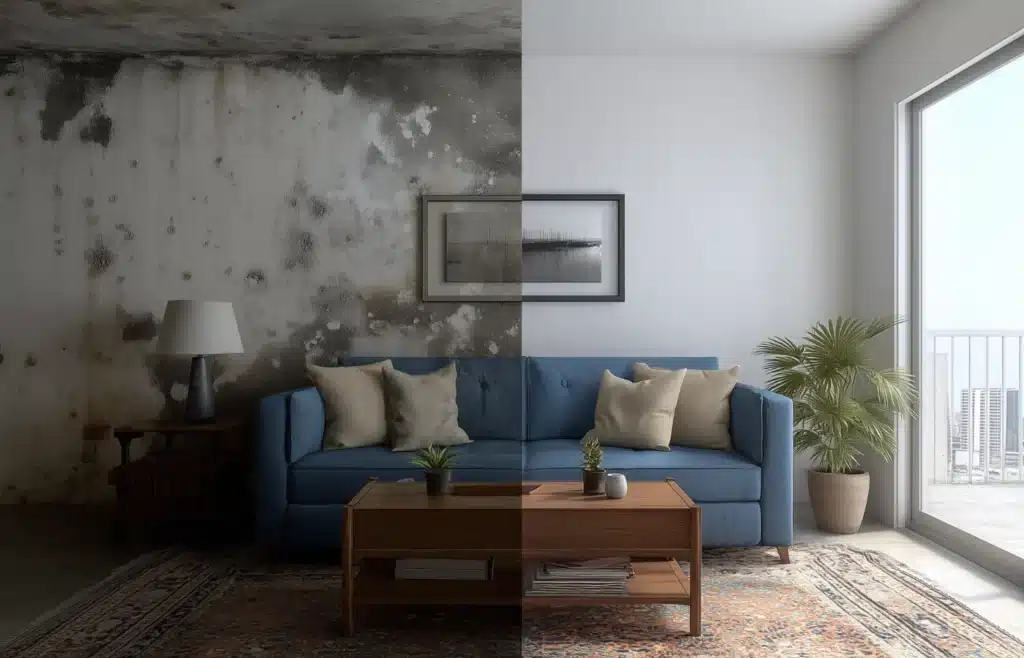
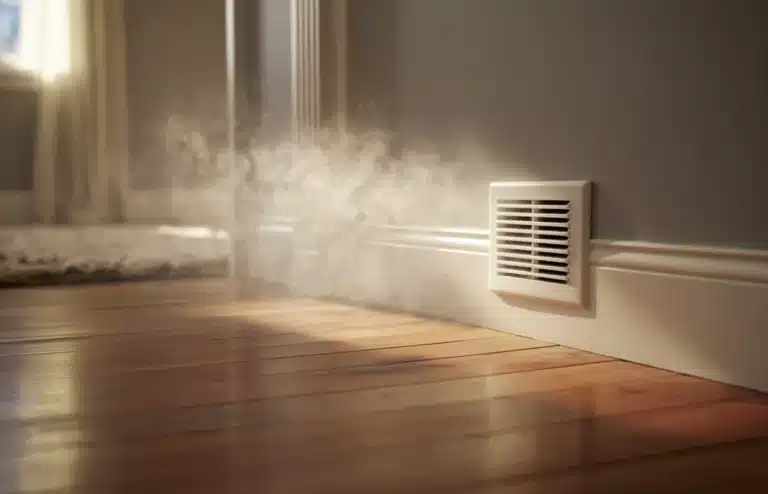
 Indoor air quality (IAQ) testing after a restoration project costs between $200 and $800, depending on what pollutants you’re testing for and how many rooms are sampled. After any water damage, fire, mold remediation, or environmental cleanup, verifying that the air in your home is safe to breathe is the final and most important step. The EPA estimates that indoor air can be two to 100 times more polluted than outdoor air, and Americans spend roughly 90% of their time indoors. This guide explains what to test for after different types of restoration, what results mean, and how to improve air quality if testing reveals problems.
Why Post-Restoration IAQ Testing Matters
Want it done for you? See our restoration SEO and marketing agency.
Restoration work fixes the visible damage. It removes standing water, tears out moldy drywall, cleans soot from surfaces, and replaces compromised materials. But the air quality question often gets overlooked. After water damage restoration, lingering moisture can cause mold growth in hidden cavities. After fire damage, volatile organic compounds (VOCs) and particulates from burned materials may persist. After mold remediation, airborne spore counts should be verified.
In this video
- 0:00 ERMI Mold Testing Overview and Sources
- 1:04 Four Terms Routinely Misused
- 1:45 Reference Database Behind the Score
- 2:25 How Dust Becomes an ERMI Score
- 3:05 Score Bands and Their Limits
- 4:28 What ERMI Does Genuinely Well
- 5:21 Hard Limits That Cause Expensive Mistakes
- 6:06 Cost DIY vs Professional Collection
- 6:50 ERMI vs Air Sampling vs Moisture Assessment
- 8:28 Red Flags and Legitimate Company Profiles
- 9:09 Six Steps After a High ERMI Score
- 10:05 ERMI vs Mycotoxin Testing and HERTSMI-2
Full transcript: What does an ERMI mold test score mean and what does it cost?
Start with the full restoration SEO guide if you are new to the topic.
“Post-remediation verification testing is the only way to confirm that cleanup was effective and the home is safe for reoccupancy,” says the Indoor Air Quality Association (IAQA). “Relying on visual inspection alone misses airborne contaminants that can cause health problems.”
According to a 2024 study published in the Journal of Occupational and Environmental Hygiene, post-restoration IAQ testing identified elevated pollutant levels in approximately 15% of properties that had passed visual inspection. The contamination sources ranged from residual mold spores in HVAC systems to formaldehyde off-gassing from replacement building materials.
What to Test For After Different Restoration Types
The pollutants you need to measure depend on what happened to your home. Here’s a breakdown by restoration type:
After Water Damage
- Mold spore counts (airborne): Confirms that mold hasn’t developed after water exposure. Post-water-damage testing is especially important because mold can begin growing within 24 to 48 hours.
- Humidity levels: Should be below 60% relative humidity to prevent future mold growth. Below 50% is ideal.
- Volatile organic compounds (VOCs): New building materials, adhesives, and paints release VOCs during and after installation.
After Fire Damage
- Particulate matter (PM2.5 and PM10): Fine soot particles can remain airborne and in HVAC systems long after cleaning. Understanding fire odor removal technology helps explain why air quality verification is critical.
- Carbon monoxide: Post-fire testing confirms no ongoing combustion sources.
- VOCs: Burned plastics, treated wood, and synthetic materials release toxic compounds.
- Hydrogen cyanide: Present in smoke from burning synthetic materials, particularly carpeting and furniture foam.
After Mold Remediation
- Airborne mold spore counts: Indoor levels should be comparable to or lower than outdoor baseline samples. The American Conference of Governmental Industrial Hygienists (ACGIH) recommends that indoor fungal types and concentrations should not exceed outdoor levels.
- Moisture readings: Confirms that the moisture source has been eliminated and materials have dried to acceptable levels.
- Surface sampling: Tape lift or swab samples from cleaned surfaces verify that remediation removed visible growth.
After Environmental Remediation
- Asbestos fiber counts: If abatement occurred, clearance air monitoring confirms levels below 0.01 fibers per cubic centimeter.
- Lead dust wipe testing: After lead paint work, dust wipe results must meet EPA clearance standards (40 µg/sq ft for floors, 250 µg/sq ft for window sills).
- Methamphetamine surface testing: Clearance wipe testing confirms contamination levels fall below state thresholds.
Want more customers from Google & AI search?
Get a free SEO audit of your site — see exactly what to fix first.
IAQ Testing Methods and Costs
| Test Type | Cost | What It Measures | When Needed |
|---|---|---|---|
| Airborne mold spore test | $150-$400 | Mold types and concentrations | After any water or mold remediation |
| VOC panel | $200-$500 | Formaldehyde, benzene, toluene, etc. | After fire, new construction materials |
| Particulate monitoring | $100-$300 | PM2.5 and PM10 particle levels | After fire damage cleanup |
| Comprehensive IAQ assessment | $400-$800 | Multiple pollutants, HVAC inspection | Major restoration or health concerns |
| Real-time electronic monitor | $150-$400 (purchase) | Continuous PM2.5, CO2, humidity, VOCs | Ongoing monitoring |
Professional IAQ testing involves collecting air samples using calibrated pumps that draw measured volumes of air through collection media. Samples are analyzed by accredited laboratories following EPA or NIOSH methods. Results typically take five to 10 business days.
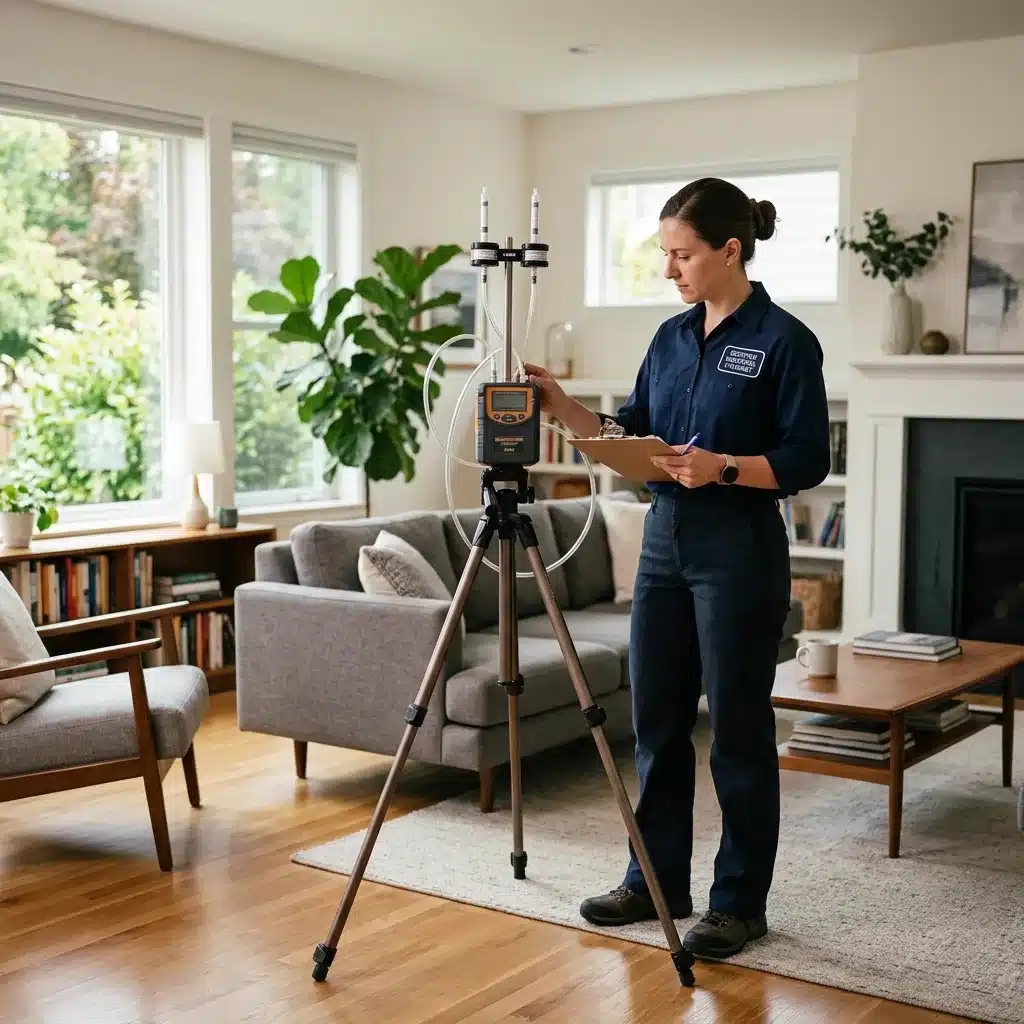
“For mold clearance testing specifically, both indoor and outdoor samples should be collected simultaneously,” notes the American Industrial Hygiene Association (AIHA). “Indoor levels should be at or below outdoor levels for the same mold species to confirm successful remediation.”
Smart Home IAQ Monitors: Are They Worth It?
Consumer-grade air quality monitors have improved significantly. Devices like the Airthings View Plus ($299), the IQAir AirVisual Pro ($269), and the Awair Element ($149) measure particulate matter, VOCs, CO2, temperature, and humidity in real time. According to testing by Wirecutter, these consumer monitors provide reasonably accurate readings for relative air quality tracking.
These devices work well for:
- Ongoing monitoring after restoration to catch any returning problems early
- Identifying ventilation issues through CO2 level tracking
- Seasonal pattern detection showing when humidity or pollutant levels spike
- Verification that HVAC filters and air purifiers are performing
They don’t replace professional testing for clearance purposes. Certified post-remediation verification requires calibrated equipment and accredited lab analysis that consumer monitors can’t provide. Think of consumer monitors as your ongoing check-in and professional testing as the definitive clearance stamp.
How to Improve Indoor Air Quality After Restoration
If testing reveals elevated pollutant levels, or if you simply want to maintain good air quality after restoration work, these strategies deliver measurable improvements:
Increase ventilation. The simplest way to reduce indoor pollutant concentrations is bringing in more outdoor air. Open windows when weather permits. Run bathroom and kitchen exhaust fans. According to ASHRAE Standard 62.2, residential ventilation should provide at least 7.5 CFM per person plus 3 CFM per 100 square feet of floor area.
Upgrade HVAC filtration. Replace standard furnace filters with MERV 13 or higher rated filters. These capture 90% or more of particles in the 1-3 micron range, including most mold spores and fine particulates. If your home has experienced HVAC contamination after fire, professional duct cleaning combined with upgraded filtration addresses both existing contamination and prevention.
Control humidity. Keep indoor relative humidity between 30% and 50%. Use dehumidifiers in basements and crawl spaces. Fix any remaining moisture sources. According to the Building Science Corporation, maintaining proper humidity is the single most effective strategy for preventing post-restoration mold recurrence.
Address VOC sources. New building materials are the primary post-restoration VOC source. Increased ventilation during the first two to four weeks after installation significantly reduces concentrations. Low-VOC or zero-VOC products are available for paints, adhesives, and sealants. Formaldehyde, the most common indoor VOC, off-gases most rapidly in the first month and declines over three to six months.
Consider air purification. HEPA air purifiers remove 99.97% of particles 0.3 microns and larger. Activated carbon filters address VOCs and odors. Units sized for the room they’re in deliver the best results. For whole-home purification, in-duct systems paired with MERV 13+ filtration provide comprehensive coverage.

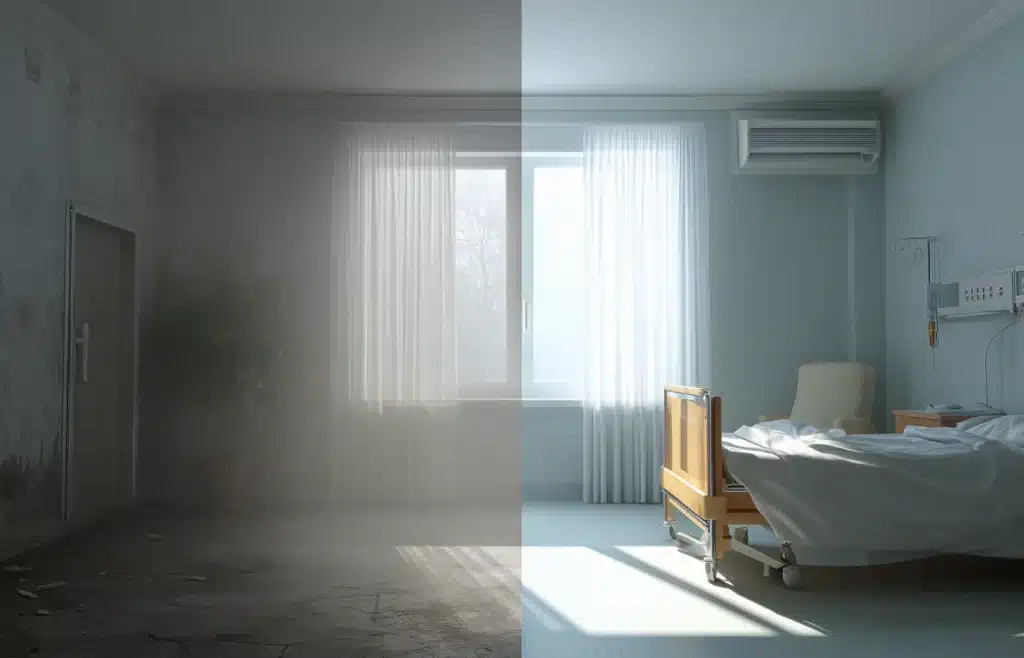
When to Retest
One clearance test isn’t always the final word. Consider retesting in these situations:
- 30 days after mold remediation to confirm spore counts haven’t rebounded. This is particularly important for condensation-related mold problems where the moisture source may be ongoing.
- Seasonally after fire damage because temperature and humidity changes can reactivate odors trapped in materials.
- After HVAC system startup following any restoration. The first time you run your heating or cooling system after work is completed, it can redistribute settled particles.
- If symptoms persist. Headaches, respiratory irritation, or allergic reactions after reoccupancy warrant retesting even if initial clearance passed.
Frequently Asked Questions
How much does indoor air quality testing cost?
Basic mold air sampling runs $150 to $400 for two to four samples. Comprehensive IAQ assessments testing multiple pollutants cost $400 to $800. VOC panels range from $200 to $500. Most testing companies offer packages that combine relevant tests based on your restoration type, which is often more cost-effective than ordering individual tests.

Who performs IAQ testing after restoration?
Certified industrial hygienists (CIH), certified indoor environmentalists (CIE), or ACAC-certified professionals conduct post-restoration IAQ testing. For mold clearance, the testing company should be independent from the remediation company to avoid conflicts of interest. Your restoration contractor can often recommend qualified testing firms.
What mold spore count is safe after remediation?
There’s no single universal “safe” number. The standard is that indoor mold spore counts should be comparable to or lower than simultaneous outdoor samples, and the same mold species found outdoors should dominate indoor samples. Elevated levels of Stachybotrys, Chaetomium, or Aspergillus/Penicillium indoors, relative to outdoor levels, suggest incomplete remediation.
Should I test air quality in a new home?
Yes, especially if the home was recently built or renovated. New construction materials off-gas formaldehyde, VOCs, and other chemicals for months after installation. A 2024 study by the Lawrence Berkeley National Laboratory found that new homes averaged formaldehyde levels 50% higher than homes over five years old.
In this video
- 0:00 Black Mold Reputation vs Real Science
- 0:35 Key Statistics That Reset Expectations
- 1:20 Four Common Mold ID Mistakes
- 1:56 How to Spot Stachybotrys by Texture
- 2:30 Five Household Molds Quick Reference
- 3:51 Penicillium and Aspergillus Underrated Risk
- 4:34 Alternaria and Chaetomium Warning Signs
- 5:58 Why Air Testing Misses Stachybotrys
- 6:40 Six Steps to Avoid Costly Mistakes
- 7:25 CDC Position on Mold Identification
- 8:00 Three Consequences of Getting It Wrong
Full transcript: Black Mold vs Other Mold Types: What Homeowners Find
How long after restoration should I wait to test?
For mold clearance, testing can occur 24 to 48 hours after remediation is complete and surfaces are dry. For VOC testing after new material installation, waiting two to four weeks provides a more representative reading. For fire damage, testing immediately after cleaning is completed gives the most accurate picture of restoration effectiveness.
Can poor indoor air quality cause long-term health problems?
Yes. Chronic exposure to mold, VOCs, particulates, and other indoor pollutants is associated with respiratory disease, allergic sensitization, neurological effects, and in the case of asbestos and radon, cancer. The WHO’s guidelines for indoor air quality identify specific pollutant thresholds linked to adverse health outcomes.
Post-restoration air quality testing is the final checkpoint between completion and reoccupancy. It confirms that your home is safe to live in and that the restoration work achieved its goal. Whether you’ve been through water damage, fire, mold, or environmental remediation, IAQ verification protects your family’s health. Contact PushLeads to connect with restoration professionals who make air quality verification a standard part of their process.
Keep Reading
Want more customers from Google & AI search?
Get a free SEO audit of your site — see exactly what to fix first.
Your path · Restoration Company SEO
Keep going: read these next
 You’re hereIndoor Air Quality Testing After Restoration: A Complete Homeowner Guide
- Up nextVideo Marketing for Restoration Companies: YouTube, TikTok, and Before/After Content
- Air Duct Cleaning After Restoration: When It Matters and What It Costs


Want this done for you?
Scan your site. See the gaps. Decide with numbers.
- Rankings, Google Business Profile and site-speed teardown
- Report lands in your inbox in about a minute
- No obligation · 4.9 from 67 Google reviews
 Continue reading
