


Key Takeaways
Want it done for you? See our roofing marketing agency.
To choose a roofing SEO company in the Southeast, you need a partner who has actually ranked roofing sites through storm seasons, not just someone who sells a generic monthly package. The Southeast market has predictable hail seasons in April, hurricane windows in August and September, and sudden windstorms that can triple your lead volume in a week. Your agency must be able to publish location pages fast, adjust ad spend quickly, and report on calls, not just rankings.
- Ask every agency candidate whether they have ranked a roofing site in the Southeast and request specific keyword and city examples.
- A storm surge strategy means publishing a targeted landing page within 48 hours of a weather event, not waiting for the monthly content calendar.
- Location pages, one real page per county or city you serve, are the single most common missed opportunity for organic call volume.
- Your Google Business Profile primary category must be set to roofing contractor, and reviews should be requested in person at job completion.
- Read your contract before signing: confirm you own your website, your Google Business Profile, and all content if you cancel.
- A good monthly SEO report shows keyword rankings, organic traffic trends, and calls attributed to organic, not just a screenshot of positions.
- Refreshing existing content every 12 to 18 months is often faster and cheaper than writing new pages from scratch.
Key moments (13)
0:28 Why Southeast Roofing SEO Is Different
1:12 What Search Demand Actually Looks Like
2:11 Service Area Pages: The Biggest Missed Opportunity
3:02 Google Maps and the Local Pack
3:51 Reviews: How to Actually Get Them
4:34 What Questions to Ask Before You Sign
6:03 The Storm Season Surge Strategy
7:01 Contract Red Flags to Know
8:19 Keyword Density: What It Actually Is
8:51 Content Refresh and Why It Matters
10:26 How to Evaluate an SEO Report
11:15 What PushLeads Does
Full transcript
0:00 Intro
hire someone who has ranked roofing sites through a storm season, not just someone who sells SEO. That is the whole answer, and everything else in this video earns it. I’m Jeremy Ashburn. I run PushLeads and marketing agency focused on contractors. If you’re a roofer in the southeast deciding who to trust with your website and leads, stay with me. I’m going to walk you through every question you should ask, every red flag
0:28 Why Southeast Roofing SEO Is Different
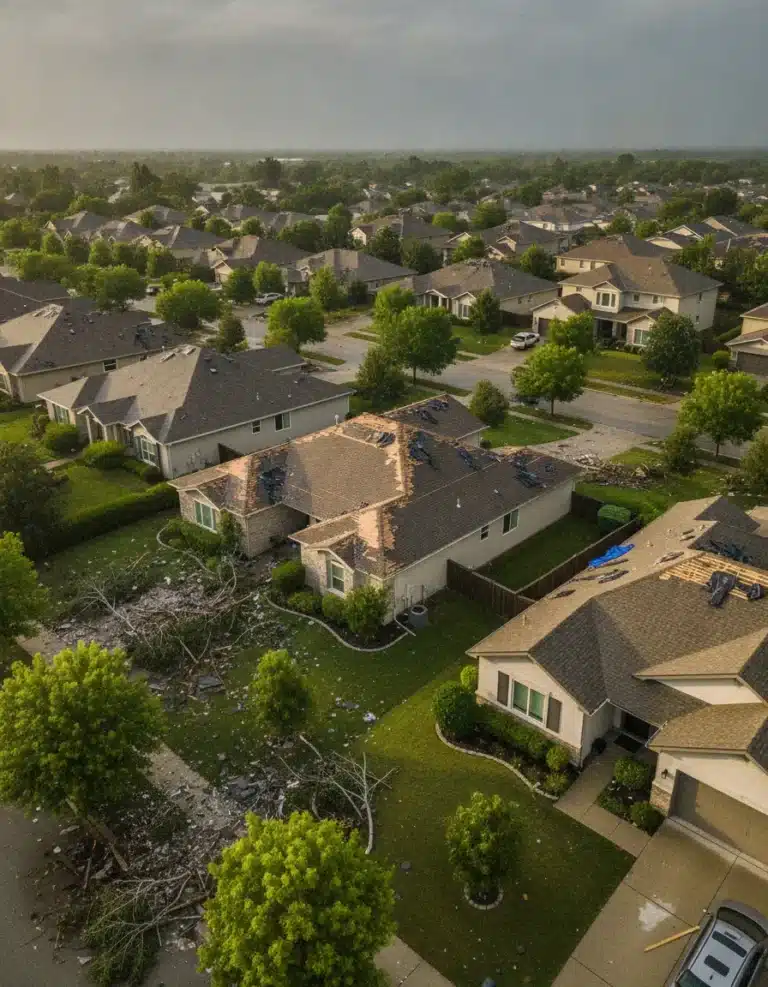
to avoid, and what good SEO actually looks like for your market. Most SEO companies sell the same program to every client. That approach does not work for roofers. The southeast is real storm country. Hail arrives in April every single year. Hurricane strike in August and again in September, a severe windstorm in June can appear with almost no warning. Your lead volume can triple running the same slow content calendar. You need someone who can publish fast after a storm. They must know how to push bids up at exactly the right moment. Your service area pages need a hard push right after each event.
1:12 What Search Demand Actually Looks Like
If an agency has never done that, keep looking. One of the most common questions I see is how many keywords a roofing website should target. Here’s an honest answer. There is no single magic number, but for a regional roofer in the southeast, you are probably looking at somewhere between 30 and 80 real keyword targets. If you’re doing it right, spread across your home page, service pages, and location pages. The key phrase is per page. Each page should own a small cluster, usually one to three closely related phrases. Trying to stuff every keyword onto one page does not help you rank faster. It just confuses Google about what that page is actually for. For a midsize roofing company serving five or six counties, that often means one home page, one page per core service like shingle, metal, flat, and storm damage in one page per city or county you actually go to. That is where your real organic keyword count starts to add up.
2:11 Service Area Pages: The Biggest Missed Opportunity
I’ll say this plainly, most roofing websites in the southeast are leaving calls on the table because they have no location pages. If you serve Greenville, Spartanburg, Anderson, and Asheville, you need a page for each one, not a copied page with the city name swapped. A real page with local context, local language, and content that actually helps someone who just had a storm hit their neighborhood. Google is getting better at detecting duplicate content, and it rewards pages that feel genuinely local. Mention the neighborhoods you work in. Mention the common roof types in that area. Mention local building codes if they affect your work. One location page done right can outrank a competitor who has been in business longer because they never built the page.
3:02 Google Maps and the Local Pack
For roofers, the local pack, those three map results at the top of Google is often worth more than the organic results below it. Here is how the local pack works. Google ranks your Google Business Profile based on proximity to the searcher, relevance of your profile and categories, and authority, which is mostly reviews and links. You can influence all three of these. Make sure your primary category is roofing contractor, not just contractor. Fill out every section of your profile, services, service area, photos, business hours, post updates at least once a month, and get reviews. Not 100 at once, which can look suspicious to Google, but a steady flow of real reviews from real customers after every job. The number one mistake I see roofers make with reviews is waiting.
3:51 Reviews: How to Actually Get Them
They finish a job, the homeowner is happy, and nobody asks. The best time to ask for a review is right then in person while they’re still on site. Text them a direct link to your Google review page before you leave the driveway. A message that works sounds something like this. Hey, Sarah, thanks for choosing us for your roof repair. If you have two minutes, it would mean a lot if you left us a review. Here is the link. That is it. No long email, no survey, just a direct ask with a direct link. If you do that consistently after every job, you will build a review profile that your competitors will struggle to catch.
4:34 What Questions to Ask Before You Sign
Here are the specific questions I recommend asking any SEO company before you hand over money. First, have you ranked a roofing site in the Southeast before? Ask for examples, not logos, not client names necessarily, but ask what keywords they ranked, what city and what the result was in terms of calls or leads. If they cannot answer that, they are guessing. Second, how do you handle storm surges? What is your process when a hail storm hits one of my service areas? Can you publish a landing page within 48 hours? Can you adjust ad spend quickly? If they look confused by the question they have never worked with a storm driven business? Third, who writes the content? AI generated content that is not reviewed or edited is a risk right now. Google is getting better at identifying thin content and you do not want your site flagged. Ask if a human reviews every piece before it goes live. Fourth, how do you measure success? If the answer is rankings only, that is a yellow flag. Rankings matter, but what jobs? Your SEO company should be tying their work to those numbers. Fifth, what do I own if I leave? Make sure your contract states that you own your website, your Google business profile, and all content on your site.
6:03 The Storm Season Surge Strategy
Here is how a good roofing SEO company should respond to a major weather event. One, monitor storm paths in your service area in real time. Two, publish or update a storm damage landing page targeting the affected counties within 48 hours. Three, push that page through Google Search Console for fast indexing. Four, if you’re running Google ads increase budget and add storm specific keywords like storm damage roof repair near me or hail damage roofer Greenville SC. Five, send a review request to any customer in the affected area who has used you before because new homeowners will be checking your reputation immediately. That is a surge strategy. It is not complicated, but it requires someone who is paying attention and knows how to move fast. Most big box agencies cannot do this because they are running everything on a monthly content calendar with two weeks of approval time.
7:01 Contract Red Flags to Know
This is the section most people skip and then they call me six months later, angry. Read your contract before you sign, red flag one, a long term lock with no performance clause, 12 or 24 month contracts with no exit if results don’t come are common. Ask for a performance review at six months with an option to exit if specific agreed metrics are not met. Red flag two, no clear ownership language. If you leave this agency, do you own your website? Do you own your Google Business Profile? Do you own the content on your site? In many contracts, the agency owns the site they built. You leave, they take it. Make sure your contract says clearly that you own all of it. Red flag three, vague deliverables. We will improve your SEO presence means nothing. You want specifics, how many pages per month, how many links, what reporting cadence, what metrics they are accountable for? Red flag four guaranteed rankings. Nobody can guarantee a first page ranking on Google. If someone promises you number one, they are either lying or planning to put you on a micro site they own and rent you the traffic run. If an agency talks to you a lot about keyword density, meaning what percentage
8:19 Keyword Density: What It Actually Is
of your page should be a specific keyword, treat that as a yellow flag. The industry ballpark has been around one to 2% for years, but Google does not rank pages based on a keyword count formula. It ranks pages based on whether the content is genuinely helpful and authoritative. Write naturally. Use your main phrase where it fits. Use related phrases throughout. That is it. Any agency spending a lot of time on keyword percentage math is probably working
8:51 Content Refresh and Why It Matters
from a playbook that is several years old. One thing good SEO companies do that most roofers never think about is refreshing old content. If you published a page on storm damage roofing three years ago and it is not ranking, the answer is not always to delete it and start over. Sometimes you update the content, add new information, improve the internal links, and resubmit it for indexing. A general industry ballpark is to review your existing content every 12 to 18 months and update anything that is outdated or underperforming. This is cheaper than writing new content and often gets faster results because the page already has some age and links pointing to it. Picture a roofing company doing about 50 calls a month in a midsize southeast metro. Let’s say about 30 of those calls are coming from Google, mostly from a mix of paid ads and organic. If they have no location pages and no active review strategy, they are probably leaving another 20 to 30 organic calls a month on the table. That is the kind of gap I see regularly. Here is how the math can work, build out six real location pages, get your Google Business Profile fully optimized, run a consistent review request process for three months. In a typical case, a roofer doing that work over six months can see organic call volume increase meaningfully without increasing ad spend. I won’t put a specific number on it because it varies, but the direction is predictable. More targeted pages, more reviews, more calls from the zip codes you actually want
10:26 How to Evaluate an SEO Report
to work in. Your SEO company should send you a monthly report. Here is what should be in it. Keyword rankings specifically for the phrases tied to your service pages and location pages, organic traffic trend, meaning is the traffic going up or down and from which pages calls and form fields attributed to organic, not just total leads. Google Business Profile views and actions calls from the profile, direction requests, website clicks, any technical issues found and fixed that month. If your report is just a screenshot of rankings going up, that is not enough. You need to see whether the traffic is converting to actual contact. I’ll be straight with you here.
11:15 What PushLeads Does
PushLeads is a marketing agency that works specifically with contractors, including roofers. What we actually do, we build and optimize roofing websites designed to rank and convert. We set up and manage Google business profiles. We build out service area pages with real local content. We run Google ads with storm surge flexibility built in. We provide monthly reporting tied to calls and leads, not just rankings. We’re not the only option. But if you want to talk to someone who does this specifically for contractors and markets like yours, we’re a reasonable call to make. Here is exactly what I tell any roofer watching this. One, pull up your website and count your location pages. If you have fewer than one page per county you actively serve, that is the first gap to fix. Two, check your Google Business Profile. Is your category set correctly? Is your service area listed? When did you last post an update? Three, read your current SEO contract if you have one. Look for the ownership clause and the exit terms. Know what you sign. Four, ask your current agency the five questions I listed. If they can’t answer them, you have a conversation to have. Five, get your free AI visibility check. Go to PushLeads.com slash check or call us directly at 828 -348 -7686. It’s a no -cost look at where your site stands right now and where the gaps are. That is how you pick an SEO company as a southeast roofer. Answer the question honestly for yourself then find someone who can actually back it up.
Why Choosing a Roofing SEO Company in the Southeast Requires a Different Approach

To choose a roofing SEO company in the Southeast, you need someone who has lived through a storm season with a roofing client, not just someone who knows the technical side of SEO. That is the core filter. Everything else is detail. I run PushLeads out of Asheville, North Carolina, and I work with contractors across the region. The Southeast is not a generic roofing market. Hail arrives reliably in April. Hurricanes typically hit in August and again in September. A serious windstorm in June can appear with almost no advance notice. When those events happen, your lead volume can triple inside a single week. Then things go quiet for three months. A general agency running a slow, monthly content calendar cannot respond to that reality. They are still waiting on two weeks of internal approvals while your competitor has already published a storm damage landing page targeting every county the hail touched. When you are trying to choose a roofing SEO company in the Southeast, that storm-response capability is not a bonus feature. It is a baseline requirement. If the agency you are evaluating has never adjusted a campaign mid-month because a weather event changed search demand overnight, they have not done this work for roofers. Keep that standard in mind as you read through every section below. The right agency exists. You just need to know what to look for.

Want more customers from Google & AI search?
Get a free SEO audit of your site — see exactly what to fix first.
What Search Demand Actually Looks Like for Southeast Roofers

Search demand for roofing in the Southeast follows predictable seasonal patterns tied directly to weather, and your keyword strategy needs to reflect that. A roofer serving five or six counties in the Carolinas, Georgia, or Tennessee is realistically looking at somewhere between 30 and 80 keyword targets if the work is done properly, spread across a homepage, service pages, and location pages. That range is not arbitrary. It comes from mapping one to three closely related phrases to each individual page. Trying to target every keyword from a single page does not help you rank faster. It signals to Google that the page lacks a clear focus.
In this video
- 0:00 Roofing SEO in 2026 What Changed
- 0:44 Three Places Prospects Find You Now
- 1:32 Five Signals That Move Rankings
- 2:27 Search Data Roofing Companies Should Know
- 3:22 AI Search and Why Most Agencies Miss It
- 4:21 The Math Behind Roofing SEO ROI
- 5:22 What a Fully Optimized GBP Looks Like
- 6:15 Geographic and Insurance Content Strategy
- 7:47 Ads vs SEO How to Run Both
- 8:38 Mistakes That Waste Your Budget
- 9:53 Questions to Ask Before You Sign
- 10:33 Real Numbers From a Roofing SEO Case
How many keywords should a roofing website target per page?
Each page on a roofing website should own a small cluster of one to three closely related phrases rather than a long list of unrelated terms. For a midsize roofing company serving five to six counties, that typically means one homepage, one page per core service like shingle, metal, flat, and storm damage, and one page per city or county you actively serve. That structure is where your real keyword count starts to build. A homepage targeting “roofing contractor Greenville SC” does not need to also carry the weight of “metal roof Spartanburg” and “flat roof Anderson.” Those belong on their own pages.
Does keyword density still matter for roofing SEO in 2025?
Keyword density, the percentage of a page made up of a specific phrase, is a yellow flag topic. The industry ballpark has been around one to two percent for years, but Google does not rank pages based on a keyword count formula. It ranks pages based on whether the content is genuinely helpful and authoritative for the person reading it. Write naturally, use your main phrase where it fits, use related phrases throughout the page, and stop there. Any agency spending significant time on keyword percentage math is working from a playbook that is several years out of date.
What service pages does a Southeast roofing company actually need?
A Southeast roofing company needs at minimum one page per core service and one page per geographic area it actively serves. Core services typically include shingle roofing, metal roofing, flat or commercial roofing, and storm damage repair. Each of those deserves its own URL, its own keyword cluster, and its own call to action. Storm damage repair in particular should be treated as a standalone service page, not a paragraph buried on the homepage, because that is a phrase people search specifically after weather events. If your site does not have that page built and indexed before storm season, you are behind before the season even starts.

Service Area Pages: The Biggest Missed Opportunity in Roofing SEO

Most roofing websites in the Southeast are leaving calls on the table because they have no real location pages, and that is fixable faster than most other SEO gaps. If you serve Greenville, Spartanburg, Anderson, and Asheville, you need a dedicated page for each city, not a copied template with the city name swapped in and nothing else changed. Google has gotten noticeably better at identifying duplicate content. What it rewards instead are pages that feel genuinely local because they contain information specific to that area.
What should a roofing location page actually include?
A roofing location page should mention the specific neighborhoods you work in, the common roof types found in that area, local weather patterns that affect roof lifespan, and any local building codes or permit requirements that affect your work. It should read like it was written for a homeowner in that specific city who just had a storm hit their neighborhood, because that is exactly who is going to land on it. A single well-built location page can outrank a competitor who has been in business longer simply because they never created the page at all.
Can duplicate location pages hurt a roofing website’s rankings?
Yes, duplicate location pages where only the city name is swapped and everything else is identical are a risk. Google may choose not to index pages it identifies as thin or duplicated, which means the page you built for Spartanburg may never rank even if Spartanburg is a city you serve actively. The fix is to write each page with unique local context. That does not mean the pages need to be entirely different in structure, but the content that makes them useful must be specific to each location. A short list of neighborhoods served, a note about local permit offices, or a reference to a recent storm event in that city all help differentiate the page.
How many location pages should a roofing company build first?
Start with one page for every county or city where you actively close jobs. If you currently serve six counties and have zero location pages, building those six pages is your highest-priority SEO task. Each page, done properly with local content and a clear call to action, represents an independent ranking opportunity in a geographic area that your homepage alone cannot cover. You can learn more about how long it takes for those pages to generate calls by reviewing how long SEO actually takes for contractor websites, since location pages typically see traction faster than brand-new domains.

Google Maps and the Local Pack for Roofing Contractors

For roofers, the local pack, the three map results that appear at the top of a Google search, is often worth more in call volume than the organic results below it because searchers with immediate needs click the map results first. Google ranks your Google Business Profile in that local pack based on three factors: proximity of your business to the person searching, relevance of your profile to what they searched, and authority, which is mostly built through reviews and inbound links. All three of those factors are things you can directly influence.
How should a roofing contractor set up their Google Business Profile?
Your primary category must be set to “roofing contractor,” not just “contractor” or “home improvement.” That single category selection is one of the strongest relevance signals Google uses when deciding whether to show your profile for roofing searches. Beyond the category, fill out every section available: services offered, service area, photos of completed jobs, business hours, and a business description that uses natural language about what you do and where you do it. Post an update to your profile at least once a month. Many roofers skip this, which means it is an easy way to stay ahead of competitors who ignore it.
How often should a roofing company post updates to Google Business Profile?
Posting at least once a month keeps your profile active and signals to Google that the business is current. Posts do not need to be long. A photo of a completed job in a specific neighborhood with a short description of the work, the location, and a call to action is enough. After a storm event, posting a storm damage update specific to the affected area is one of the fastest ways to signal relevance for the surge in searches that follow. This is a small task but it compounds over time as your profile accumulates activity history.
What review strategy actually builds local pack authority for roofers?
A steady flow of real reviews from real customers after every job is what builds lasting local pack authority. Getting 100 reviews at once can look suspicious to Google and may trigger a review filter. The goal is consistency: one or two reviews per week from jobs you completed that week. The most reliable method is asking in person at the job site while the homeowner is still happy, then texting them a direct link to your Google review page before you leave the driveway. A simple message works: “Hey Sarah, thanks for choosing us. If you have two minutes, it would mean a lot if you left us a review. Here is the link.” No survey, no email sequence, just a direct ask with a direct link.

The Storm Season Surge Strategy Every Southeast Roofer Needs

A storm surge strategy is a documented process for responding to major weather events with fast content and advertising adjustments, and it is what separates an agency that understands the Southeast roofing market from one that does not. When a hail storm or hurricane moves through your service area, search volume for storm damage roofing terms can increase dramatically in the following 48 to 72 hours. If your agency is not set up to respond in that window, you are losing calls to competitors who are.
What should a roofing SEO agency do within 48 hours of a storm?
Within 48 hours of a storm event in your service area, a good agency should publish or update a storm damage landing page targeting the affected counties, push that page through Google Search Console for accelerated indexing, and if you are running paid ads, increase budget and add storm-specific keywords like “storm damage roof repair near me” and “hail damage roofer Greenville SC.” These are not complicated steps, but they require someone monitoring storm paths in real time and knowing how to execute quickly. Most large agencies running monthly content calendars with multi-week approval cycles cannot do this. It is a structural limitation, not just a skills gap.
Should roofers run Google Ads during storm season in the Southeast?
Running paid ads during storm season in the Southeast is often the fastest way to capture demand that your organic rankings cannot yet cover for newly affected areas. If a tornado touches down in a county where you have no location page built yet, a targeted paid ad can fill that gap the same day. The relationship between paid and organic in roofing is worth understanding before you commit a budget, and reviewing SEO versus Google Ads for roofers can help you decide how to allocate spend across both channels at different points in the season.
How should a roofing company use reviews after a storm event?
After a major storm event, send a review request to any customer in the affected area who has used you before. New homeowners searching for a roofer in that area will check your review count and recency before calling. A recent five-star review from a neighbor on the same street carries significant weight. This is a step most roofing companies skip because they are focused on scheduling and production during surge periods, but it is exactly when reputation visibility matters most.
Questions to Ask Any SEO Company Before You Sign

Asking the right questions before you commit to an SEO contract is the fastest way to filter out agencies that have never worked with storm-driven businesses. There are five specific questions that will tell you most of what you need to know, and an agency that cannot answer them clearly has not done this work in your market.
Have you ranked a roofing site in the Southeast before?
Ask for specific examples: what keywords they ranked, what city, and what the result was in terms of calls or leads generated. Logos on a website and a list of client names are not answers to this question. You want to know whether this agency has actually moved rankings for roofing-specific phrases in Southeast markets where storm seasonality affects demand. If they cannot point to a specific example, they are applying a general playbook to a market that requires a specialized one. That is a meaningful risk to your marketing budget.
Who writes the content for my roofing website?
AI-generated content that is not reviewed or edited by a human is a risk right now. Google continues to improve its ability to identify thin or low-quality content, and you do not want your site flagged for it. Ask directly whether a human reviews every piece of content before it goes live. The answer should be yes. It is also worth asking who actually does the work at the agency, meaning is it in-house staff or is it being outsourced to a subcontractor you have never met, because that affects both quality and consistency.
How do you measure success beyond keyword rankings?
If the answer is rankings only, treat that as a yellow flag. Rankings matter, but they are a leading indicator, not the outcome. The outcome is phone calls and form submissions from people who want a roof repair or replacement. Your SEO company should be tying their work back to those numbers, specifically organic calls and form fills, Google Business Profile call volume, and traffic from location pages in the counties you are targeting. A monthly report that only shows ranking positions going up is an incomplete picture.
Contract Red Flags to Know Before You Commit

Reading your SEO contract carefully before signing is not optional, and the specific clauses that protect you are ones that many contractors skip over. There are four contract patterns I see regularly that create problems for roofers six to twelve months into a campaign.
What does a long-term SEO contract lock mean for roofing contractors?
A 12 or 24 month contract with no performance clause means you are committed to full payment regardless of results. Ask for a performance review at the six-month mark with an option to exit if specific agreed metrics have not been met. Those metrics should be written into the contract before you sign, not referenced verbally. Vague deliverables like “we will improve your SEO presence” are not metrics. You want specifics: how many pages published per month, how many links built, what reporting cadence, and what numbers they are accountable for.
What ownership rights should a roofing company protect in an SEO contract?
Your contract must clearly state that you own your website, your Google Business Profile, and all content on your site if you decide to leave the agency. This is a common problem: in many agency contracts, the agency owns the site they built on your behalf. When you cancel, they take the site with them, and you start from zero. Understanding website ownership after cancellation before you sign a contract is one of the most important contract protections for any contractor working with an SEO agency. Do not assume you own your site. Find the clause and read it.
Are guaranteed first-page rankings a red flag in SEO contracts?
Yes, guaranteed first-page rankings are a red flag. No agency can guarantee a specific position on Google because Google controls those rankings and updates its algorithm continuously. If someone promises you a number one ranking, they are either making a commitment they cannot keep, or they are planning to rank you on a micro-site they own and rent you the traffic from, which is a setup that leaves you with nothing if you stop paying. It is also worth reviewing SEO money back guarantees explained so you understand what those offers actually cover and what they typically exclude before you treat a guarantee as meaningful protection.
Content Strategy: Building and Refreshing Pages That Rank

A roofing SEO content strategy in the Southeast needs to account for two things that many agencies ignore: building out the right page structure from the start, and maintaining those pages as they age. Both matter, and neither one is a one-time task. Good content strategy is ongoing, and the agencies that treat it as a campaign that ends after three months are not set up to maintain rankings through the second and third year of competition.
How often should a roofing website refresh existing content?
Review your existing content every 12 to 18 months and update anything that is outdated or underperforming. This is a general industry ballpark, not a hard rule, but it reflects how long it typically takes for a page to either prove its value or fall behind. Refreshing an old page is often cheaper and faster than writing a new one from scratch because the existing page already has some age, some indexed history, and potentially some links pointing to it. Updating the content, improving internal links, adding new information, and resubmitting through Google Search Console can revive a page that has been declining without requiring a full content rebuild.
What is the gap in organic calls that most Southeast roofers are missing?
Picture a roofing company doing about 50 calls a month in a midsize Southeast metro, with roughly 30 of those coming from Google across a mix of paid ads and organic. If they have no location pages and no active review strategy, they are likely leaving another 20 to 30 organic calls per month on the table. Building out six real location pages, fully optimizing the Google Business Profile, and running a consistent review request process for three months is a realistic path to closing a significant portion of that gap without increasing ad spend. The direction of the outcome is predictable even when the exact number varies by market.
How long does it take for roofing SEO to show results in the Southeast?
The timeline for roofing SEO results varies based on domain age, existing content, competition in your market, and how much foundational work has already been done. Location pages on an established domain can show traction in as few as 60 to 90 days. A brand-new domain building from zero takes considerably longer. For a full picture of realistic timelines by site type and market size, it helps to review how long SEO actually takes for contractor websites, because setting accurate expectations with your agency from the start prevents the frustration that leads to premature cancellations.
How to Evaluate the Monthly SEO Report Your Agency Sends

Your SEO company should send you a monthly report, and knowing what should be in it protects you from paying for work that looks good on paper but is not generating calls. A monthly report that only shows a ranking screenshot is not a performance report. It is a partial view of one metric, and rankings without traffic and without conversions tell you almost nothing about whether your investment is working.
What should a roofing SEO monthly report include?
A complete monthly report should include keyword rankings specifically tied to your service pages and location pages, organic traffic trends showing whether traffic is going up or down and which pages are driving it, calls and form fills attributed to organic search rather than total leads across all channels, Google Business Profile metrics including calls from the profile, direction requests, and website clicks, and any technical issues that were found and fixed during the month. If your report does not break down calls by channel, you cannot tell whether your SEO investment is working or whether all the calls are coming from paid ads.
What does a good SEO agency report tie their work back to?
A good agency ties their monthly reporting directly to the business outcomes you care about: phone calls and form submissions from people searching for a roofer in your service area. Rankings are a leading indicator, and traffic is a mid-level indicator, but neither one pays your crew. If your agency cannot show you a line from their SEO work to calls received in specific zip codes, ask them to add that to the reporting. If they cannot provide it, that is worth a direct conversation about what they are actually tracking. Understanding digital marketing package pricing across agencies can also help you benchmark whether what you are paying aligns with the depth of reporting and service you are receiving.
How should a roofing contractor read their organic traffic trend data?
When reviewing organic traffic trends, look at traffic by page, not just total site traffic. Your homepage traffic may be stable while your location pages are growing, which is a positive sign that your geographic expansion strategy is working. Conversely, if your storm damage service page is seeing traffic decline heading into storm season, that is a signal to refresh the content and push it back through Google Search Console. Month-over-month traffic on individual pages is more actionable than a total site number because it tells you exactly where the momentum is and where the gaps are.
Frequently Asked Questions
How do I know if an SEO company has real experience with roofing contractors?
Ask them to name specific keywords they have ranked for roofing clients, the city where those rankings were achieved, and the call or lead volume that resulted. Generic claims about experience with contractors are not enough. You want a specific example: a roofer in a Southeast market, the keyword phrase, the position achieved, and what it produced in terms of measurable business outcomes. If they cannot answer that with specific details, they have not done this work in your market.
What is a storm surge strategy in roofing SEO?
A storm surge strategy is a documented process for responding to major weather events with fast content updates and advertising adjustments. When a storm hits your service area, search demand for roofing terms can spike sharply within 24 to 72 hours. A good strategy involves publishing a storm damage landing page for the affected counties within 48 hours, submitting it for fast indexing, and increasing paid ad budgets with storm-specific keyword additions. It requires real-time monitoring and the ability to act immediately, not on a monthly content schedule.
Why do location pages matter more than a homepage for roofing SEO?
Your homepage typically ranks for your brand name and your primary city. It cannot rank equally well for every county and city you serve without becoming unfocused. A dedicated location page for each service area gives Google a clear, relevant page to surface when someone in that specific city searches for a roofer. One well-built location page for a city you actively serve can generate calls from that zip code that your homepage alone would never capture, even if your homepage ranks well in your primary market.
How many reviews does a roofing company need to rank in the local pack?
There is no fixed number required to rank in the local pack. What matters more than a total count is the recency and consistency of your reviews. A company with 40 reviews received steadily over 18 months often outperforms a company with 200 reviews received all at once. Aim for a consistent flow of one to two new reviews per week by asking at job completion. Recency signals to Google that your business is active and that customers continue to have positive experiences.
Can I keep my website if I cancel my SEO agency?
Whether you keep your website after canceling depends entirely on what your contract says. Many agencies build client websites on platforms or hosting accounts they own, which means you lose the site when you cancel. Before signing any SEO contract, find the clause that addresses website ownership and read it carefully. It should explicitly state that you own the domain, the site files, and all content. If that language is absent or vague, ask for it to be added before you sign.
What is the difference between SEO and Google Ads for roofing companies?
SEO builds organic visibility that grows over time and does not stop producing when you stop paying, while Google Ads produce immediate visibility that stops the moment you stop funding the campaign. For roofers, both channels serve different roles. Paid ads fill gaps during storm surges in areas where your organic rankings have not yet caught up. Organic SEO builds the long-term foundation that reduces your dependence on paid spend. Most Southeast roofing companies benefit from running both, with the balance shifting based on season and market maturity.
How much should a roofing company budget for SEO each month?
Monthly SEO budgets for roofing contractors vary based on market size, competition, and what services are included. A single-city roofing company in a less competitive market may see results with a lower monthly investment, while a multi-county operation in a competitive Southeast metro will need a larger budget to build meaningful location page coverage and compete for local pack visibility. Reviewing transparent agency pricing before you have sales conversations gives you a realistic baseline and helps you spot proposals that are significantly underpriced, which often signals lower quality work.
How should I evaluate whether my current SEO agency is doing a good job?
Pull your monthly report and check whether it shows calls and form submissions attributed to organic search, not just rankings or total traffic. Check whether your location pages are indexed and generating traffic from the counties you serve. Check whether your Google Business Profile call volume is trending upward. Ask your agency the five questions covered above: Southeast experience, storm surge process, content authorship, success metrics, and ownership terms. If you cannot get clear answers to those questions, you have identified the problem.
Start With a Simple Audit of What You Already Have
Pull up your website right now and count your location pages. If you have fewer than one page per county you actively serve, that is the first gap to address. Next, check your Google Business Profile: is your primary category set to roofing contractor, is your service area filled in, and when did you last post an update? Then look at your current SEO contract if you have one, find the ownership clause, and read the exit terms so you know exactly where you stand.
If you are evaluating agencies, ask the five questions from this post and hold out for someone who answers them with specifics. The Southeast roofing market rewards contractors who are visible in the right places at the right moments, specifically in the 48 hours after a storm, in the Google local pack when someone searches for a roofer in their county, and on location pages that show up for city-specific searches your homepage will never rank for alone.
At PushLeads, we work specifically with contractors in markets like yours. We build and optimize roofing websites designed to rank and convert, manage Google Business Profiles, build out service area pages with real local content, run paid campaigns with storm surge flexibility, and report monthly on calls and leads, not just rankings. If you want a no-cost look at where your site stands right now, reach out at pushleads.com/contact and we will take a look at your current visibility and show you where the gaps are.
Keep Reading
Want more customers from Google & AI search?
Get a free SEO audit of your site — see exactly what to fix first.
Your path · Emergency Service Marketing for Home Service Contractors
Keep going: read these next

- Up nextSoutheast HVAC Emergency Marketing: How Contractors Win in the Country’s Fastest-Growing Market
- Storm Damage Marketing Strategy for Contractors: How to Win Roofing, Restoration, and Repair Jobs After Every Storm
- Local Service Ads for Emergency Contractors: The Complete Setup and Optimization Guide



Want this done for you?
Scan your site. See the gaps. Decide with numbers.
- Rankings, Google Business Profile and site-speed teardown
- Report lands in your inbox in about a minute
- No obligation · 4.9 from 67 Google reviews
 Continue reading

