


Key Takeaways
Link building for contractors means earning backlinks from local news outlets, supplier directories, trade associations, and chamber websites — sources that Google treats as trust signals for local service businesses. Contractors who build a consistent pipeline of relevant, locally rooted links rank higher in map packs and organic results, pull in more qualified leads, and reduce their dependence on paid ads over time.
- Local press coverage after storm or disaster jobs produces some of the highest-authority backlinks a contractor can earn.
- Supplier and manufacturer partner pages are an underused, low-friction source of do-follow links pointing to your domain.
- Chamber of commerce and trade-association citations build both domain authority and local relevance simultaneously.
- DIY guest-post outreach rarely targets the right audience and often produces links Google ignores or penalizes.
- A local SEO agency tracks link velocity, anchor text ratios, and referring domain diversity so the strategy stays clean.
- 911 restoration companies, HVAC contractors, roofers, and remodelers all have vertical-specific link opportunities that generic strategies miss.
Why Link Building Hits Different for Contractor Businesses
Link building for contractors works when the links come from sources that reflect real-world trust in your service area. Google’s local ranking algorithm weighs three primary factors: relevance, proximity, and prominence. Backlinks from local and industry-specific domains feed directly into prominence. A roofing company with 40 referring domains from local newspapers, supplier partner pages, and regional business directories will consistently outrank a competitor with 200 links from generic guest-post farms.
Want more customers from Google & AI search?
Get a free SEO audit of your site — see exactly what to fix first.
How do I build backlinks for my contractor website?
Start with the sources where a relationship already exists: local chamber directories, manufacturer dealer pages, and trade-association contractor locators. Chamber memberships cost $200 to $500 a year and include a live directory link. Manufacturer listings from Carrier, Lennox, or Trane are free with certification and typically activated with one email to a regional rep.
What link building services actually help local contractors rank?
Services that target geographically relevant sources move contractor rankings. A link from a local news outlet like the Asheville Citizen-Times outweighs 50 links from low-authority national directories. Effective work focuses on chambers, manufacturer dealer pages, trade associations, and local press rather than broad directory submissions that carry little local relevance.
What link building tactics work for home contractors specifically?
Home contractors benefit most from locally specific sources: chamber of commerce listings, manufacturer dealer pages, industry associations like ACCA and PHCC, and neighborhood or HOA sites. Generic national directories sit at the bottom of value. Map pack position changes have been documented within 60 to 90 days of earning just a handful of quality local links.
How does link building work for contractors in local markets?
Google ranks local businesses on relevance, distance, and prominence, and backlinks feed directly into prominence. A link from a county chamber signals genuine local presence. For smaller markets, five to ten strong local backlinks combined with a well-maintained Google Business Profile can move a contractor into competitive map pack positions.
How do I get local backlinks for my trades business?
Fix inconsistent citations first, since mismatched name, address, or phone number across Yelp, Angi, and the BBB reduces the value of every link pointing at the site. Then claim manufacturer dealer listings, join a local chamber, and ask plumbers, electricians, or property managers who already refer you to add your business to their vendor pages.
What link building strategies work best for local service businesses like plumbers and electricians?
Locally specific links outperform broad ones regardless of domain authority. A neighborhood blog link carries more local signal than a national home-improvement site link. Separate service pages for each trade and each town give every earned backlink a specific, relevant destination, which increases the ranking value of the links you already have.
How does link building for HVAC contractors differ from general SEO?
HVAC contractors have access to manufacturer dealer pages from Carrier, Lennox, and Trane that link directly to certified contractors — a free, high-relevance backlink most contractors never claim. Industry associations like ACCA and PHCC run contractor locators with real authority in the HVAC space, giving trades businesses distinct sources unavailable to general websites.
What link building approach works for home service businesses?
Fewer, better links beats volume. Local relevance multiplies what each link is worth, so one strong local backlink outperforms many low-authority national ones. Reviews and backlinks are separate ranking signals but compound together — a business with strong local links and frequent recent reviews consistently outperforms one relying on only one of the two.
Contractor businesses operate in a local trust economy. Homeowners hire the roofer their neighbor used or the restoration company the insurance adjuster recommended. Google tries to replicate that same trust signal digitally. When the Asheville Citizen-Times links to your restoration company after you helped a neighborhood recover from a flood, that link tells Google you are a real, recognized business operating in that community. No amount of purchased links replicates that signal.
The challenge is that most contractors are busy running crews, managing job sites, and closing estimates. They do not have time to pitch journalists, maintain supplier relationships for SEO purposes, or track which links are actually helping rankings. That gap is exactly where a focused local SEO strategy for service businesses closes the distance between a stagnant map pack position and a consistent top-three finish. PushLeads works with home-service businesses in Asheville, North Carolina, applying contractor-specific link acquisition methods that generic agencies routinely overlook.
The sections below break down each major tactic, what realistic results look like, and how to sequence the work so you build authority without triggering spam filters.

Local Press Coverage After Storm and Disaster Jobs
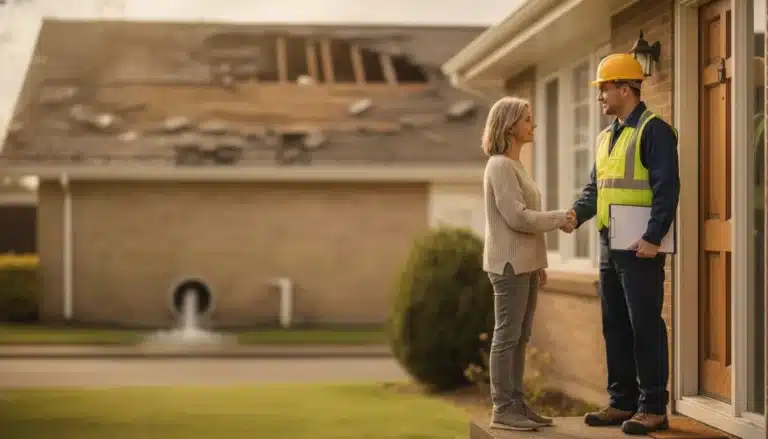
After a major storm or disaster event, local news outlets actively look for on-the-ground sources, and a contractor with crews already working in the affected neighborhood is the perfect interviewee. Earning a mention in a local or regional news article produces a backlink from a domain that often carries a Domain Authority score between 45 and 75, which is significantly higher than most contractor websites start with. For more information on disaster recovery best practices, consult FEMA or the EPA for regulatory compliance.
How do contractors get journalists to cover their work after a storm?
Timing is the variable most contractors miss. Reporters file storm-recovery stories within 24 to 72 hours of the event. A contractor who sends a concise press release or calls a local news desk within that window has a real shot at inclusion. The release should state the number of homes being served, the types of damage being addressed, and a quote from an owner or project manager. Keep it under 300 words. Attach one or two high-resolution job-site photos. Local TV stations, radio affiliates, and regional news sites all accept this format.
What kinds of local outlets carry the highest link value for home-service contractors?
Regional newspaper websites, local TV station web pages (many of which carry Domain Authority scores between 50 and 80), neighborhood-focused blogs, and county government emergency-management pages all produce high-value links. HOA newsletters that publish online and local real estate agent blogs are secondary but still relevant. The key is that the linking domain should cover your service area geographically. A news outlet three states away produces almost no local ranking benefit even if its Domain Authority is high.
Can a contractor build a system for capturing press links consistently?
Yes. The system requires three components. First, maintain an updated press contact list with names and direct emails at the top five to eight local outlets that cover your area. Second, prepare a press release template in advance that only needs location-specific details filled in after an event. Third, designate one person, typically the owner or office manager, to send the release within 24 hours of a qualifying job. Contractors who follow this system realistically capture two to five press-originated backlinks per year, which compounds significantly over a three-year period. Restoration contractors in particular should pair this approach with a 90-day restoration marketing framework that sequences outreach, content, and link acquisition together.
Supplier and Manufacturer Partner Links
Supplier and manufacturer partner pages are one of the most consistently underused link sources available to contractors. When you are a certified installer or authorized dealer for a roofing shingle brand, a water-damage restoration equipment supplier, or an HVAC equipment manufacturer, those companies often maintain a contractor locator or dealer directory on their websites. Those directory pages link back to your site.
Which manufacturers and suppliers actually link back to contractors on their websites?
Major roofing material manufacturers like GAF and CertainTeed operate contractor certification programs that include directory listings with backlinks. HVAC equipment brands run similar programs. Water and fire restoration equipment suppliers maintain certified-technician directories. Building material distributors sometimes list preferred local contractors on regional landing pages. The Domain Authority of these manufacturer domains frequently ranges between 40 and 70, and the links are editorially placed, meaning Google treats them as genuine endorsements rather than purchased links. Industry standards are governed by organizations like construction management associations.
How does a contractor actually claim these supplier directory links?
The process is more straightforward than most contractors expect. Step one is to list every manufacturer, distributor, and supplier your company actively uses. Step two is to visit each company’s website and search for terms like “find a contractor,” “certified installers,” “dealer locator,” or “preferred contractors.” Step three is to contact the supplier’s contractor relations or marketing department directly, confirm your certification or purchasing relationship, and request that your listing include a link to your website rather than just your phone number. Most suppliers comply within two to four weeks. This process typically yields five to fifteen new referring domains within the first 90 days if done systematically.

What if a supplier directory only shows a phone number and no link?
Request an upgrade to the listing. Suppliers want their certified contractors to look professional because it reflects on their brand. Frame the request as a benefit to both parties: a linked listing allows homeowners to verify your credentials and contact you directly, which increases conversion rates for the supplier’s product. Most supplier marketing teams understand this argument. If the directory platform does not support hyperlinks, ask whether the supplier can create a blog post or case study featuring a job you completed using their product. That content often carries a link naturally and frequently earns more traffic than a directory entry alone. HVAC contractors can strengthen this approach further by building out maintenance agreement programs that create recurring revenue and give suppliers a reason to feature your business as a long-term partner.
In this video
- 0:00 Guest Blog Backlinks Driving Local SEO Results
- 0:52 What a Guest Blog Backlink Actually Is
- 1:50 Domain Authority and Why Link Quality Matters
- 2:44 Keyword Rankings Jump from 14 to 46 Terms
- 4:07 Visibility Score Climbs from 5 to 14 Percent
- 5:20 Tracking Rankings Across South Asheville
- 6:07 Citywide Asheville Rankings Starting to Move
- 7:30 Next Steps and Who This Strategy Fits
Chamber of Commerce and Trade-Association Citations

Chamber of commerce memberships and trade-association listings produce two types of value simultaneously: a citation that reinforces your NAP (name, address, phone number) consistency, and a backlink from a domain that Google associates with legitimate local business activity. These are not the highest-authority links available, but they are stable, relevant, and expected for any contractor operating in a given market. The Occupational Safety and Health Administration (OSHA) maintains contractor safety standards and compliance resources.
Which associations actually carry SEO weight for home-service contractors?
The Asheville Chamber of Commerce, the National Roofing Contractors Association, and similar trade organizations maintain member directories with backlinks.
Watch: How do HVAC contractors get local backlinks that rank?
✓Are You Making the 4 Local Backlink Mistakes?7 quick questions · about 1 minuteStart
What this video covers
- 0:00 — Local Backlinks Move HVAC Rankings
- 0:41 — How Fast Local Links Work
- 1:16 — Why Local Relevance Multiplies Link Value
- 1:50 — Fastest Local Backlink Sources to Pursue
- 2:30 — Comparing Link Sources Side by Side
- 3:13 — Four Mistakes HVAC Contractors Make
- 3:59 — What the Numbers Look Like in Practice
- 4:31 — The Sequence That Actually Works
- 5:16 — Local Specificity Beats Domain Authority
- 5:45 — Backlink Audit Finds Hidden Opportunities
Full video transcript
If you run an HVAC company in North Carolina and you've been grinding away at your website without seeing map pack movement, the answer is almost certainly local backlinks. Not links from random national directories — links from organizations in your own backyard that tell Google your business actually belongs in this market. That's what we're breaking down today.
I'm Jeremy with PushLeads. My entire focus is making the phone ring for HVAC contractors who want more local search visibility. PushLeads has been at this since 2012, and I was ranking sites five years before that. This video is about the exact local backlink sources that push HVAC contractors to page one in North Carolina markets.
Here's the direct answer. Yes, local backlinks move HVAC rankings, and the timeline is faster than most contractors expect. Search Engine Land documented map pack position changes within 60 to 90 days of earning just a handful of quality local links. BrightLocal's research confirms that link signals are among the top factors for local organic rankings, and that local relevance multiplies what each link is worth. One strong backlink from an Asheville news outlet can outperform 50 links from low-authority national directories. Fewer, better links is the strategy.
Why does local relevance matter so much? Google ranks local businesses on three core signals: relevance, distance, and prominence. Backlinks feed directly into prominence. A contractor with strong local links signals a more established, more trusted business. A backlink from the Buncombe County Chamber tells Google your company is genuinely embedded in that market. And for a Weaverville HVAC company competing with Asheville businesses, a link from a Weaverville neighborhood association carries more geographic weight than anything a broad regional site can offer.
The fastest sources to pursue are the ones where a relationship already exists. Local chambers and business associations publish member directories with live links, and membership costs $200 to $500 a year. Manufacturer dealer pages from Carrier, Lennox, and Trane link directly to certified contractors. If you're certified and not listed, one email to your regional rep typically handles it. Industry associations like ACCA and PHCC run contractor locators that carry real authority in the HVAC space. These are the lowest-friction backlinks available, and most contractors have never asked for them.
Not every link source delivers equal value, so it helps to see them side by side. Chamber of Commerce listings are high local relevance, low effort, and cost $200 to $500 a year. Manufacturer dealer pages are high relevance, low effort, and free with certification. Local news sites — the Asheville Citizen-Times, Mountain Xpress — are the highest local relevance you can earn, but they require a pitch and a relationship. HOA and neighborhood sites are similarly high value but need relationship building. Generic national directories sit at the bottom: low relevance, easy to get, and unlikely to move anything meaningful.
Most HVAC contractors make the same four mistakes that cancel out whatever work they're doing. First, they focus entirely on national links and ignore local North Carolina chambers, suppliers, and community sites. Second, they never contact their regional rep to get listed on manufacturer dealer pages — a free backlink left sitting on the table. Third, they use one catch-all services page instead of separate pages for each service, which means every backlink they earn has only one generic destination. Fourth, their business name, address, and phone number appear differently across Yelp, Angi, and the BBB, and that NAP inconsistency undermines the trust value of every link pointing at the site.
Here's what the numbers look like in practice. In smaller markets like Weaverville, five to ten strong local backlinks combined with a well-maintained Google Business Profile and recent reviews can move a contractor into competitive map pack positions. For tougher terms like AC Repair Asheville, expect three to six months of consistent effort. Reviews and backlinks are separate ranking signals, but they compound. A company with strong local links and frequent reviews outperforms one with only one of the two, and recent reviews matter as much as total review count.
Here's the sequence that works. Start by fixing any inconsistent citations before you build anything new. Mismatched addresses reduce the value of backlinks you already have. Then claim your manufacturer dealer listing with one email, join your local chamber, and join at least one trade association. Once those are in place, pitch local news outlets — offer a quote on heat pump incentives or what homeowners should check before cold weather hits. Ask the plumbers, electricians, and property managers who already refer you to list you on their vendor pages. Finally, build dedicated pages for each service in each town you actually serve, so every backlink you earn has a specific, relevant place to land.
This captures the core principle: a backlink from a Weaverville neighborhood blog carries more local signal than one from a national home improvement site, even if that national site has higher overall domain authority. That's the mindset shift that separates contractors who move up the map pack from ones who accumulate links without seeing results. Local specificity is the advantage that a smaller Weaverville company can actually own against larger Asheville competitors.
Most HVAC contractors in North Carolina don't know which of their competitors' backlinks are driving rankings, which of their own links are doing nothing, or where the easiest local opportunities in their market are sitting unclaimed. A backlink audit answers all three with real data. PushLeads tracks backlink acquisition and ranking movement together, so you can see exactly which links move the needle — not just a count of what you've collected. Get a free teardown of your current visibility at the link in the description, or call 828-348-7686.
Keep Reading
Want more customers from Google & AI search?
Get a free SEO audit of your site — see exactly what to fix first.
Your path · Emergency Service Marketing for Home Service Contractors
Keep going: read these next

- Up nextLocal Service Ads for Emergency Contractors: The Complete Setup and Optimization Guide
- Nextdoor Marketing for Emergency Contractors: How to Win Neighborhood Trust and Generate Local Leads
- Zero-Click Searches: How Emergency Service Contractors Can Protect Their Leads



Want this done for you?
Scan your site. See the gaps. Decide with numbers.
- Rankings, Google Business Profile and site-speed teardown
- Report lands in your inbox in about a minute
- No obligation · 4.9 from 67 Google reviews
 Continue reading

