
 Homeowners insurance deductibles rose an average of 22% in 2025, and premiums increased another 10% on top of that. For restoration companies, this shift changes everything about how you sell, how you collect payment, and which services generate the most profit. When your customer’s out-of-pocket cost jumps from $1,000 to $5,000 or even $15,000, the sales conversation is fundamentally different.
This isn’t a temporary correction. Insurance carriers are restructuring their risk models after absorbing $182.7 billion in weather disaster losses across 27 billion-dollar events in 2024. The days of $500 deductibles and broad coverage are ending, and restoration companies that don’t adapt their business models will lose revenue to companies that do.
What’s Actually Changing
Want it done for you? See our restoration SEO and marketing agency.
The numbers tell a clear story. According to the National Association of Insurance Commissioners (NAIC), the average homeowners insurance deductible has shifted from flat-dollar amounts ($500-$1,000) toward percentage-based structures (1-5% of the insured dwelling value). On a $400,000 home, a 2% deductible means $8,000 out of pocket before insurance pays a dollar.
Industry analyst Phillip Rosebrook of C&R Magazine documented a Texas client whose premium jumped from $3,500 to $20,000 while their deductible tripled in a single renewal cycle. That’s an extreme case, but the trend is national.
Several forces are driving this:
Catastrophic loss frequency. The U.S. has now experienced billion-dollar weather disasters at an accelerating rate. Hurricane Helene killed 250 people and caused over $55 billion in damages. Hurricane-related claims overwhelmed carrier reserves in multiple states.
Carrier market exits. Major insurers have withdrawn from high-risk markets entirely. State Farm, Allstate, and others stopped writing new policies in parts of Florida and California. When fewer carriers compete, remaining companies raise prices.
Reinsurance costs. The companies that insure insurance companies have raised their own rates, and those costs pass directly to policyholders.
For restoration companies watching these trends, the strategic question is simple: how do you maintain revenue when your customers have less insurance coverage and more out-of-pocket exposure?
The Direct Impact on Restoration Revenue
Rising deductibles create three specific problems for restoration companies:

Smaller jobs disappear. When a homeowner’s deductible is $5,000 and the water damage restoration costs $4,500, there’s no insurance claim to file. The homeowner pays the full amount out of pocket, and many will try DIY solutions or simply live with the damage rather than spend $4,500. Your water damage restoration volume on smaller jobs will decline.
Sales conversations get harder. When insurance covered 90% of the bill, restoration was an easy decision. Now homeowners face real financial pain on every claim. They’ll shop harder, question scope, and resist recommendations they perceive as unnecessary. The days of “don’t worry, insurance covers it” are over.
Collection risk increases. Higher deductibles mean collecting larger amounts directly from homeowners rather than from insurance carriers. Carrier payments are reliable (slow, but reliable). Homeowner payments carry more risk of partial payment, delayed payment, or nonpayment.
Want more customers from Google & AI search?
Get a free SEO audit of your site — see exactly what to fix first.
Strategy 1: Offer Financing Options
When homeowners face $5,000 to $15,000 in out-of-pocket restoration costs, payment flexibility becomes a competitive differentiator. Phillip Rosebrook explicitly recommended “exploring financing options” as a critical industry adaptation.
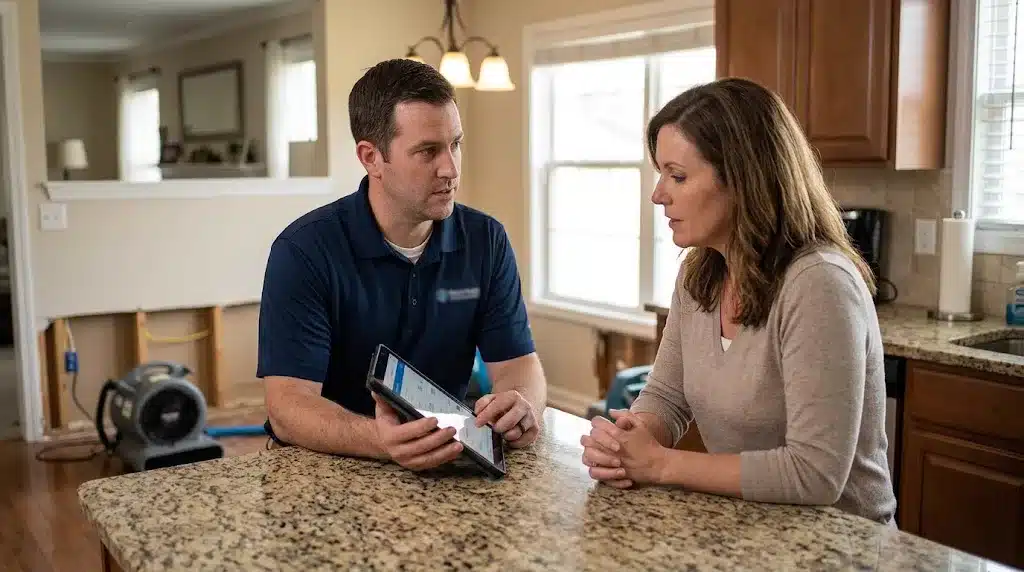
Third-party financing platforms allow homeowners to spread restoration costs over 6-60 months. Platforms like GreenSky, Service Finance, and Enhancify work with home service companies. The restoration company gets paid in full upfront; the financing company collects from the homeowner over time.
In-house payment plans work for smaller amounts ($1,000-$5,000). A simple agreement splitting the deductible into 3-4 monthly payments can make the difference between a signed work authorization and a homeowner who decides to “wait and see.”
Credit card payment processing sounds obvious, but many restoration companies still don’t accept cards or add surcharges that discourage their use. According to a 2024 Pew Research study, 41% of Americans don’t carry cash for daily purchases. Making credit card payment easy and fee-free removes friction at the point of sale.
If you’re already running marketing campaigns for restoration leads, mentioning financing options in your ads and on your website increases conversion rates. “Financing available” in a Google Ads extension can push a prospect from researching to calling.
Strategy 2: Diversify Into Commercial and Municipal Work
Commercial restoration represents roughly 35% of total industry revenue, and commercial clients operate differently from homeowners. Commercial property insurance typically has lower percentage deductibles relative to the loss size, and property managers prioritize speed of restoration over cost minimization because business interruption losses dwarf restoration costs.

Rosebrook recommends pursuing “new verticals: municipalities, commercial, healthcare” as insurance dynamics shift. Commercial Emergency Response Plans (ERPs) create recurring revenue relationships. A property management company with 50 units needs a restoration partner on retainer, not a one-time vendor.
Marketing to commercial clients requires different tactics than residential. Multi-location restoration marketing strategies, B2B networking, and direct outreach to property managers and facility directors replace the residential playbook of Google Ads and local SEO.
In this video
- 0:00 Why Commercial Restoration Revenue Dwarfs Residential
- 1:36 Know Your Buyers Property Managers to Adjusters
- 2:07 12-Month Commercial Acquisition Calendar
- 3:24 Decisions Happen Before Disasters
- 4:30 Three Revenue Numbers That Make the Case
- 5:09 Three Pillars Every Commercial Plan Needs
- 5:58 Targeting by Facility Type and Timing
- 6:59 LinkedIn Sequencing and Cold Outreach
- 7:43 PPC and Retargeting for Commercial Accounts
- 8:41 The Real Cost of Missing a Window
- 9:50 Owned Assets That Compound Over Time
- 10:33 Six to Eight Touches Close Commercial Deals
Full transcript: How do restoration companies win commercial clients year-round?
Strategy 3: Adjust Your Marketing Message
Your marketing needs to acknowledge the new financial reality without scaring away prospects. The old message of “We work directly with your insurance company” is losing effectiveness when insurance covers less and less.
New messaging approaches:
“We help you maximize your insurance claim and offer flexible payment options for your deductible.” This positions you as an ally who helps them get the most from their policy while making the out-of-pocket portion manageable.
“Free damage assessment with detailed documentation you can submit to your insurance company.” Leading with a free assessment lowers the barrier to entry and positions your website as a conversion tool rather than a sales pitch.
“Certified technicians who document every step, so your insurance company covers what they should.” This addresses the homeowner’s fear that they’ll pay their deductible and then discover insurance won’t cover the rest.
Updating your Water Damage Service Page Optimization and fire damage content with financing information and clear explanations of the insurance process helps capture leads from homeowners who are now doing more research before committing.
Strategy 4: Emphasize Value Over Price
When homeowners are paying more out of pocket, they become more price-sensitive. The temptation is to compete on price, but that’s a race to the bottom. Instead, compete on value.
Document the cost of NOT doing it right. Show homeowners what happens when water damage isn’t properly dried, using real data. According to FEMA, mold can begin growing within 24-48 hours. Explain that a $4,000 water extraction today prevents a $15,000 mold remediation job next month. Make the financial case for proper restoration.
Showcase your technology and expertise. Thermal imaging, professional-grade dehumidifiers, and moisture monitoring equipment produce better outcomes than rented fans and a Shop-Vac. When homeowners see the technology you bring, they understand why professional restoration costs what it does.
Provide detailed written estimates with explanations. Don’t just list line items. Explain what each step does and why it matters. Homeowners who understand the scope of work are less likely to cut corners.
Maintain your IICRC certifications and display them prominently. When the homeowner is spending their own money, they need confidence that you know what you’re doing. Certifications provide that assurance.
Strategy 5: Build Direct Referral Networks
As insurance-driven referrals become less reliable, building your own referral pipeline matters more than ever. Plumbers, real estate agents, property managers, and insurance agents all encounter water damage and mold situations regularly.
A plumber who discovers a burst pipe at 10 PM needs a restoration company to call. If that’s your company, you get the job before the homeowner ever contacts their insurance company or searches Google.
Insurance agents are particularly valuable referral partners. Local agents want their clients to have a good experience because it reflects on the agent. They’ll recommend restoration companies they trust, bypassing managed repair programs entirely.
Build these relationships systematically. Attend local networking events, offer educational presentations, and create referral tracking systems so you can recognize and reward partners who send business your way.
In this video
- 0:00 Why Restoration Leads Feel Unpredictable
- 0:39 The Myth Holding Restoration Companies Back
- 1:33 Four Lead Categories You Must Separate
- 2:03 Where Restoration Leads Actually Come From
- 2:40 Local SEO Pillars for Restoration Rankings
- 3:28 Pay Per Call vs Form Fill Conversion Data
- 3:56 Channel Costs and Conversion Rates Compared
- 4:46 Response Time Is Where Most Leads Are Lost
- 5:20 Building Insurance Adjuster Referral Streams
- 6:26 Storm Events and Surge Preparation
- 7:07 Follow-Up System Six Components
- 7:49 Full Channel Picture and 18-Month Goal
Full transcript: Restoration Digital Marketing: Fill Your Pipeline Year-Round
Strategy 6: Pursue Self-Pay and Cash Customers
Not every job needs to go through insurance. For smaller damages below the deductible threshold, homeowners who pay cash represent a growing segment of your market.
These jobs are often faster, simpler, and more profitable than insurance claims. There’s no documentation burden, no adjuster negotiation, and no 30-60 day payment cycle. You scope the work, agree on a price, complete the job, and collect payment.
Market self-pay services explicitly on your website and in your advertising. Phrases like “Below your deductible? We can still help.” capture a segment of homeowners who assume they can’t afford professional restoration without insurance involvement.
Price self-pay work competitively but fairly. Homeowners paying out of pocket will comparison shop more aggressively than insured customers. Being 10-15% below your insurance-rate pricing acknowledges the reduced overhead of non-insurance work while maintaining healthy margins.

Preparing for What’s Next
The insurance industry isn’t going to reverse course. Carrier profitability pressures, climate-driven loss increases, and regulatory uncertainty all point toward continued deductible increases and coverage restrictions.
Smart restoration companies will build businesses that don’t depend entirely on insurance-funded work. That means multiple revenue streams (residential, commercial, municipal), multiple payment options (insurance, financing, cash), and marketing that reaches homeowners directly rather than waiting for insurance carrier referrals.
The companies that adapt fastest will gain market share from competitors who keep running the old playbook.

Frequently Asked Questions
How do I explain higher deductibles to homeowners who are upset?
Be transparent. Explain that insurance deductibles have increased across the industry and that you understand their frustration. Then immediately pivot to solutions: financing options, detailed documentation to maximize their claim, and a scope of work focused on essential restoration. Empathy first, solutions second.
Should I stop accepting insurance-funded work?
No. Insurance claims still represent the majority of restoration revenue. But you should reduce your dependence on any single payment source. A healthy mix might be 60% insurance, 20% commercial, 10% self-pay, and 10% other revenue streams.
What financing platforms work best for restoration companies?
GreenSky, Service Finance, and Enhancify are popular in the home services industry. Evaluate each platform on interest rates offered to homeowners, dealer fees charged to your company, approval rates, and payment speed. Most companies fund within 1-3 business days after job completion.
How do percentage-based deductibles affect restoration billing?
Percentage-based deductibles create larger out-of-pocket amounts on expensive homes and in high-value markets. A 2% deductible on a $600,000 home means $12,000 before insurance coverage kicks in. For restoration companies, this means more of the job cost comes directly from the homeowner.
Will commercial insurance deductibles rise the same way?
Commercial deductibles are also increasing, but the dynamics differ. Commercial policies are individually underwritten, and larger businesses have more negotiating power. The biggest commercial impact is in property-heavy industries like hotels, retail, and multifamily housing.
Keep Reading
Want more customers from Google & AI search?
Get a free SEO audit of your site — see exactly what to fix first.
Your path · Restoration SEO
Keep going: read these next
 You’re hereRising Deductibles and Shrinking Coverage: What Restoration Companies Must Do Now



Want this done for you?
Scan your site. See the gaps. Decide with numbers.
- Rankings, Google Business Profile and site-speed teardown
- Report lands in your inbox in about a minute
- No obligation · 4.9 from 67 Google reviews

