Key Takeaways
Most generic SEO agencies treat a restoration company like any other service business. That costs you money. A restoration specialist understands emergency intent, TPA relationships, Google Business Profile categories, and call tracking. Before you sign anything, ask for local pack screenshots, a sample call-volume report, and a direct reference from a restoration owner. Those three items alone will separate the specialists from the generalists faster than any sales call.
- Emergency intent keywords need click-to-call landing pages, not blog posts; research intent keywords need informational content, not service pages.
- The correct primary Google Business Profile category for most restoration companies is “water damage restoration service,” not “general contractor.”
- Generic city pages with swapped city names no longer fool Google; real service-area pages need 500 to 800 words with unique local signals.
- Call tracking is non-negotiable; if your agency reports only traffic and impressions, they are measuring the wrong thing.
- Ask every candidate agency about TPA context; silence on that question tells you everything you need to know.
- You should own your website and all content if you cancel; never sign a contract that holds your assets hostage.
- A monthly report should cover at least four of these six: inbound calls, local pack rankings, organic traffic by service line, page-level conversion rates, GBP actions, and site health.
Key moments (12)
0:19 Restoration Is Not a Normal SEO Niche
1:02 Emergency Intent Versus Research Intent
2:05 Insurance and TPA Context
2:45 Service-Area Pages Done Right
3:42 Google Business Profile Categories
4:31 Call Tracking and What It Actually Tells You
5:22 The Questions to Ask Before You Hire
6:10 The Proof to Demand
7:33 How Many Keywords Should You Target Per Page
8:03 What a Specialist Agency Tracks and Reports
8:39 What PushLeads Does
Full transcript
0:00 Intro
Most generic SEO agencies will lose you money in this industry. The right one pays for itself in inbound emergency calls. Here is exactly how to tell the difference, the questions to ask, the proof -to -demand, and the red flags that should end the conversation.
0:19 Restoration Is Not a Normal SEO Niche
A plumber has maybe three or four services. A restoration company has water, fire, mold, biohazard, contents, reconstruction, and sometimes pack out. Each one of those has a different buyer urgency. Each one has a different insurance workflow. Each one has a different keyword intent. A generic agency sees one website. A restoration specialist sees six or seven separate problems stacked inside one domain. If your agency has never heard of a TPA, never mapped your services to emergency versus non -emergency intent, and cannot name the top four Google Business Profile categories for a restoration company, they are going to burn your budget learning on your business.
1:02 Emergency Intent Versus Research Intent
This is the single biggest thing most agencies miss. When someone types water damage restoration near me at two in the morning, they are not comparing prices. They are panicking. They need a phone number. They need it in under 10 seconds. That is emergency intent. It needs a landing page built to convert fast, click to call front and center, load speed under two seconds, and local pack visibility above everything else. When someone types how long does mold remediation take, they are researching. They might call in three days. That is research intent. It needs a blog post or FAQ page, not a service page built for conversion. A generic agency treats both of the same. A restoration specialist separates them at the keyword level, the page level, and the reporting level. PPA stands for third -party administrator,
2:05 Insurance and TPA Context
companies like Elacrity, Contractor Connection, and SLS manage claims on behalf of insurers. A restoration SEO agency that actually understands your business knows homeowners sometimes search with insurance language. Phrases like insurance approved water damage company or does insurance cover mold removal show up in real search behavior. Your agency should know to target those phrases. They should also know that ranking for them brings a different buyer than a pure emergency caller, and your content should speak to both. If you ask your agency about TPA context and they go silent or change the subject, that tells you everything.
2:45 Service-Area Pages Done Right
This is where most agencies fake it. They spin up 50 pages with the city name swapped in, same body copy, same headings, same everything. Google sees through that in months, sometimes weeks. A restoration specialist builds service area pages with real local signals. That means referencing the specific neighborhoods you actually serve, the local humidity or flood risk context where it is relevant, and internal links to real locally relevant content. Each page should have a unique meta title, a unique H1, unique body copy, and a real reason to exist beyond just the city name. The industry ballpark for a solid service area page is around 500 to 800 words with two or three local signals woven in naturally. If an agency is offering you 50 city pages in the first month, ask to see examples of pages they have already built that actually rank.
3:42 Google Business Profile Categories
Your GBP is often more important than your website for emergency calls. The right primary category for most restoration companies is water damage restoration service. Secondary categories should cover fire and smoke damage, mold remediation, and potentially building restoration. A generic agency will often leave you on general contractor or cleaning service because that is what they defaulted to for the last client they worked with. Wrong categories cost you local pack placements, local pack placements cost you inbound calls. Ask any agency you are evaluating. What primary GBP category do you recommend for us and why? If they cannot answer without looking it up, move on. SEO for restoration is not about rankings.
4:31 Call Tracking and What It Actually Tells You
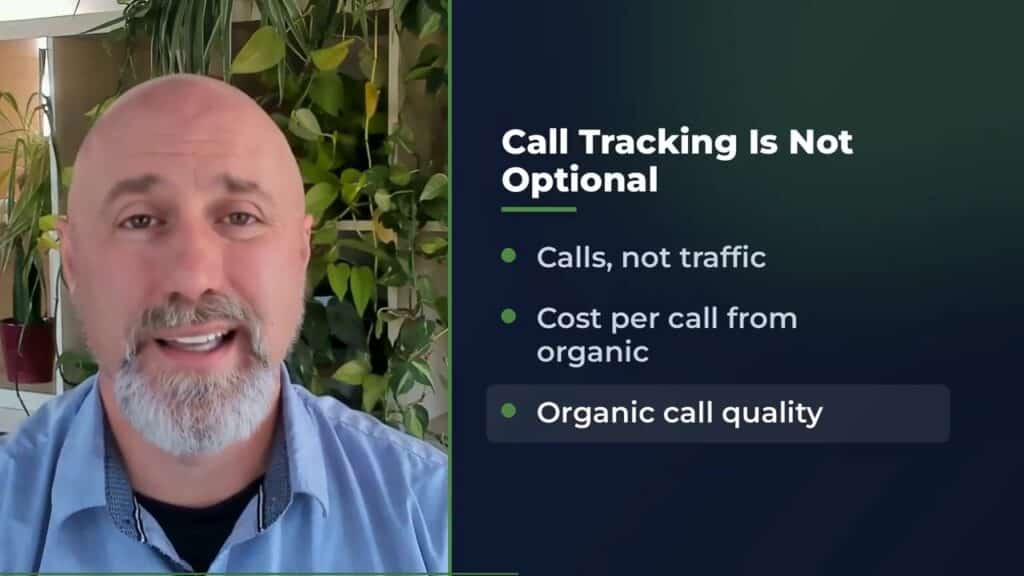
It is about inbound phone calls. A specialist agency will set up call tracking so you can see exactly which keywords, which pages, and which campaigns are generating real phone calls, not just website visits. They should be able to tell you your costs per inbound call from organic search, which service lines are driving the most calls, and what your close rate is on those calls versus paid leads. Industry ballpark, organic leads from SEO often close at higher rates than paid because the person found you on their own terms. In my experience with service businesses, organic call quality tends to run meaningfully higher than paid traffic call quality over time. If your agency is reporting to you in traffic and impressions only and cannot tell you how many calls you got, they are measuring the wrong thing. Here are the specific questions that sort specialists from generalists.
5:22 The Questions to Ask Before You Hire
1. Can you name the difference between emergency intent and research intent keywords for a water damage company? 2. What GBP primary category do you recommend for a restoration company? 3. How many service area pages do you think we need and how are you going to make each one unique? 4. How do you handle call tracking and attribution? 5. Have you worked with restoration companies before and can I see examples of local pack rankings you have driven? 6. Do you understand TPA relationships and insurance driven search behavior? 7. What happens to my site and content if I leave? That last question matters more than people think. Some agencies build on proprietary platforms or hold your content hostage.
6:10 The Proof to Demand
You should own everything. Talk is cheap. Before you sign anything, ask for three things. First, local pack screenshots for restoration keywords in markets they have worked in. Not just the keyword, the full three pack with the business name visible. Second, a sample report showing call volume from organic not just traffic or impressions. Third, a reference from at least one restoration company owner you can call directly. If an agency cannot produce any of these, they have not done the work. Guaranteed rankings. No agency can guarantee a Google ranking. If they promise one leave, lock -in contracts over 12 months with no exit clause. You should be able to leave if performance is not there. Reporting in impressions only. If they cannot tie their work to calls or revenue, they are hiding behind vanity metrics. No call tracking setup. This is table stakes for any local SEO agency in 2026. Templated service pages with just the city name swapped. Ask to see examples and read the actual page copy. Vague keyword targeting. An agency should be able to tell you exactly how many keywords they are targeting per page and what each one is. The industry norm for a focus service page is one primary keyword with two
7:33 How Many Keywords Should You Target Per Page
or three supporting terms. This comes up a lot. For a service page, one clear primary keyword. For a blog post, one primary keyword, three to five closely related terms woven in naturally. If a page is trying to rank for 12 unrelated keywords, it is probably ranking for none of them well. The agencies that ask how many times to repeat a keyword in a blog are still operating on 2012 SEO logic. Modern search is about topical relevance, not keyword density.
8:03 What a Specialist Agency Tracks and Reports
A restoration SEO specialist should report on these every month. Inbound calls from organic search, local pack rankings for your top service keywords, organic traffic by service line, not just total site traffic, page level conversion rates, meaning how many visitors call, GBP actions, meaning calls, direction requests, and website clicks from your profile. Site health because broken pages and slow load times kill rankings quietly over time. If your current report does not include at least four of those six,
8:39 What PushLeads Does
you are flying blind. PushLeads work specifically with restoration and service businesses. The focus is local SEO, GBP management, and AI search visibility. The team understands emergency intent, service area page strategy, and call tracking for inbound lead attribution. It is not a fit for every company, but if you are a restoration owner who wants an agency that speaks your language from day one, it is worth a conversation. Start with a free AI visibility check. Go to PushLeads.com slash check or call 828 -348 -7686. The check shows you how visible your business is in both traditional search and AI driven search results, where more and more homeowners are starting their research. It takes about five minutes to request and gives you a real starting point before you commit to any agency relationship.
Why Restoration SEO Is a Different Problem Than General Contractor SEO

A restoration company has six or seven distinct service lines, each with its own buyer urgency, insurance workflow, and keyword intent, and a generic agency sees all of that as one website rather than six or seven separate problems stacked inside one domain. A plumber handles three or four services. A restoration company handles water damage, fire and smoke, mold remediation, biohazard cleanup, contents, reconstruction, and sometimes pack-out. Every one of those services attracts a different type of searcher at a different point in their decision. Someone with a flooded basement at two in the morning behaves nothing like someone calmly researching whether their homeowner’s policy covers mold removal.
That distinction has real consequences for page design, keyword selection, GBP setup, and reporting. When an agency does not understand it, they build the wrong pages, target the wrong phrases, and report on the wrong numbers. The result is a site that may technically rank for some terms but generates very few inbound calls. If you have ever wondered why your SEO spend never seems to show up as actual phone calls, that mismatch is usually the reason.
A specialist who works with restoration companies regularly will map every service to its intent category before writing a single word of copy. They will know which phrases signal panic and need a fast-converting page, and which phrases signal curiosity and need a blog post or FAQ. That mapping shapes everything downstream, from content structure to internal linking to how the monthly report is built. Working with a restoration company SEO agency that has already built this framework saves you months of trial and error on your budget.
Want more customers from Google & AI search?
Get a free SEO audit of your site — see exactly what to fix first.
Emergency Intent Versus Research Intent: The Distinction That Drives Calls

Emergency intent means the searcher needs help right now and will call the first credible option they see, while research intent means the searcher is gathering information and may not call for days. Getting those two categories mixed up is one of the most expensive mistakes a restoration company can make in its SEO strategy.
What does emergency intent look like in a restoration search?
When someone types “water damage restoration near me” at two in the morning, they are not comparing prices or reading reviews in depth. They are panicking and they need a phone number in under ten seconds. An emergency-intent page needs a click-to-call button above the fold, a load speed under two seconds, and local pack visibility that puts your business in front of that query before anything else. The page should be short, direct, and built entirely around converting a scared homeowner into a phone call. Long-form educational copy on that page will hurt you because it delays the action you need the visitor to take.
What does research intent look like in restoration searches?
A query like “how long does mold remediation take” signals a very different mindset. That person might call in three days after they have read a few articles and decided what to do next. That query needs a blog post or FAQ page with real answers, not a service page optimized for immediate conversion. Sending that searcher to a service page built for emergency intent will feel pushy and irrelevant, and they will bounce. A restoration specialist separates these two categories at the keyword level, the page level, and the reporting level. A generic agency almost never does.
How should a restoration SEO agency separate these two intent types in reporting?
Your monthly report should show call volume broken out by page and by keyword, not just aggregate traffic. That way you can see which emergency-intent pages are actually generating calls and which research-intent pages are building the audience that calls later. If your agency cannot show you that breakdown, they almost certainly have not built the underlying tracking infrastructure to capture it. Call tracking tied to specific pages and keywords is the only way to know whether your SEO spend is producing revenue or just impressions.

TPA Context and Insurance-Driven Search Behavior

A TPA, or third-party administrator, is a company like Alacrity, Contractor Connection, or SLS that manages claims on behalf of insurers, and homeowners sometimes use insurance language when they search for restoration help. An agency that has never heard the term TPA will not know to target those phrases, which means you miss a segment of searchers who are already further along in the claims process and often easier to close.
What insurance-related phrases do homeowners actually search for?
Phrases like “insurance approved water damage company” and “does insurance cover mold removal” show up in real search behavior. Those queries come from homeowners who already know they have a claim and are looking for a contractor their insurer will recognize. Ranking for those phrases brings a different buyer than a pure emergency caller. That person is not panicking at two in the morning; they are making a more deliberate decision and comparing options. Your content needs to speak to both audiences, which means having separate pages or sections that address the insurance workflow directly.
How can you tell if an agency understands TPA relationships?
Ask them directly about TPA context in a pre-hire conversation. If they go silent, change the subject, or ask you what a TPA is, that tells you they have not worked with restoration companies at any serious depth. It is not a trick question. Any agency that has genuinely run SEO campaigns for restoration companies will have encountered TPA terminology and insurance-driven search behavior within the first few months of a campaign. Ignorance of that term is a clear signal that your budget will fund their education rather than your growth.
Should insurance-related content live on its own pages or be woven into existing service pages?
The answer depends on search volume and competition in your market, but as a general rule, if a phrase gets meaningful search volume in your area, it deserves its own dedicated page or at minimum a substantial section with its own heading structure. Tucking one sentence about insurance into a generic water damage service page will not rank for insurance-specific queries. A restoration specialist will audit your keyword data and decide where insurance content fits structurally before building anything.

Building Service-Area Pages That Actually Rank

Spinning up fifty city pages with only the city name swapped in is a tactic that Google has seen through for years, and it will not earn you local pack rankings or meaningful organic traffic. Real service-area pages require unique copy, genuine local signals, and a clear reason to exist beyond just the geography.
What makes a service-area page unique enough to rank?
The industry ballpark for a solid service-area page is 500 to 800 words with two or three local signals woven in naturally. Local signals can include references to specific neighborhoods you actually serve, relevant local context like flood risk or humidity levels that affect damage patterns in that area, and internal links to locally relevant content on your site. Each page needs a unique meta title, a unique H1, and body copy that could not be lifted word for word onto another city’s page. If the only thing that changes is the city name, you do not have a local page; you have a template Google will largely ignore.
How many service-area pages does a restoration company actually need?
The right number depends on your actual service area, not on what an agency can produce fastest. An agency that offers fifty city pages in the first month is almost certainly using a template approach. The better question to ask them is not how many pages they will build but whether they can show you examples of service-area pages they have already built that rank and generate calls in a comparable market. Real examples with visible rankings are worth far more than a promise of volume. You can find specific questions to ask SEO agencies before you commit to any service-area page strategy.
What internal linking structure supports service-area pages?
Service-area pages should link to the primary service pages for each relevant service line, and those service pages should link back to the area pages where it makes geographic sense. This creates a logical structure that tells Google which pages are authoritative for which services and which geographies. An agency that builds area pages in isolation, without connecting them to the rest of your site through internal links, is leaving ranking potential on the table. The internal link structure is as important as the page copy itself for local SEO performance.
Google Business Profile Categories and Why They Determine Your Phone Calls

Your Google Business Profile is often more important than your website for emergency calls, and the primary category you choose controls which searches trigger your profile in the local pack. The correct primary category for most restoration companies is “water damage restoration service,” not “general contractor” or “cleaning service.”
What secondary GBP categories should a restoration company use?
Secondary categories should cover fire and smoke damage, mold remediation, and potentially building restoration depending on the scope of your services. These secondary categories expand the range of queries that can surface your profile in the local pack. A generic agency often defaults to the category they used for the last client, which may be “general contractor” or even “cleaning service.” Those categories will not trigger your profile for emergency restoration queries, which means you lose local pack placements, and local pack placements cost you inbound calls. The category selection is one of the highest-leverage decisions in local SEO for restoration, and it takes about two minutes to get right if you know what you are doing.
How should you test whether a prospective agency understands GBP categories?
Ask them directly in your first conversation: “What primary GBP category do you recommend for a restoration company and why?” A specialist will answer immediately with “water damage restoration service” and explain the reasoning. An agency that has to look it up or hedges with “it depends on your services” without naming the specific category is signaling they have not done this before. It is a simple factual question with a clear answer. Getting it wrong is not a minor oversight; it is a structural mistake that will cost you local pack visibility for months until someone fixes it.
What GBP actions should your agency be tracking each month?
Your monthly report should include calls generated from your GBP, direction requests, and website clicks from your profile. Those three numbers tell you whether your profile is surfacing for the right queries and whether the people who find it are taking action. If your agency is reporting only website traffic and ignoring GBP action data, they are missing the channel that most restoration emergency calls actually flow through. GBP performance should be a standing agenda item in every monthly review, not an afterthought.
Call Tracking and What It Actually Tells You About Your SEO

SEO for restoration is not about rankings; it is about inbound phone calls, and the only way to know whether your SEO is generating calls is to have call tracking set up at the keyword and page level. If your agency is reporting in traffic and impressions only, they are measuring the wrong thing.
What should a restoration company’s call tracking setup include?
A proper setup lets you see exactly which keywords, which pages, and which campaigns are generating real phone calls. It should show you cost per inbound call from organic search, which service lines are driving the most calls, and ideally what your close rate is on those calls compared to paid traffic leads. Without that attribution, you cannot make informed decisions about where to invest in new content or which service-area pages to prioritize. Call tracking at this level of detail is table stakes for any local SEO agency working with restoration companies in 2026, not an advanced add-on.
How does organic call quality compare to paid call quality for restoration?
Organic leads from SEO often close at higher rates than paid leads because the caller found you on their own terms rather than being served an ad. In my experience working with service businesses, organic call quality tends to run meaningfully higher than paid traffic call quality over time. That does not mean paid advertising is worthless, but it does mean that an organic SEO investment that generates fifty calls per month may be worth more in closed revenue than paid advertising generating the same call volume. Your agency should be helping you understand that difference, not hiding behind aggregate traffic numbers. Understanding the realistic SEO timeline for contractors will help you set appropriate expectations for when call volume should start climbing.
What call data should appear in a monthly SEO report for a restoration company?
A monthly report should cover inbound calls from organic search, local pack rankings for your top service keywords, organic traffic broken out by service line rather than just total site traffic, page-level conversion rates showing how many visitors actually call, GBP actions including calls and direction requests, and site health data because broken pages and slow load times kill rankings quietly over time. If your current report does not include at least four of those six items, you are running your business on incomplete information. Ask your agency to add the missing items to the next report and watch how they respond.
The Questions to Ask Before You Hire a Restoration SEO Agency

Seven specific questions will separate a restoration specialist from a generalist faster than any sales presentation. Ask all of them in your first conversation and judge the agency by the speed and specificity of their answers, not by how polished their slides look.
What specific questions reveal whether an agency understands restoration SEO?
Ask them: Can you name the difference between emergency intent and research intent keywords for a water damage company? What GBP primary category do you recommend for a restoration company? How many service-area pages do you think we need, and how will you make each one unique? How do you handle call tracking and attribution? Those four questions alone will tell you a great deal. A specialist answers all four without hesitation. A generalist will give vague answers or pivot to talking about their process without actually answering. These are not gotcha questions; they are basic competency checks for anyone who claims to specialize in restoration.
What questions about proof and references should you ask?
Ask whether they have worked with restoration companies before and whether you can see examples of local pack rankings they have driven for those clients. Ask them to show you a sample report with call volume from organic search, not just traffic. Ask for the name of at least one restoration company owner you can call directly. Those three requests separate agencies that have actually done the work from agencies that have watched a few YouTube videos about restoration SEO. Knowing who does the actual work at the agency, whether that is a senior strategist or an overseas team following a checklist, is also worth asking about directly.
What should you ask about contract terms and ownership?
Ask what happens to your site and content if you leave. Some agencies build on proprietary platforms or write your content in a way that makes it legally theirs if you cancel. You should own everything: the domain, the website files, every page of content, and all the data in your analytics and call tracking accounts. Understanding website ownership in contracts before you sign is not paranoia; it is basic due diligence. Lock-in contracts over twelve months with no exit clause for performance failures are another red flag. A confident agency does not need to hold you hostage to keep your business.

The Red Flags That Should End the Conversation

Certain agency behaviors are reliable signals that you are about to spend money on someone who will not deliver calls, and recognizing them early saves you months of wasted budget and lost opportunity.
What guarantees and contract terms should make you walk away?
No legitimate agency can guarantee a Google ranking. Google’s algorithm is not something any third party controls, and any agency that promises you a specific ranking is either misleading you or planning to use tactics that will eventually penalize your site. Walk away from that conversation immediately. Lock-in contracts over twelve months with no exit clause tied to performance are a close second. You should be able to leave if the results are not there after a reasonable ramp period. Checking how SEO money back guarantees are actually structured will tell you a lot about whether an agency is making promises they intend to keep.
What reporting and tracking failures signal a weak agency?
Reporting only in impressions and clicks with no call attribution is a clear sign the agency is hiding behind vanity metrics. Impressions tell you people saw your site in search results. They tell you nothing about whether anyone called. No call tracking setup at all is a related failure that in 2025 and beyond has no excuse. A restoration SEO agency that cannot tell you how many calls your organic search generated last month cannot tell you whether their work is worth paying for. That is not a minor gap in reporting; it is a fundamental problem with how they define success. You can see a real example of SEO rankings that don’t convert to understand what that failure looks like in practice.
What content and keyword red flags should you watch for?
Templated service pages with only the city name swapped in are easy to spot: ask to read the actual page copy for two or three different cities and see whether the body text is identical. Vague keyword targeting is another red flag. A competent agency should be able to tell you exactly how many keywords they are targeting per page and what those keywords are. For a service page, the standard is one primary keyword with two or three supporting terms. For a blog post, one primary keyword and three to five closely related terms woven in naturally. Any agency still asking how many times to repeat a keyword in a blog post is operating on 2012 SEO logic. Modern search rewards topical relevance, not keyword density.
What a Specialist Agency Should Report Every Month
A monthly report from a restoration SEO specialist should cover six specific metrics, and if your current report skips more than two of them, you are making decisions without enough information to know what is actually working.
Which metrics directly measure whether SEO is generating revenue?
Inbound calls from organic search and local pack rankings for your top service keywords are the two metrics that connect most directly to revenue. Calls are the outcome you are paying for. Local pack rankings show whether you are visible in the moment when emergency intent searchers are looking. Page-level conversion rates, meaning the percentage of visitors on a given page who call, tell you whether your pages are doing their job or just attracting traffic that never converts. Those three numbers together give you a clear view of whether your SEO investment is producing real business outcomes.
Which metrics help diagnose problems before they hurt rankings?
Site health data, covering broken pages, crawl errors, and slow load times, is the diagnostic layer of a good monthly report. A page that loads in four seconds instead of two will quietly lose local pack placements over time without any obvious single cause. Organic traffic broken out by service line rather than just total site traffic shows you whether a drop in performance is across the board or isolated to one service category, which changes what you do about it. GBP action data, specifically calls, direction requests, and website clicks from your profile, shows whether your profile is surfacing correctly in local search and whether the people who find it are taking the next step.
How often should you review SEO performance with your agency?
Monthly reviews are the minimum standard. Each review should include an agenda that covers the six metrics above, a comparison to the prior month, and a clear explanation of what changed and why. If your agency sends a report by email without walking you through it, ask for a call. The report itself is not the value; the interpretation of what the numbers mean for your next thirty days of work is where the value lives. An agency that can explain clearly why a specific page’s call rate dropped and what they plan to do about it is an agency that actually understands what they are building.
Frequently Asked Questions
How long does it take for restoration SEO to generate inbound calls?
Most restoration companies start seeing measurable increases in organic call volume between three and six months after a properly structured campaign launches. The timeline depends on how competitive your market is, the current state of your website’s technical health, and how quickly service-area pages and GBP optimizations are implemented. Emergency-intent pages tied to strong GBP categories can produce results faster than longer-form content targeting research-intent phrases, so the sequencing of work matters as much as the total timeline.
Should a restoration company use a local agency or a national one?
Either can work, but the more important factor is whether the agency has hands-on experience with restoration SEO specifically. A local agency in your market may understand regional search behavior, but if they have never built emergency-intent landing pages or set up call tracking for a restoration client, that local knowledge does not help much. A national agency with a documented restoration client roster and real ranking examples is likely a stronger choice than a local generalist who has never dealt with TPA context or multi-service-line keyword mapping.
What is a realistic monthly budget for restoration SEO?
Budget ranges vary widely by market size and competition, but restoration SEO in a mid-size to large metro typically requires a meaningful monthly investment to compete effectively. Very low-budget options, say under a few hundred dollars a month, almost never include the call tracking infrastructure, custom service-area pages, and GBP management that restoration companies need. The better framing is to ask what cost per inbound call you are willing to pay and work backward from there once you have baseline call volume data from a few months of tracking.
Can a restoration company do its own SEO?
Some foundational tasks, like claiming and completing your GBP, ensuring your business name, address, and phone number are consistent across directories, and publishing genuinely useful blog content, are manageable in-house if you have the time. However, the technical layers, including call tracking attribution, service-area page architecture, site speed optimization, and competitive keyword research, typically require dedicated expertise and tools that most restoration business owners do not have bandwidth to maintain while running crews and managing jobs.
What is the difference between local pack rankings and organic rankings?
The local pack is the map section with three business listings that appears near the top of Google results for location-based queries. It is driven primarily by your GBP, your proximity to the searcher, and your local relevance signals. Organic rankings are the traditional blue-link results below the local pack, driven primarily by your website’s content, authority, and technical health. For restoration emergency calls, local pack visibility tends to generate more immediate calls because it appears higher on the page and includes your phone number directly.
How do you know if your current SEO agency is underperforming?
The clearest signal is that your monthly report shows traffic and impressions but cannot tell you how many calls your organic search generated. A secondary signal is that your report has not changed structurally in six or more months, meaning your agency is reporting the same metrics in the same format without connecting them to your actual business outcomes. A third signal is that your GBP primary category is set to something other than “water damage restoration service” and your agency has never raised that issue.
What does it mean for AI search visibility to matter for restoration?
AI-powered search tools, including chatbots and AI-generated answer features built into search engines, increasingly answer homeowner questions directly before the person ever clicks a website. If your business and your content are not structured in a way that those AI systems can read and reference, you can lose visibility to competitors whose content is better optimized for extraction. For restoration companies, this is an emerging concern because homeowners researching mold remediation or water damage are exactly the kind of users who now turn to AI search before clicking any organic result.
What happens to your SEO if you cancel your agency contract?
If you own your domain, website, and all content outright, canceling means you retain everything that was built. Your rankings may drift over time without ongoing maintenance, but nothing disappears immediately. If your agency built your site on a proprietary platform or holds the content license, canceling can mean losing access to years of work. That is why asking about ownership before signing is critical. Any reputable agency will confirm in writing that you own all assets before the relationship begins.
Start With the Right Questions Before You Sign Anything
Choosing the wrong SEO agency costs a restoration company real money, not just in monthly fees but in missed emergency calls that go to a competitor who showed up in the local pack instead of you. The framework in this post gives you everything you need to evaluate any agency before you commit.
Ask about emergency versus research intent. Ask for the GBP category recommendation on the spot. Ask to see real local pack screenshots with business names visible. Ask for a sample report that shows call volume, not just traffic. Ask who owns your site and content if you leave. Those questions will tell you more in thirty minutes than any agency proposal document ever will.
At PushLeads, I work with restoration and home-service businesses specifically on local SEO, GBP management, and AI search visibility. I understand the service-line structure, the emergency intent dynamic, and the call tracking infrastructure that makes this kind of work actually show up as revenue. If you want to have that conversation, reach out at https://pushleads.com/contact/ and we can start with a free AI visibility check that shows you exactly where you stand before you commit to anything.
Keep Reading
Want more customers from Google & AI search?
Get a free SEO audit of your site — see exactly what to fix first.
Your path · Restoration SEO
Keep going: read these next

- Up nextIn-House Marketing Hire vs. Agency for Restoration Companies


Want this done for you?
Scan your site. See the gaps. Decide with numbers.
- Rankings, Google Business Profile and site-speed teardown
- Report lands in your inbox in about a minute
- No obligation · 4.9 from 67 Google reviews
 Continue reading