0:00 Intro
0:37 The Three Channels You’re Probably Using
1:23 Why Cost Per Click Is the Wrong Number
2:14 How SEO Actually Works on Cost
3:20 How LSA Works on Cost
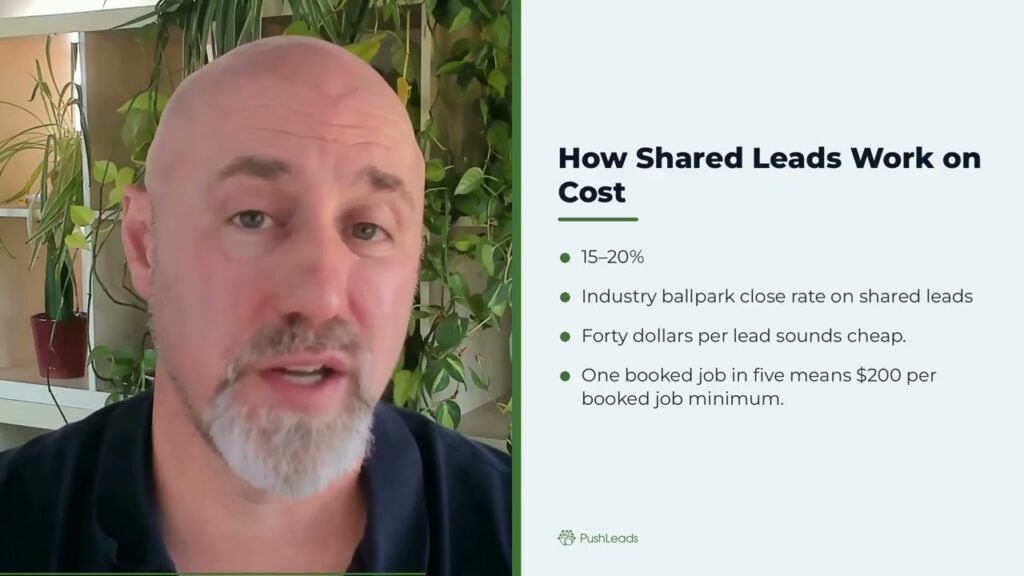
4:07 How Shared Leads Work on Cost
5:07 The Worked Example: How the Math Plays Out
6:18 The AIO Shift and Why It Matters Right Now
7:19 The Common Mistakes That Kill Your Cost Per Lead
8:20 What Good Tracking Actually Looks Like
8:57 How to Choose the Right Channel Mix
9:47 What to Do Next
Full transcript
0:00 Intro
Most restoration companies are paying somewhere between forty and three hundred dollars per lead depending on the channel But the number that actually matters is cost per booked job not cost per click that gap is enormous And most owners never see it because the invoices don’t show it So today I’m going to walk you through the three main digital channels restoration companies use Show you what each one actually costs on a per -booked job basis walk through the math on a realistic example And tell you where the hidden money drains are. Let’s get into it If you’re running digital marketing for a
0:37 The Three Channels You’re Probably Using
restoration company right now, you’re probably touching at least one of these three channels number one Organic SEO meaning your website showing up in the regular Google results number two Local Services Ads Which Google calls LSA the paper lead product that shows up at the very top with a green check mark number three Shared led platforms things like Thumbtack Angi or similar services where multiple contractors get the same lead at the same time each one has a completely different cost structure a Completely different close rate and a completely different path to a booked job If you’re comparing them on cost per click or even cost per lead without accounting for close rate you’re comparing apples to radiators
1:23 Why Cost Per Click Is the Wrong Number
The search date I look at regularly shows terms like how much does digital marketing cost and digital marketing agency pricing Pulling in meaningful traffic with position scores in the 50s Which tells me a lot of restoration owners are shopping for a number without a framework to evaluate it Cost per click tells you what you paid for someone to visit your website It does not tell you whether that person called whether someone answered whether they were in your service area or whether they booked a Channel with a low cost per click and a terrible close rate is more expensive in real terms Then a channel with a higher cost per click and a strong close rate The only number worth tracking is cost per booked job and to get there You need to know three things for each channel what you paid to get the lead How many of those leads turned into calls and how many of those
2:14 How SEO Actually Works on Cost
calls turned into booked jobs? Organic SEO has a high entry cost and a low long -run cost per lead Here’s what I mean. You’re typically paying a monthly retainer for SEO work in my experience serious SEO for a restoration company in a midsize market run somewhere in the range of $1,500 to $4,000 a month depending on competition how much ground you need to make up and what the agency is actually doing in The first six to 12 months your cost per lead from SEO looks terrible because you’re paying the retainer and the leads are still ramping up Water damage leads for $40 to $80 each in a typical market and here’s the part people miss Organic leads close at a fundamentally higher rate than shared leads because the person found you specifically They searched water damage restoration in their city. They saw your listing They clicked your site and they called you they are not also calling for other companies at the same moment That specificity is worth real money and close rate Local Services Ads charge you per lead not per click Google sets the price
3:20 How LSA Works on Cost
based on your market and your job category for water damage in most markets You’re looking at somewhere in the range of 50 to $150 per lead as a general ballpark though It varies a lot by market the quality is generally better than a shared lead platform because the person is still looking for you specifically Not responding to a marketplace ad the main risk with LSA is lead credit disputes and a limited daily budget that can get eaten up fast If your intake process is weak, which means slow to answer no techs follow up No after hours coverage. You will pay for leads. You never actually book LSA has a hard limit on volume two You can’t scale it infinitely in a smaller mid -size market because the search volume just isn’t there
4:07 How Shared Leads Work on Cost
Shared lead platforms make cost per lead look cheap But cost per booked job tells a very different story You might pay $20 per lead on a shared platform those same leads can cost up to $60 each That lead was also sold to three other companies at once it may have gone to four or even five competitors simultaneously The homeowner’s phone is ringing from every direction at once the first company to call usually wins that job If you wait longer than two minutes your close rate drops significantly even with perfect speed Shared leads close far less often than organic ones Organic leads come from homeowners who specifically chose you already a reasonable close rate on shared leads is 15% It might reach 20% under good conditions say you paid $40 per lead in close one and five Your cost per booked job becomes $200 minimum that figure ignores leads where someone else booked first Those lost leads still cost you
5:07 The Worked Example: How the Math Plays Out
real money every time Picture a restoration company doing 30 leads a month across two channels 15 of those leads come from a shared platform at $40 each that’s $600 and led spend if they close 20% they book three jobs Cost per booked job $200 The other 15 come from their own organic SEO the SEO retainer is $2 ,000 a month At 15 leads the cost per lead is $133 But their close rate is 45% because these leads are exclusive and the person sought them out They book roughly seven jobs cost per booked job $286 wait that looks like SEO is more expensive per booked job Why would you do it because those numbers shift over time at month 24 the same $2,000 retainer Might be generating 45 leads a month instead of Now cost per lead drops to $44 and at a 45% close rate cost per booked job is under $100 The shared platform stays flat. You pay the same rate per lead forever SEO builds an asset shared leads rent someone else’s audience There is a meaningful change happening in how Google surfaces information and
6:18 The AIO Shift and Why It Matters Right Now
restoration companies that move now are going to be in a much better Position than the ones who wait Google’s AI generated answers What a lot of people are calling AI or AI overviews are pulling information directly from websites and summarizing it in search results This is both a threat and an opportunity The threat clicks to individual websites can drop if Google is answering the question before anyone clicks The opportunity restoration is an emergency service Someone with active water damage in their home is not reading a summary They are clicking Calling or hitting the map pack immediately The companies that own the top organic positions for water damage terms in their market are still getting those calls And if your content is the source Google is pulling from for those AI answers Your brand is appearing even on searches that don’t result in a click That brand exposure builds trust at a scale that a $40 shared lead will never build for you
7:19 The Common Mistakes That Kill Your Cost Per Lead
Mistake number one counting a lead before it’s answered If your phones aren’t answered after hours or on weekends and you’re in water damage you are buying leads you cannot close That’s not a marketing problem. That’s an operations problem that shows up in your marketing numbers Mistake number two measuring cost per lead instead of cost per booked job Your crm or even a simple spreadsheet should be telling you for every dollar spent on each channel How many booked jobs came back if you can’t answer that you don’t actually know what your marketing is costing you Mistake number three canceling SEO before it matures SEO has a long ramp canceling a campaign at month four because it hasn’t produced a positive return Is like planning a tree watering it for a month and pulling it up The compounding is in months 12 through 36 Mistake number four ignoring speed to lead on shared platforms if you’re going to pay for shared leads You have to win the speed race every minute past the first two is costing you close rate You don’t need a complicated setup to track this properly At minimum you want
8:20 What Good Tracking Actually Looks Like
a unique phone number on each channel So calls are attributed correctly a simple log of where each booked job came from and a monthly tally of spend versus booked jobs per channel If you have a crm that’s better tag every lead at intake with the source Call tracking tools can do most of this automatically The point is that if you don’t have source level data on booked jobs You’re optimizing based on feelings not numbers And in a market where water damage leads can run from 40 to 150 dollars depending on the channel That’s an expensive way to run a business
8:57 How to Choose the Right Channel Mix
There’s no universal answer, but here’s a reasonable framework If you’re new and need leads immediately LSA is your fastest entry point for legitimate exclusive ish leads at a manageable cost Shared platforms can supplement volume, but watch your close rate closely If you’re established and want to build long run margin SEO is where the real cost per booked job advantage comes from over a two to three year horizon If you have both working The goal is to gradually shift budget toward the channels with the lowest cost per booked job Not the lowest cost per lead The data I see on searches like restoration digital marketing and water damage restoration business marketing Tells me there’s a lot of competition hunting for the same information you are right now The company’s building their organic presence now or getting ahead of that competition If you want to know what your market actually looks like Specifically which water
9:47 What to Do Next
damage terms have real search volume in your city And where you currently stand the best next step is a visibility audit We do these at no cost for restoration companies You can request one at SEO .PushLeads calm slash audit or call us directly at eight two eight three four eight seven six eight six No pitch you’ll get actual data on where your site stands What your competitors are doing and what the opportunity looks like in your specific market That’s the number that should drive every marketing decision you make
▶ Watch on its own page (10:45), with the transcriptMore videos in the library →
Key Takeaways
Restoration companies pay between $40 and $300 per lead depending on the channel, but cost per lead is the wrong metric. Cost per booked job is the number that drives real decisions. SEO starts expensive and gets cheaper over time. Shared leads start cheap and stay expensive forever. LSA sits in the middle. Knowing your close rate by channel is the only way to compare these accurately.
- Cost per booked job is the only metric worth tracking, not cost per click or cost per lead.
- Shared leads go to three to five competitors simultaneously, which crushes close rates.
- SEO builds an owned asset; shared lead platforms rent you someone else’s audience indefinitely.
- LSA is the fastest entry point for legitimate near-exclusive leads at a manageable upfront cost.
- If your phones go unanswered after hours, you are buying leads you will never close.
- Google’s AI-generated answers change the visibility landscape, but emergency services still drive direct clicks and calls.
- Speed to lead on shared platforms is not optional. Every minute past two costs you close rate.
What Digital Marketing Actually Costs a Restoration Company Per Booked Job
Most restoration companies pay between $40 and $300 per lead depending on the channel they use, but the number that actually drives profitability is cost per booked job, and those two figures can be radically different depending on close rate. The invoices from your ad platforms will never show you that gap. They show you spend and lead volume. They do not show you how many of those leads answered, how many were in your service area, or how many actually turned into revenue.
That is the problem I see repeatedly when I talk to restoration owners about their marketing budgets. They are comparing channels on cost per lead, which is like comparing cars on sticker price without looking at fuel costs, repair history, or how many miles are already on the engine. You end up making decisions that feel financially conservative but are actually bleeding money.
In this video
- 0:00 SEO Cost vs Return for Restoration Companies
- 0:32 What Restoration SEO Actually Costs
- 1:20 Why Restoration Job Values Change the Math
- 2:08 Months One Through Three Investment Period
- 3:09 Months Six Through Twelve Compounding Returns
- 4:06 High-Intent Keywords That Drive Real Calls
- 4:59 Page Structure That Wins Restoration Traffic
- 5:53 Five Mistakes That Kill SEO ROI
- 7:03 Realistic Twelve-Month Case Study
- 8:31 Three Progress Signals to Track by Month Four
- 9:10 Next Steps and Free Visibility Audit
Full transcript: How much does SEO cost for a restoration company versus what it actually returns?
The three channels most restoration companies are using right now are organic SEO, Google Local Services Ads (LSA), and shared lead platforms like Thumbtack or Angi. Each one has a different cost structure, a different close rate, and a completely different trajectory over time. When you look at them through the lens of cost per booked job instead of cost per lead, the ranking changes significantly. In some cases, the channel that looks cheapest on paper is the most expensive in practice. That is what I want to walk you through here.
Want more customers from Google & AI search?
Get a free SEO audit of your site — see exactly what to fix first.
Why Cost Per Click Is the Wrong Number to Optimize
Cost per click tells you what you paid for someone to visit your website, and nothing else. It does not tell you whether that person called, whether someone answered, whether they were inside your service area, or whether they ever booked a job. A channel with a low cost per click and a poor close rate costs more in real terms than a channel with a higher cost per click and a strong close rate.
The only calculation that matters is cost per booked job, and to get there you need three data points for each channel: what you paid to get the lead, how many of those leads became phone calls, and how many of those calls became booked jobs. Most restoration companies do not have all three of those numbers by channel. That means they are optimizing on feelings.
Why do restoration owners focus on cost per click instead of cost per booked job?
Cost per click is the number that shows up most prominently in ad platform dashboards, so it tends to anchor decision-making even when it is not the most useful metric. Ad platforms are designed to show you the metrics that make their product look effective. Cost per booked job requires you to connect your marketing data to your CRM or job log, which takes a little setup. Most owners skip that step and end up making channel decisions without accurate information.
What three numbers do I need to calculate cost per booked job?
You need total spend on the channel for the period you are measuring, the number of booked jobs that originated from that channel in the same period, and ideally a close rate calculated from leads to bookings. Divide total spend by booked jobs and you have your real cost per acquisition. If you are running multiple channels without unique phone numbers or source tagging, you cannot calculate this accurately because you cannot attribute the bookings correctly.
How does close rate change the cost comparison between channels?
Close rate is the multiplier that separates channels that look similar on a per-lead basis into very different cost structures per booked job. If you pay $40 per lead on a shared platform and close 20 percent, your cost per booked job is $200. If you pay $80 per lead from organic SEO and close 45 percent, your cost per booked job is about $178. The organic lead looks more expensive until you account for close rate, at which point it is actually cheaper per job booked.
How Organic SEO Works on a Per-Lead Cost Basis
Organic SEO has a high entry cost and a low long-run cost per lead, and understanding that curve is critical before you evaluate it against other channels. You pay a monthly retainer for the work, and in the first six to twelve months the leads are still ramping up, so your cost per lead during that period looks poor. But the trajectory bends sharply over time in a way that no other channel replicates.
In a typical mid-size market, serious SEO for a restoration company runs somewhere between $1,500 and $4,000 a month depending on competition, how much ground you need to make up, and what the agency is actually doing. You can find information on contractor local SEO pricing to understand what that investment looks like broken down by market size and service type.
Water damage leads from organic search in a competitive but not saturated market typically run $40 to $80 each once the campaign matures. The reason organic leads close at a fundamentally higher rate than shared leads is specificity. The person typed water damage restoration and their city into Google, saw your listing, clicked your site, and called you. They were not responding to a marketplace ad that went to five companies simultaneously. That specificity translates directly into close rate, and close rate translates directly into cost per booked job.
How long does SEO take to produce leads for a restoration company?
Most restoration SEO campaigns start producing meaningful lead volume between months six and twelve, depending on how competitive the market is and how much authority the website already has. The first few months are typically spent fixing technical issues, building content, and earning links. You will see ranking improvements before you see significant lead volume, and lead volume builds before booked jobs accumulate enough to clearly show the return. Pulling a campaign at month four is a common and costly mistake.
Why do organic SEO leads close at a higher rate than shared leads?
Organic leads close at higher rates because the person searching chose you specifically before they ever made contact. They ran a search, evaluated the results, clicked your listing, read something on your site, and then called. That is a buyer who has already done some self-qualification. A shared lead platform sends that same phone number to multiple contractors at once, which means you are competing for attention the moment contact is made rather than walking into a conversation where your reputation preceded you.
What does SEO cost per booked job look like at month 24 versus month six?
If you are paying a $2,000 monthly retainer and generating 15 leads a month at month six, your cost per lead is about $133. At a 45 percent close rate, you book roughly seven jobs and your cost per booked job is around $286. By month 24, that same $2,000 retainer might be generating 45 leads a month as rankings compound. Cost per lead drops to about $44, and at the same close rate your cost per booked job falls below $100. The retainer stayed flat. The output grew.
How LSA Works on Cost and When It Makes Sense

Google Local Services Ads charge you per lead rather than per click, and for restoration companies they represent the fastest path to near-exclusive leads at a predictable cost. Google sets the price based on your market and your job category. For water damage in most markets, the general range is $50 to $150 per lead, though this varies significantly by geography and competition. Detailed breakdowns of Google Ads costs for restoration can help you benchmark what your specific market should look like.
The quality of an LSA lead is generally better than a shared lead platform because the person is still looking for you specifically rather than responding to a marketplace ad. The lead is also closer to exclusive. It is not truly one-to-one the way an organic call is, but it is not distributed to five competitors the way a shared platform lead is.
What are the main risks with LSA for restoration companies?
The two main risks with LSA are lead credit disputes and budget limits. If your intake process is weak, meaning slow to answer, no after-hours coverage, or inconsistent follow-up, you will pay for leads you never book. The credit dispute process exists but requires documentation and takes time. On the volume side, LSA has a hard ceiling in smaller and mid-size markets because the underlying search volume only supports so many leads per month. You cannot scale LSA infinitely in a market with limited search demand.
Is LSA better than organic SEO for a restoration company that is just starting out?
For a company that needs leads immediately and does not yet have the organic authority to rank, LSA is the most practical starting point. It gets you into search results at the top of the page relatively quickly, the leads are reasonably qualified, and the cost per lead is predictable. The limitation is that it does not build any long-term asset. When you stop paying, the leads stop. SEO is the right long-term strategy, but LSA is a reasonable bridge while SEO matures.
How does my intake process affect my LSA cost per booked job?
Your intake process is the multiplier on every LSA lead you buy. If calls go unanswered after hours or on weekends, you are paying for leads you cannot close. Water damage is an emergency category, which means a meaningful share of calls come outside business hours. A company with 24-hour answering will book a much higher percentage of the same leads than a company that calls back the next morning. The same $100 lead can become a $200 cost per booked job or a $500 one depending entirely on how fast and consistently you answer.
How Shared Lead Platforms Work and What They Actually Cost
Shared lead platforms make cost per lead look cheap and cost per booked job look very different. You might pay $20 to $40 per lead on a platform like Angi or Thumbtack, but that lead was sold to three, four, or even five contractors at the same time. The homeowner’s phone is ringing from multiple directions at once, and the first company to call usually wins. If you wait longer than two minutes to respond, your close rate drops significantly.
A reasonable close rate on shared leads is around 15 to 20 percent under good conditions. If you paid $40 per lead and close one in five, your cost per booked job is $200 at minimum. That ignores the leads where a competitor answered faster and you paid for a lead that was never available to you. Those lost leads cost you real money every time. The per-lead price looked like a bargain. The per-booked-job cost is comparable to LSA without the quality advantage.
Why do shared leads have such low close rates for restoration companies?
Shared leads have low close rates because the homeowner did not choose you. They submitted a request and multiple contractors responded. There is no pre-existing trust or brand familiarity. You are cold-calling someone who is also fielding calls from your competitors at the same moment. In that environment, the decision often comes down to who calls first rather than who has the best reputation, the best reviews, or the most relevant experience.
Can shared lead platforms work as part of a restoration marketing mix?
Shared platforms can work as a volume supplement, particularly when you are early in building organic authority and need job flow to fund operations. The condition is that you have to win the speed race consistently and track your close rate and cost per booked job closely. If your close rate on shared leads drops below 15 percent, the cost per booked job typically exceeds what you would pay through LSA for better-quality leads. Most established restoration companies find that shared platforms make sense as a minor supplement, not a primary channel. You can see a side-by-side of mold remediation channel costs as a comparison point for a closely related service category.
What is the real cost when shared leads go to five competitors?
When a lead is distributed to five companies, you are paying full price for a one-in-five shot at best. If the platform charges $40 per lead, the effective cost of the leads you lose to faster competitors is built into your cost per booked job even though it never shows up on the invoice. A company spending $600 a month on shared leads and closing 20 percent is booking three jobs at $200 each. They are also paying for 12 leads they will never book. Those 12 leads are a sunk cost that does not appear anywhere on the dashboard.

The Worked Example: How the Math Plays Out Across Channels


Walking through a concrete example makes the channel comparison much clearer than abstract percentages. Consider a restoration company running 30 leads a month across two channels. Fifteen leads come from a shared platform at $40 each. That is $600 in lead spend. If they close 20 percent, they book three jobs. Cost per booked job: $200.
The other 15 leads come from their organic SEO investment. The retainer is $2,000 a month. At 15 leads, the cost per lead is $133. But their close rate is 45 percent because these are exclusive leads from people who specifically found and chose them. They book roughly seven jobs. Cost per booked job: about $286.
At first glance, SEO looks more expensive per booked job. But that calculation is only true at month six or so. By month 24, the same $2,000 retainer is generating 45 leads a month because rankings have compounded. Cost per lead drops to $44. At a 45 percent close rate, cost per booked job falls below $100. The shared platform costs $200 per booked job at month six and $200 per booked job at month 24. It does not improve. That is the core difference between renting an audience and building an asset.
For fire-specific work, the math has its own nuances. Looking at fire damage marketing per lead shows how emergency categories with lower search volume but higher average job values change the channel calculus. And the long-run argument for SEO over lead purchasing is laid out in detail at SEO versus buying leads.
How do I calculate cost per booked job for my own restoration company?
Take your total spend on a given channel for a month, then divide it by the number of jobs that were booked from leads attributed to that channel in the same period. To do that accurately, you need unique phone numbers per channel so calls are attributed correctly, and you need someone logging where each booked job came from at intake. A simple spreadsheet works. A CRM with source tagging is better. Without this data, you are guessing, and in a market where leads run $40 to $150 each, that is an expensive way to make decisions.
At what point does SEO become cheaper per booked job than shared leads?
In most mid-size markets with a reasonable SEO investment, the crossover point where organic cost per booked job falls below shared lead cost per booked job typically happens somewhere between months 12 and 18. The exact timing depends on competition, how quickly the site earns authority, and what the close rate differential is between your organic and shared leads. Companies that track both numbers closely can see the crossover in their own data and use it to make a deliberate decision about shifting budget.
Does commercial restoration change the cost per booked job calculation?
Commercial restoration jobs carry higher average revenue, which changes how much you can reasonably spend per booked job and still maintain healthy margins. A channel that is too expensive for residential work may make perfect financial sense for commercial. The commercial restoration ROI math works differently because a single commercial job can justify a much higher customer acquisition cost than a residential water damage call.
The AI Overview Shift and What It Means for Restoration Marketing Right Now
Google’s AI-generated answer summaries, often called AI Overviews, are pulling information directly from websites and surfacing it in search results before anyone clicks. For many informational searches, clicks to individual websites are declining as a result. That is a real shift. But for restoration companies specifically, it matters less than it does for other industries.
Water damage is an emergency service. Someone with water actively coming into their home is not reading a paragraph-length AI summary and then thinking about it. They are clicking the first listing they see, calling the map pack number, or hitting the first organic result. Emergency intent bypasses the research mode that AI summaries cater to. The companies that hold the top organic positions for water damage terms in their market are still getting those calls.
There is also an opportunity in the AI shift that most restoration companies are not yet thinking about. If your content is the source that Google is pulling from to generate those AI answers, your brand appears on searches that never result in a click. That brand exposure builds recognition at a scale that a $40 shared lead cannot replicate. The homeowner who saw your name answer their question three times before they ever had water damage is much more likely to remember you when they do.
Will AI search reduce the value of restoration SEO?
AI search is more likely to reduce the value of informational content than to reduce the value of local service visibility. Restoration companies rank for terms like water damage restoration and their city name, which trigger map packs, local organic results, and LSA placements. Those formats are not going away. AI overviews appear more often on broad research queries. Emergency local service searches continue to produce traditional local results with high click rates.
How can restoration companies get their content cited in AI answers?
Google’s AI Overviews tend to pull from pages that already rank well organically and that answer questions directly and specifically. Writing content that gives a clear answer in the first sentence of each section, uses structured formatting, and covers the topic with depth and accuracy makes it more likely to be cited. This is not a separate strategy from SEO. It is the same work, optimized for how Google increasingly surfaces information.
Referral Networks as a Fourth Channel and Their Real Cost
Referral networks are often overlooked in the channel comparison because the cost structure looks different from paid digital. Relationships with plumbers, insurance adjusters, and real estate agents can generate leads at a much lower cost per booked job than any paid digital channel, but they require time and consistent maintenance rather than budget. The referral network lead costs are often near zero on a per-lead basis, but the investment is relationship management rather than ad spend.
For most restoration companies, referral networks work best as a complement to digital channels rather than a replacement. They cannot be scaled the way paid channels or SEO can, and they are not controllable in the same way. A change in an adjuster’s preferences or a plumber retiring can eliminate a referral stream overnight. But while they are active, the close rates on referral leads tend to be among the highest of any source because the trust transfer from the referring party does a lot of the sales work before contact is even made.
How do I calculate the cost of referral leads compared to paid channels?
Referral leads are rarely free. The cost is the time spent maintaining the relationship, any meals or events used to develop it, and the opportunity cost of that time. If you spend four hours a month on a referral relationship that generates two jobs, the cost per booked job is your hourly value times four, divided by two. For most owners, that math looks very favorable. The challenge is that referral networks take months or years to build, which makes them a poor primary strategy for a company that needs leads immediately.
Should referral networks replace digital marketing for restoration companies?
Referral networks should not replace digital marketing because they cannot provide the consistent, scalable lead flow that a restoration company needs to grow predictably. They are also dependent on a small number of relationships, which creates concentration risk. The right approach is to build referral relationships alongside digital channels so that digital provides volume and predictability while referrals provide high-close-rate leads at low acquisition cost. Neither one works as well in isolation as both do together.
Common Mistakes That Inflate Your Cost Per Booked Job
The four mistakes I see most often in restoration marketing all have the same effect: they inflate cost per booked job without showing up as a line item in the marketing budget. They look like bad marketing luck. They are usually operational or measurement failures.
The first mistake is counting a lead before it is answered. If your phones are not covered after hours or on weekends and you are in water damage, you are buying leads you cannot close. Water damage calls do not happen only between nine and five. An unanswered lead on a Saturday night is a paid lead that became $0 in revenue. That is not a marketing problem. It shows up in your marketing numbers as a high cost per booked job, but the fix is in operations.
The second mistake is measuring cost per lead instead of cost per booked job. Every dollar spent on marketing should be traceable to booked jobs by channel. If you cannot answer that, you are optimizing on a metric that does not connect to revenue.
The third mistake is canceling SEO before it matures. SEO has a long ramp. Canceling a campaign at month four because it has not produced a positive return is like planting a tree, watering it for a month, and pulling it up. The compounding return is in months 12 through 36. Companies that cancel early lock in the cost with none of the long-term benefit.
The fourth mistake is ignoring speed to lead on shared platforms. If you are going to pay for shared leads, you have to win the speed race every time. Every minute past the first two costs you close rate. This is not a competitive strategy. It is a requirement for shared leads to work at all.
How does after-hours answering affect restoration marketing ROI?
After-hours answering can change your cost per booked job dramatically because a meaningful share of water damage emergencies happen outside normal business hours. A company that answers 24 hours a day will close a higher percentage of the same leads than one that calls back the next morning. The leads cost the same amount. The booked jobs differ. An answering service or on-call dispatcher that costs a few hundred dollars a month can improve marketing ROI by thousands if it converts even one additional job per month from leads you were already paying for.
What is the most common reason restoration companies cannot measure their cost per booked job?
The most common reason is that leads from different channels all flow into the same phone number or the same contact form without source tagging. When a booked job comes in, there is no way to trace it back to the channel that generated it. The fix is straightforward: use unique tracking numbers per channel, tag leads at intake with their source, and run a monthly tally of spend versus booked jobs by channel. A CRM makes this easier but is not required. A well-maintained spreadsheet works.
What Good Tracking Actually Looks Like for a Restoration Company
Good tracking does not require enterprise software. At minimum, you need a unique phone number on each marketing channel so calls are attributed correctly, a simple log of where each booked job came from, and a monthly tally of spend versus booked jobs per channel. Those three things give you the data to make actual decisions.
If you have a CRM, tag every lead at intake with the source channel. Call tracking tools like CallRail can automate most of the attribution work and give you recordings you can use for quality review. The goal is source-level data on booked jobs, not just on leads. Leads without bookings are costs without revenue. Tracking only leads tells you how much you spent. Tracking booked jobs by source tells you what you earned per dollar spent by channel.
What call tracking setup works for a small restoration company?
A basic setup involves one unique phone number per marketing channel, all of which forward to your main line. Call tracking platforms typically cost $30 to $75 a month for the numbers and reporting. The numbers appear on your Google Business Profile, your website, your LSA listing, and any shared platform profiles, each with a different number. When a call comes in, the tracking platform logs which number was dialed, giving you a clear record of which channel generated that call without changing anything about how the call is answered.
How often should I review my cost per booked job by channel?
Monthly is the right frequency for most restoration companies. You want enough data in each period to see meaningful patterns without letting a bad month drag on too long without adjustment. Some channels, particularly new SEO campaigns, need a longer window, six to twelve months, before the numbers stabilize enough to make channel decisions. Shared lead platforms should be evaluated monthly without exception because costs and close rates can shift quickly and you want to catch a deteriorating situation before it becomes expensive.
Frequently Asked Questions
How much does digital marketing cost for a restoration company per month?
Monthly digital marketing costs for a restoration company typically range from $1,500 for a basic SEO retainer in a smaller market to $8,000 or more when combining SEO, LSA, and paid lead supplements in a competitive market. LSA budgets vary by market and call volume. Shared lead spending depends entirely on how many leads you purchase. The more useful question is cost per booked job by channel, not total monthly spend.
What is a realistic close rate for water damage leads from different channels?
Close rates vary significantly by channel. Organic SEO leads typically close at 40 to 50 percent because the person specifically chose you before calling. LSA leads close at roughly 30 to 40 percent in companies with strong intake processes. Shared leads on platforms like Angi or Thumbtack close at 15 to 20 percent under good conditions, primarily because the same lead went to multiple competitors at the same time. These figures assume calls are answered promptly and followed up consistently.
Are shared lead platforms worth it for restoration companies?
Shared lead platforms can be worth it as a volume supplement when you are early in building organic authority and need job flow. They are rarely worth it as a primary channel because the close rates are low, the cost per booked job ends up comparable to LSA, and the leads do not improve your long-term competitive position. If you use them, track close rate and cost per booked job monthly and set a threshold below which you reduce or eliminate spend.
How long before SEO produces a positive return for a restoration company?
Most restoration SEO campaigns start producing leads in months six through nine, but a clearly positive return compared to the retainer cost typically takes 12 to 18 months. In highly competitive markets with established incumbent rankings, it can take longer. The return then compounds through month 36 and beyond as domain authority grows and rankings stabilize. Companies that hold through the ramp period consistently report cost per booked job well below other channels by year two.
What is a good cost per booked job for water damage restoration?
A cost per booked job below $200 is generally considered reasonable for water damage restoration given average job values in most markets. LSA typically runs $150 to $300 per booked job depending on market and intake quality. Shared leads often run $200 or higher once close rate is factored in. Mature SEO campaigns in mid-size markets can bring cost per booked job below $100. The right benchmark depends on your average job revenue and target margin.
Should a restoration company use LSA or Google Ads?
LSA and Google Ads serve different functions. LSA charges per lead, shows at the very top of the page, and requires Google’s background check and license verification. Google Ads charges per click and gives you more control over targeting, messaging, and budget. For restoration companies prioritizing cost efficiency and lead quality, LSA is generally the better starting point. Google Ads can supplement volume but requires strong landing pages and conversion tracking to avoid expensive clicks with low close rates.
How does the Google AI overview change restoration marketing?
Google’s AI Overviews reduce clicks on informational searches but have less impact on emergency local service searches, which are the core of restoration demand. A homeowner with active water damage searches with high intent and clicks immediately rather than reading a summary. Companies whose content is cited as a source in AI answers gain brand exposure even on no-click searches. Building content that ranks organically also makes it more likely to be cited in AI-generated answers.
What is the fastest way to get leads for a new restoration company with no online presence?
LSA is the fastest legitimate path to leads for a company with no organic authority. Setting up a Google Business Profile, completing the LSA verification process, and funding a modest daily budget can produce calls within days of approval. Shared lead platforms are faster to access but lower quality. Starting SEO simultaneously gives you a long-term asset building in the background while LSA provides near-term lead flow. Do not rely on shared leads as your primary source if you can access LSA instead.
Make Your Marketing Budget Work Harder Starting This Month
The framework here is not complicated, but most restoration companies are not using it. They are tracking cost per lead instead of cost per booked job, running channels they cannot accurately attribute, and making budget decisions on incomplete data. That is expensive in a category where a single lead can cost $150 and a single booked job can be worth several thousand dollars in revenue.
If you want to know what your market actually looks like, specifically which water damage terms have real search volume in your city, where you currently stand against your competitors, and what the realistic opportunity is for your specific situation, the right first step is a visibility audit. At PushLeads, we do these at no cost for restoration companies. You will get actual data on where your site stands, what your competitors are doing, and what the channel opportunity looks like in your market. No generic report, no sales pitch attached to it.
Request your audit at https://pushleads.com/contact/ or call us directly at 828-348-7686. We publish our pricing and we show our work, which is more than most agencies will do.
Keep Reading
Want more customers from Google & AI search?
Get a free SEO audit of your site — see exactly what to fix first.
Your path · Restoration SEO
Keep going: read these next

- Up nextHow much does fire damage restoration marketing actually cost per lead?
- Marketing Restoration Services in Hurricane-Prone Markets: A Seasonal Playbook


Want this done for you?
Scan your site. See the gaps. Decide with numbers.
- Rankings, Google Business Profile and site-speed teardown
- Report lands in your inbox in about a minute
- No obligation · 4.9 from 67 Google reviews
 Continue reading