
Key Takeaways
Want it done for you? See our restoration SEO and marketing agency.
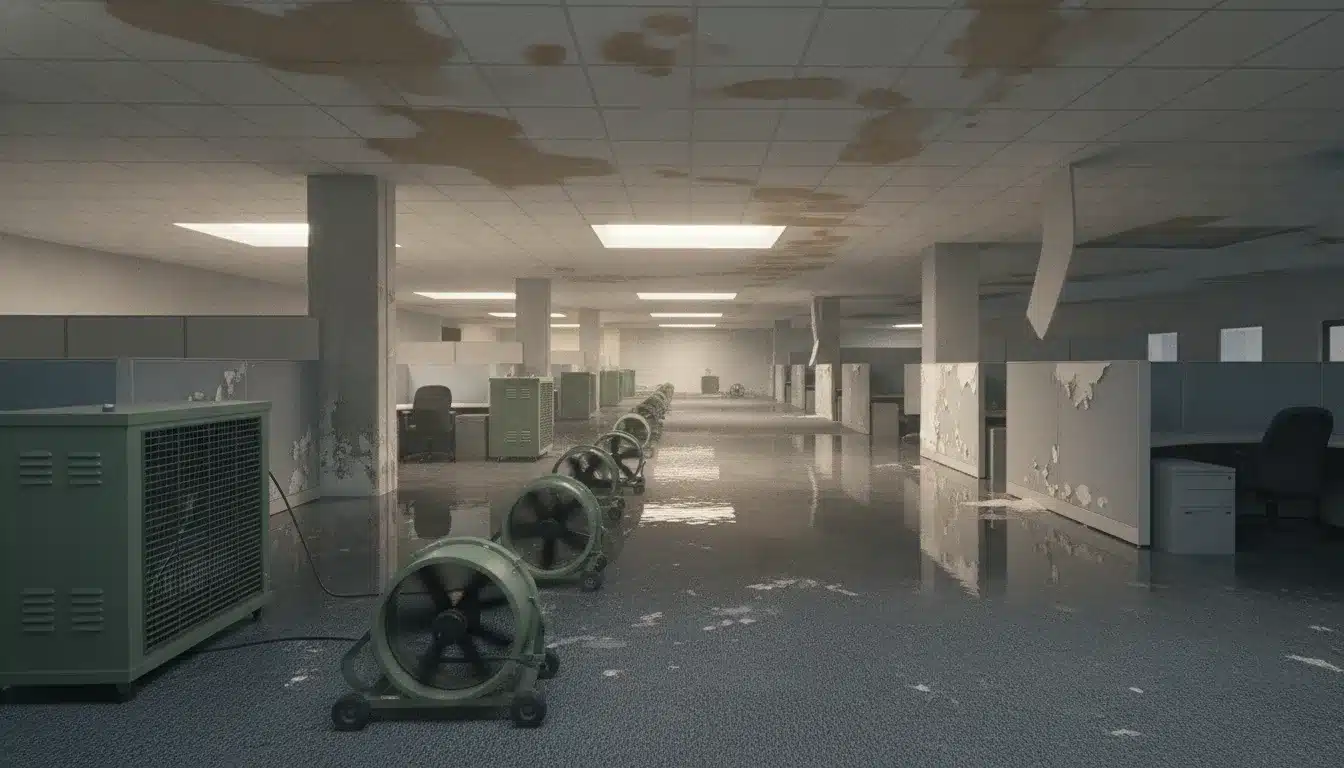
Commercial water restoration moves fast. When a pipe bursts or a roof leaks, businesses have 24 to 48 hours before mold sets in and structural damage multiplies. Knowing what to expect from the restoration process, what it costs, and how to get your doors open again quickly can save tens of thousands of dollars and keep your team working.
- Water damage spreads fast. Mold growth begins within 24 to 48 hours of exposure.
- Commercial restoration typically costs between $4 and $7 per square foot for water extraction alone.
- Document everything before cleanup starts. Your insurance claim depends on it.
- IICRC-certified technicians follow defined standards for drying and decontamination.
- Getting found online after a loss event depends on how well your restoration company ranks locally.
What Commercial Water Restoration Actually Covers
Commercial water restoration is the full process of removing water, drying structural materials, sanitizing affected areas, and repairing or rebuilding damaged components in a business property. It applies to office buildings, retail stores, restaurants, warehouses, hotels, and any other non-residential structure. When people say “water restoration,” they often mean the whole chain: emergency extraction, industrial drying, mold prevention, and sometimes full reconstruction.
The scale of commercial jobs is what separates them from residential work. A flooded office floor might cover 10,000 square feet. A leaking roof over a warehouse can saturate insulation, ceiling tiles, and concrete for days before anyone notices. According to the IICRC water damage standards, effective drying requires reaching specific moisture content levels in each material category, and commercial jobs almost always involve multiple material types simultaneously.

For complete coverage of companies that handle these jobs, see our Commercial Restoration Companies: What to Know Before You Hire resource.
PushLeads has worked with restoration contractors across the Asheville, NC region who handle commercial losses, and the pattern is consistent. The businesses that recover fastest are the ones who called a certified contractor within the first two hours and already had a documented emergency action plan. The businesses that struggle are the ones making calls at hour 12, after the carpet has wicked water into the drywall and the subfloor.
Want more customers from Google & AI search?
Get a free SEO audit of your site — see exactly what to fix first.
How Does the Commercial Water Restoration Process Work?
The restoration process follows a defined sequence. Skipping steps or rushing drying to save money tends to create bigger problems later, including hidden mold and structural failure. Here’s what certified crews actually do on a commercial water loss job.
What happens in the first few hours after a water event?
The first priority is stopping the water source. Then technicians assess the category of water, because that determines what safety protocols apply. Category 1 is clean water from a supply line. Category 2 is gray water from appliances or sinks. Category 3 is black water from sewage or flooding, and it requires full protective equipment and sanitization. According to FEMA flood guidance, floodwater from outside is almost always Category 3 regardless of how it looks.
After assessment, crews bring in truck-mounted or portable extraction units to pull standing water from floors and carpets. Industrial-grade extractors can remove hundreds of gallons per hour. The faster extraction happens, the less water migrates into walls, ceilings, and subflooring.
How long does the drying phase take in a commercial building?
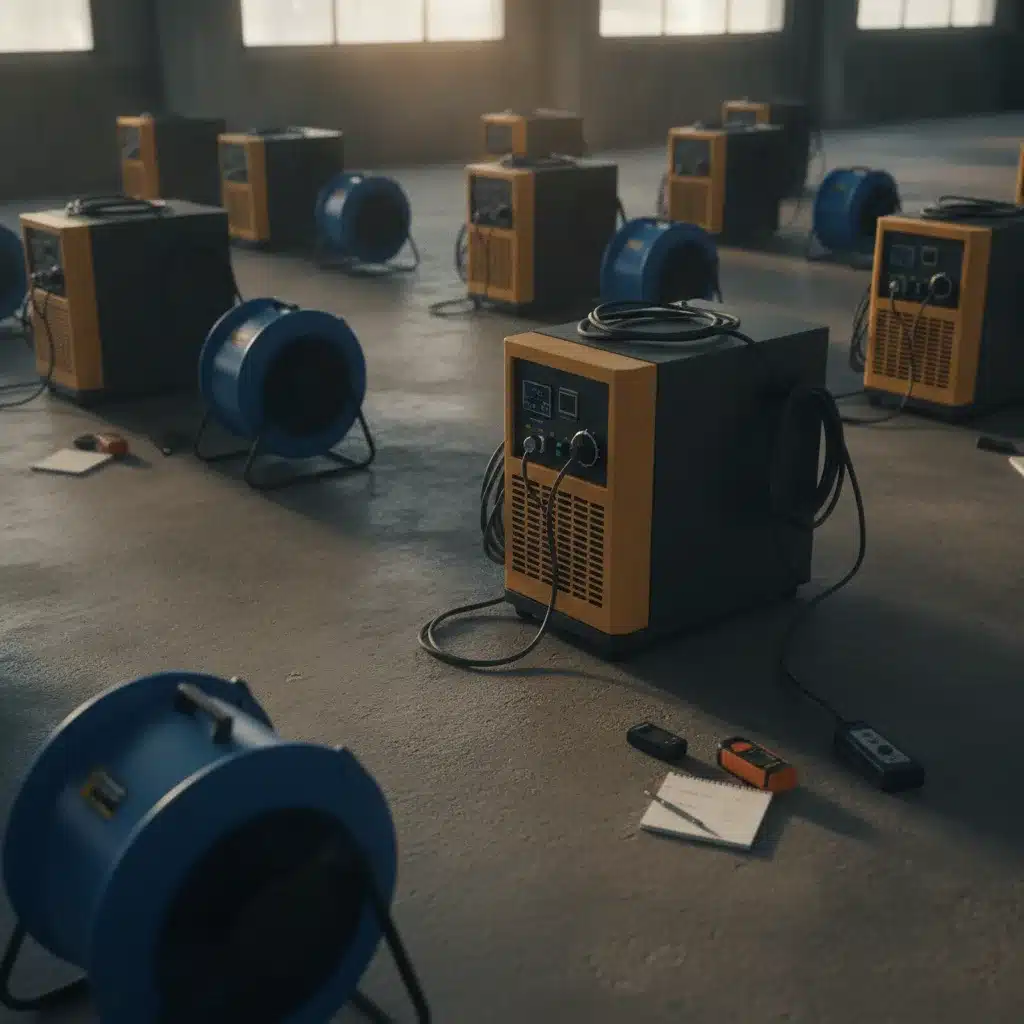
Drying a commercial space typically takes three to five days when equipment is deployed correctly. Technicians place industrial air movers and commercial dehumidifiers throughout the affected area. They take daily moisture readings using penetrating and non-penetrating moisture meters to verify that materials are drying toward the target range. The ASHRAE technical resources on humidity control recommend maintaining indoor relative humidity below 60% during drying to prevent secondary mold growth.
Larger buildings, concrete construction, and older properties with dense insulation take longer. Crews also set up negative air pressure or containment when Category 3 water is involved to prevent cross-contamination into unaffected parts of the building.

What Does Commercial Water Restoration Cost?
Cost ranges vary widely based on square footage, water category, structural materials, and how long water sat before extraction started. Businesses that call quickly pay significantly less than those who wait.
You may also find this useful: Google penguin update.
What are the typical price ranges for commercial water damage jobs?
Water extraction alone runs roughly $4 to $7 per square foot for most commercial spaces. Add industrial drying equipment at $500 to $1,500 per day depending on how many machines are needed, and a 5,000 square foot flooded office can easily hit $25,000 to $50,000 before any reconstruction starts. For a deeper look at how these numbers break down across different loss scenarios, see our complete water restoration cost guide. According to the Insurance Information Institute, water damage and freezing account for nearly 24% of all homeowner and commercial property insurance claims by dollar volume, making it one of the most common and expensive losses businesses file.
Does commercial property insurance cover water restoration?
Most commercial property policies cover sudden and accidental water damage, like a burst pipe or roof leak from a storm. They usually exclude flooding from outside the building unless a separate flood policy is in place. The claim process requires documentation, so photograph and video everything before any cleanup starts. Adjusters use that evidence to calculate covered losses. Slow documentation is one of the main reasons claims get underpaid.
How Do You Choose a Commercial Water Restoration Company?
Not every company that owns a water extractor is qualified to handle a 20,000 square foot commercial loss. The stakes are high, so the vetting process matters.
What certifications should a commercial restoration contractor hold?
Look for IICRC certification, specifically the Water Damage Restoration Technician (WRT) credential and the Applied Structural Drying (ASD) certification for crews doing commercial drying. The IICRC standards for water damage restoration set the technical baseline that certified firms must follow. Also check that the company carries commercial general liability insurance and workers’ compensation, because restoration sites involve slip hazards, electrical risks, and potential exposure to contaminated water. Understanding how to evaluate a restoration company’s credibility and track record before hiring can save significant time and money when an emergency strikes.
Start with the full SEO for restoration companies guide if you are new to the topic.
How do you find a qualified contractor quickly after a loss?
Speed matters more in commercial water restoration than almost any other trade service. According to BrightLocal, 78% of local mobile searches result in an offline purchase or contact within 24 hours, which tells you that businesses under pressure are searching and calling fast. A restoration company needs to rank at the top of local search results to capture those calls. Companies that invest in restoration SEO strategies built around emergency searches are the ones that show up when the emergency happens.
If you run a restoration company and want to show up in those moments, local SEO strategies for contractors are worth understanding before your competitors figure it out.
What Are the Health and Safety Risks of Commercial Water Damage?
Commercial water damage isn’t just a property problem. It creates real health risks for employees, customers, and anyone else who enters the building before proper remediation is complete.
When does mold become a serious concern after water damage?
According to EPA mold guidance, mold growth begins within 24 to 48 hours on wet organic materials like drywall, carpet, and ceiling tiles. In a commercial building with poor air circulation, mold can spread across a large area in days. The CDC reinforces this timeline. CDC mold information identifies mold exposure as a trigger for respiratory symptoms, eye irritation, and skin reactions, all of which create liability for employers who allow workers back into a building before remediation is confirmed complete. For context on what professional mold cleanup involves and what it typically costs, see our breakdown of mold remediation pricing for 2025.
What safety protocols should be in place during restoration work?
OSHA requires that restoration crews working with Category 3 water use full personal protective equipment including respirators, gloves, and protective suits. Businesses should restrict employee access to affected areas and post clear barriers. According to OSHA workplace safety guidelines, employers have a general duty to maintain a workplace free from recognized hazards, which extends to allowing contractor work in a building without controlling access to affected zones.

“Mold begins growing on damp surfaces within 24 to 48 hours,” says the EPA’s guidance team at the U.S. Environmental Protection Agency. “The key to mold control is moisture control.”
How Does Water Damage Affect Business Operations During Restoration?
One of the hardest parts of commercial water restoration for business owners isn’t the cost. It’s the downtime. Figuring out how to stay operational during a multi-day or multi-week restoration is a real problem.
Can a business stay open during commercial water restoration?
Sometimes, yes. If only a portion of the building is affected, crews can set up containment barriers using plastic sheeting and create isolated work zones. Employees can continue working in unaffected areas while restoration runs in the damaged section. This is more common in large office buildings or warehouses than in retail spaces where customers would see or hear the work.
Restoration timelines also depend on material types. Concrete dries slower than wood. Drop ceilings hold moisture longer than open joist bays. A restaurant kitchen with commercial flooring might be back online in four days. A medical office with specialty flooring, cabinetry, and strict cleanliness standards might take three weeks.
What should businesses do to prepare before a water loss happens?
Document the building’s baseline condition with photos and a property inventory before any loss occurs. Keep your commercial property insurance policy accessible and know your carrier’s 24-hour claims line. Identify a certified restoration contractor in advance and save their number. Businesses that have a pre-loss plan in place lose less revenue and get back to normal operations faster. That preparation is free. The cost of not having it can run into six figures.
How Restoration Companies Can Win More Commercial Clients Online
Commercial water restoration is a competitive market. The companies that get the call are the ones with strong online visibility. When a facilities manager has water pouring through a ceiling at 10pm, they search for a local contractor, read a few reviews, and call. That decision happens in under three minutes.
Restoration companies need to show up in local map packs, rank for location-specific service terms, and have a website that loads fast and communicates expertise clearly. Reviews play a significant role in that decision, and how restoration contractors respond to Google reviews directly affects whether a prospect picks up the phone. Understanding SEO reporting metrics that drive leads for contractors helps restoration businesses measure what’s actually working and double down on it before a competitor claims that visibility first.
Keep Reading
Want more customers from Google & AI search?
Get a free SEO audit of your site — see exactly what to fix first.
Your path · Commercial Restoration Companies
6 articles. About 80 minutes.

- Up nextCommercial Flood Restoration: What Businesses Need to Know


Want this done for you?
Scan your site. See the gaps. Decide with numbers.
- Rankings, Google Business Profile and site-speed teardown
- Report lands in your inbox in about a minute
- No obligation · 4.9 from 67 Google reviews
 Continue to Part 4
