
Key Takeaways
Want it done for you? See our restoration SEO and marketing agency.
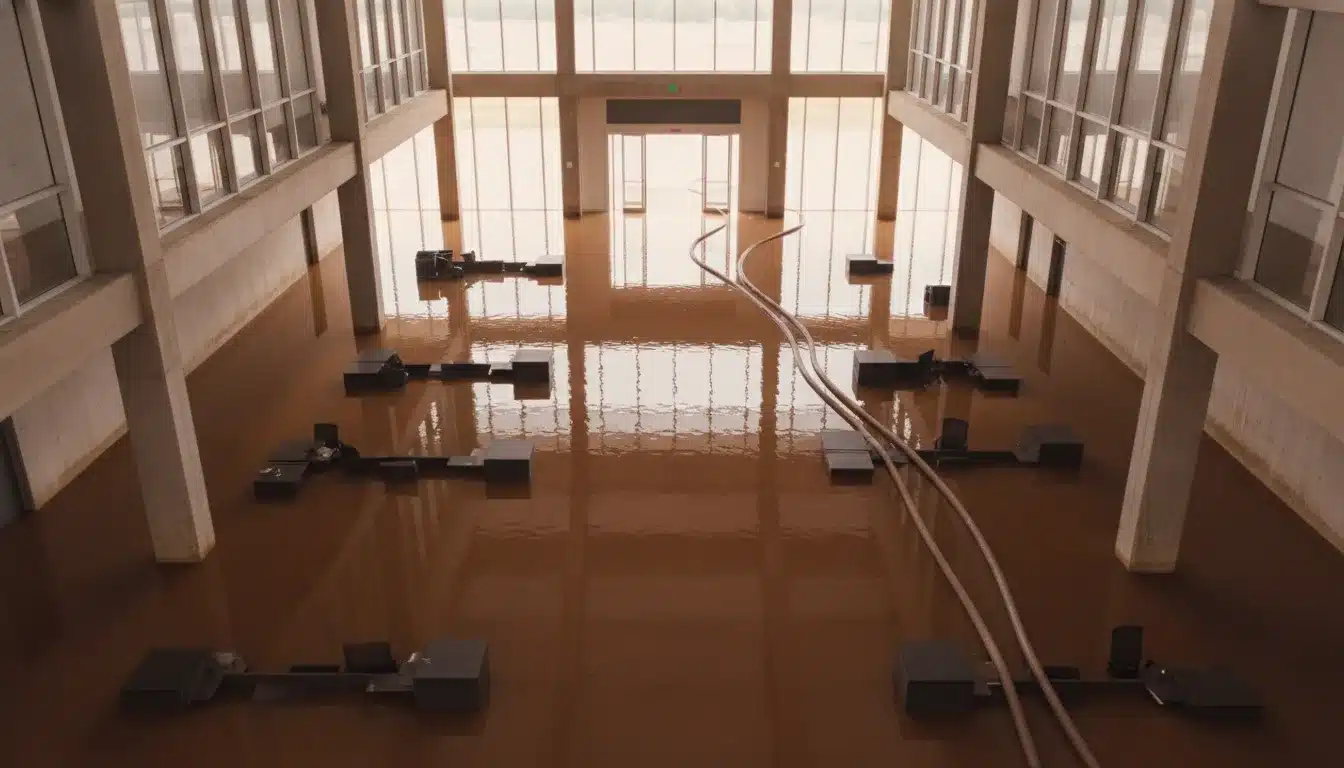
Commercial flood restoration moves fast or it gets expensive. Water intrusion damages structural materials within hours, shuts down operations, and triggers mold growth in as little as 24 to 48 hours. Businesses that understand the process, costs, and timelines make better decisions under pressure and recover faster with less long-term damage to their bottom line.
- Water extraction must begin within hours to prevent secondary damage and mold colonization
- Commercial restoration costs range from $5,000 to over $100,000 depending on facility size and damage category
- IICRC S500 standards govern how certified technicians assess and remediate commercial water damage
- Insurance documentation starts at the scene and directly affects claim approval speed
- Restoration timelines for commercial spaces typically run 3 to 10 days for drying, longer for rebuilding
What Commercial Flood Restoration Actually Covers
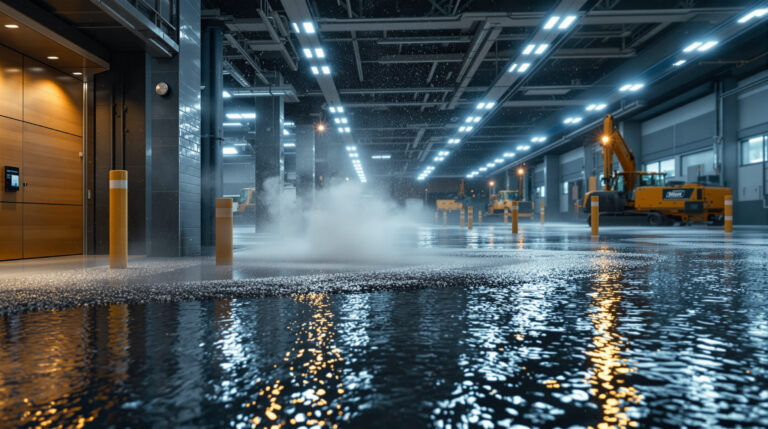
Commercial flood restoration is the process of extracting standing water, drying structural materials, removing contaminated content, and rebuilding damaged areas inside a business facility. It covers everything from a burst pipe in a retail store to a Category 3 sewage backup in a restaurant kitchen. The scope is wider than residential work because the stakes are higher. You have employees, customers, inventory, and operations all depending on a fast, clean recovery.
According to FEMA flood damage guidance, just one inch of water can cause up to $25,000 in damage to a commercial property. That number climbs quickly in larger facilities with specialized equipment, finished interiors, or temperature-sensitive inventory. The goal of commercial flood restoration is not just to dry the building. It is to return the space to a safe, code-compliant condition that lets you reopen without liability risk.
In this video
- 0:00 Contents Restoration Margin vs Structural Work
- 0:52 Market Size and the Subcontracting Problem
- 1:22 Contents Franchise vs General Restoration Compared
- 2:13 Four Forces That Keep Contents Margins High
- 3:32 Commercial Pack-Out Operational Pillars
- 4:15 Restoration vs Replacement Economics
- 4:54 Content Marketing Strategy for B2B Buyers
- 5:47 Speed to Lead and Why First Response Wins
- 6:23 Three Channels That Drive Referral Volume
- 7:11 Cost of Subcontracting Contents Work
- 7:44 Blue Kangaroo Packouts Franchise Validation
For complete coverage, see our Commercial Restoration Companies: What to Know Before You Hire resource on how commercial restoration companies handle the full range of property damage scenarios businesses face.
PushLeads has tracked search behavior for restoration companies and found that business owners searching for flood help want answers fast. They are not browsing. They are in crisis mode. That context shapes every decision from which contractor to call to how quickly you need to get your team out of a flooded building.
Want more customers from Google & AI search?
Get a free SEO audit of your site — see exactly what to fix first.
The First 24 Hours: What Needs to Happen Right Now
Speed is the defining factor in commercial flood restoration outcomes. Water does not wait. It wicks into drywall, soaks into subfloor material, and saturates insulation within the first few hours of contact. According to EPA mold guidance, mold growth begins within 24 to 48 hours of moisture exposure, which means the clock starts the moment flooding occurs.
Should you try to remove water yourself before help arrives?
You can use wet-vacs or mops on small surface water if it is safe to enter the building, electrical systems are off, and the water source is clean. But for any standing water that exceeds a few inches, or any Category 2 or 3 water event involving sewage or floodwater from outside, you should not attempt removal without protective equipment and professional guidance. The contamination risk is real and serious.
What does a certified restoration technician do in the first hour on-site?
A technician certified under IICRC water damage standards will conduct a moisture mapping assessment using thermal imaging cameras and pin-type moisture meters. They classify the water category (1, 2, or 3) and determine the drying class (1 through 4) based on how much of the structure is saturated. From there, they place industrial air movers and dehumidifiers, establish a drying plan with daily monitoring targets, and document everything for your insurance file.
The IICRC S500 standard is the industry benchmark for this process. Any commercial restoration company worth hiring follows it. If they cannot explain their drying protocol by category and class, that is a red flag.
Understanding Water Damage Categories in Commercial Buildings
Not all floodwater is the same, and the category determines how much remediation your property actually needs. Category 1 is clean water from a supply line or rainwater intrusion with no contamination. Category 2 is gray water with biological contaminants, like overflow from a sink or dishwasher. Category 3 is black water. That includes sewage, rising floodwater from outside, and any Category 1 or 2 water that sat long enough to grow bacteria.

Does water category affect how much my insurance pays?
Water category affects the scope of remediation, which directly affects cost and what your adjuster approves. Category 3 events require removal of porous materials like drywall, insulation, and carpet that cannot be adequately disinfected. That drives costs up significantly. According to the Insurance Information Institute, commercial water damage claims average around $17,000, but Category 3 losses in larger buildings regularly exceed $75,000 to $150,000 after full demo and rebuild.
Can a building reopen during drying?
In some cases, yes. Restoration companies can isolate affected zones with polyethylene barriers and negative air pressure machines to allow partial operations. This works best when the damage is contained to a back area, a mechanical room, or a single floor in a multi-story building. Your restoration contractor should give you a written scope that identifies which spaces are safe for reoccupation and which are not. Do not make that call yourself.
How Much Does Commercial Flood Restoration Cost?
Cost ranges vary based on four factors: facility square footage, water damage category, how long water sat before extraction began, and whether structural rebuilding is required. A 1,500-square-foot retail suite with Category 1 water damage caught quickly might run $5,000 to $15,000 total. A 10,000-square-foot commercial kitchen with Category 3 damage and two days of standing water could exceed $100,000 once demo, antimicrobial treatment, and rebuild are included.
You may also find this useful: Fema flood zone.
What line items should I expect on a commercial restoration invoice?
Standard line items include water extraction, equipment placement (air movers and dehumidifiers), daily monitoring visits, moisture readings documentation, antimicrobial application, content pack-out and storage, structural demo and debris removal, and reconstruction. Labor rates for certified technicians typically run $75 to $150 per hour depending on market and certification level. Equipment charges are usually billed per day per unit.
Will my commercial insurance cover all of this?
Commercial property insurance generally covers sudden and accidental water damage, like a burst pipe. It typically does not cover flooding from outside unless you carry a separate commercial flood policy through the National Flood Insurance Program or a private flood carrier. Know what you have before disaster strikes. Review your policy exclusions annually. Many business owners discover gaps in coverage only after a loss, and by then the negotiating window is closed.
The Drying Process: What Those Machines Are Actually Doing
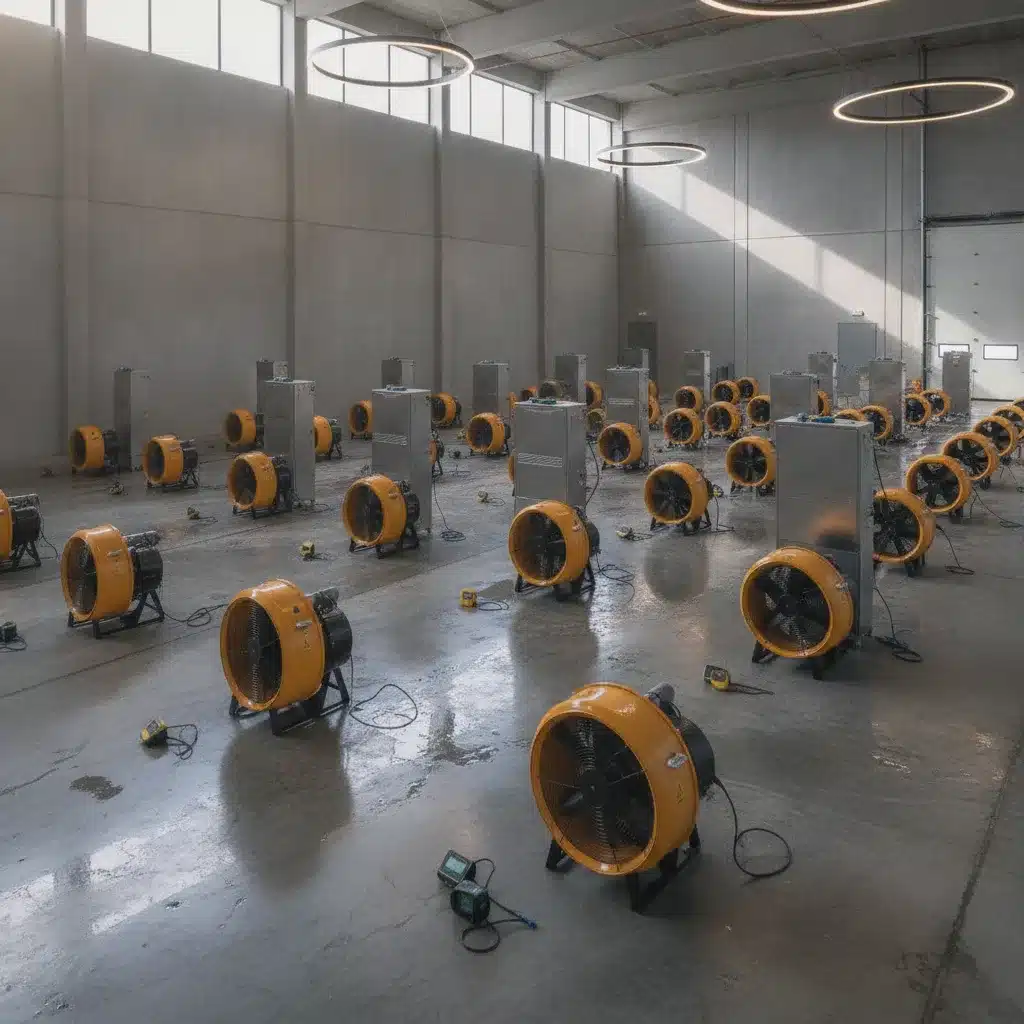
When you walk into a flooded commercial space and see rows of loud machines, they are not just blowing air around. Industrial air movers push high-velocity airflow across wet surfaces to speed evaporation. LGR (Low Grain Refrigerant) dehumidifiers pull that moisture-laden air and drop it to very low humidity levels, typically targeting a grain-per-pound reading below 40 GPPH inside the drying zone. This creates a controlled drying environment that pulls moisture out of concrete, wood, and drywall without causing those materials to crack or warp from drying too fast.
How long does commercial drying take?
According to IICRC drying standards, most Class 2 and Class 3 drying scenarios in commercial buildings take 3 to 5 days with proper equipment density. Concrete slabs hold moisture longer and can extend the drying cycle to 7 to 14 days. Technicians document daily psychrometric readings to prove to your insurer that drying progressed systematically and that equipment was not pulled prematurely.
What happens if drying is rushed or cut short?
Moisture trapped inside walls and under flooring becomes a mold factory. According to CDC mold information, mold exposure in commercial buildings causes respiratory problems and can trigger OSHA complaints from employees. Premature drying sign-off saves a few days of equipment rental but often leads to mold remediation costs six months later that dwarf the original water damage bill. Do not let anyone pull equipment before moisture readings hit drying targets.
Mold Risk During Commercial Flood Restoration
Mold is not a separate problem from flooding. It is the direct consequence of inadequate or delayed restoration. Spores are already present in every building. They need only moisture and organic material to colonize, and a flooded commercial space gives them both in abundance. BrightLocal research on local service searches shows that mold-related queries spike sharply after major rain events in regional markets, which tells you how common post-flood mold problems are for businesses.
How do I know if mold started growing before help arrived?
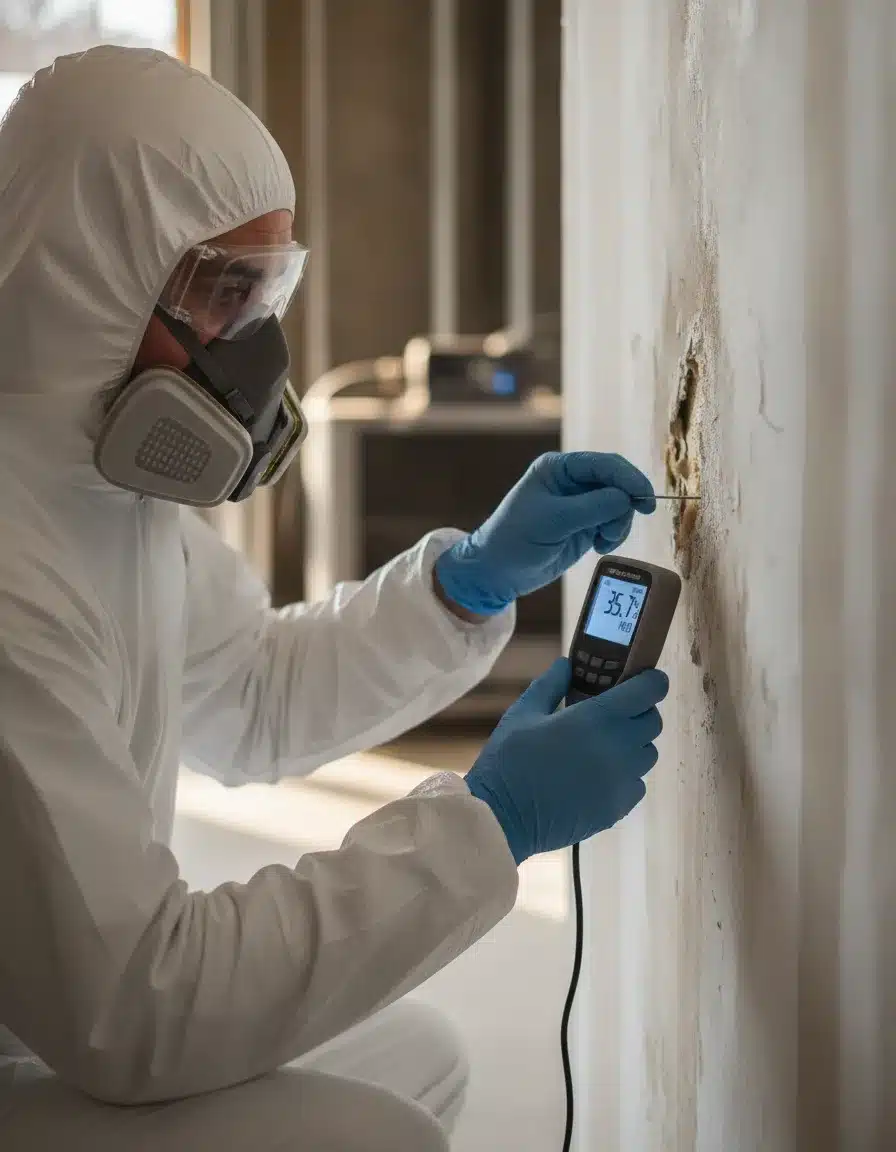
Visual inspection works for surface mold, but mold inside wall cavities or under flooring requires air sampling or tape lift sampling by a certified industrial hygienist. If water sat for more than 48 hours before extraction began, assume mold is a possibility and budget for testing. Your restoration contractor can recommend a third-party hygienist, which is best practice since the same company should not assess and remediate mold without independent verification.
Restoration companies that serve the Asheville, NC region deal with both mountain storm events and plumbing failures in older commercial stock, so local experience with variable building types matters when selecting a contractor.
Start with the full restoration company SEO guide if you are new to the topic.
Choosing a Commercial Flood Restoration Contractor
Commercial work requires different credentials than residential restoration. Look for IICRC Water Restoration Technician (WRT) certification, Commercial Drying Specialist (CDS) certification, and Applied Structural Drying (ASD) certification on the team. Verify that the company carries general liability insurance of at least $2 million per occurrence and workers’ compensation for all field staff. Ask for a written scope of work before signing any authorization.
Should I use my insurance company’s preferred vendor or choose my own?
In most states, you have the legal right to choose your own restoration contractor regardless of what your insurer recommends. Preferred vendors often deliver solid work, but they also have a financial relationship with the carrier that can create pressure to minimize scope. Getting an independent estimate gives you a baseline for comparison. If the numbers differ significantly, ask both parties to document their methodology.
What questions should I ask before signing a restoration authorization?
Ask about IICRC certifications for the crew doing the work, not just the company owner. Ask how equipment density is determined (the answer should reference IICRC S500 guidelines). Ask about daily monitoring and documentation. Ask who your point of contact is for insurance communication. And ask what happens if additional damage is found once demo begins. A contractor who answers those questions specifically and in writing is the one worth hiring.
For more on finding qualified contractors for your business, check out our resource on restoration SEO agency services that help restoration companies reach businesses searching for help after a flood.
Working With Your Insurance Adjuster During Restoration
Your insurance adjuster’s job is to verify the claim and determine covered scope. Your job is to document everything and advocate for a complete, accurate settlement. Take photos and video before any water is extracted. Save samples of damaged materials before they are discarded. Get a signed inventory of any contents that are packed out. Keep all communication with the adjuster in writing, and request written explanations for any coverage denials.
What documentation does my insurer need for a commercial flood claim?
Adjusters need photographic evidence of damage before remediation, a complete moisture mapping report from the restoration contractor, daily drying logs, a contents inventory, and itemized invoices. The more organized your documentation, the faster your claim moves. According to the Insurance Information Institute, documented claims with complete records settle significantly faster than those with missing information.
In this video
- 0:00 Albi Restoration Software Overview
- 0:45 Lead Generation Is the Real Problem
- 1:26 What Albi Actually Does Well
- 2:46 Western NC Market Dynamics
- 3:24 Albi vs Dash vs Job Nimbus
- 4:48 Software Without Marketing Slows Growth
- 5:30 Local Search Stats That Matter
- 6:30 Asheville Competitive Gaps
- 7:18 What a Complete Marketing System Needs
- 8:02 Where PushLeads Fits In
If you want to understand how restoration contractors market to businesses in crisis, our post on local SEO for contractors breaks down how search visibility during high-demand events affects which company gets the call.
Frequently Asked Questions
How Long Does Commercial Flood Restoration Take From Start to Finish?
Drying typically runs 3 to 10 days depending on water category and structural saturation. Demolition of damaged materials adds 1 to 3 days. Reconstruction varies from one week to several months based on the extent of structural damage. A 2,000-square-foot office with Category 1 damage might be restored in under two weeks total. A large commercial kitchen with Category 3 damage and required rebuilding could take 6 to 12 weeks from extraction to final inspection.
Can My Business Stay Open During Flood Restoration?
Partial operations are possible when damage is isolated to one section of the building. Restoration crews can establish containment barriers to separate the work zone from active areas. However, Category 3 contamination events, significant structural damage, or loss of utilities typically require full closure. Your contractor should provide a written assessment of which areas are safe for occupancy before any employees or customers re-enter the building.

What Is the Difference Between Flood Restoration and Water Damage Restoration?
Flood restoration specifically addresses water intrusion from external sources like rising rivers, storm surge, or heavy rainfall overwhelm. Water damage restoration is a broader term covering all moisture events including internal plumbing failures, appliance leaks, and sprinkler malfunctions. The distinction matters for insurance purposes. Standard commercial property policies usually cover internal water damage but exclude floods, which require a separate flood insurance policy to cover external water events.
How Do I Find a Certified Commercial Restoration Company?
Search the IICRC’s online directory at iicrc.org to verify that a company holds current certifications. Look for WRT, ASD, and CDS credentials specifically. Check their state contractor license status through your state licensing board. Read reviews on Google Business Profile focusing on commercial projects rather than residential ones. Ask for references from similar-sized business clients and actually call them. Certification and license verification takes about 15 minutes and eliminates most unqualified contractors from consideration.
Does Commercial Flood Restoration Include Rebuilding?
Many restoration companies offer full-service restoration that includes both the mitigation phase (extraction, drying, demo) and the reconstruction phase (framing, drywall, flooring, painting). Some specialize only in mitigation and refer reconstruction to separate contractors. Ask upfront whether the company handles both phases or only one. Using one contractor for both phases typically speeds up the process and simplifies insurance billing, but it is not always the most cost-effective option for complex rebuilds.
What Are the Health Risks of a Flooded Commercial Building?
Category 2 and Category 3 water events introduce bacterial contamination, sewage pathogens, and chemical runoff into the building environment. According to OSHA workplace safety guidelines, employers have a duty to protect workers from exposure to contaminated environments. Allowing employees into a building before it has been properly assessed and cleared creates liability. Mold exposure from inadequate drying adds long-term respiratory risk. Clearance testing by a third-party industrial hygienist is the standard way to confirm a building is safe for reoccupancy.
How Does Commercial Flood Restoration Affect Property Value?
Properly documented and certified restoration generally does not reduce commercial property value. In fact, a complete restoration file showing IICRC-compliant drying, clearance testing, and rebuilt materials to code can be a selling point for future buyers. What does hurt value is undisclosed or improperly remediated damage. Moisture left inside walls eventually shows up as mold, structural decay, or elevated humidity readings on a pre-sale inspection. Full documentation protects your investment and your resale position.
Get Your Commercial Property Recovered and Back in Business
Commercial flood restoration is a time-sensitive process with real financial consequences. Every hour of delay adds moisture penetration depth, increases the chance of mold colonization, and extends the timeline before you can reopen. Knowing the process, the costs, and your rights as a policyholder puts you in a better position to act fast and recover fully. If your restoration contractor cannot tell you the water category, the drying class, and the daily moisture targets in plain language, find one who can. Getting the right information quickly is what separates a two-week recovery from a two-month one. PushLeads helps service businesses like restoration companies get found by the businesses that need them most, so the right contractors show up when you search. Contact us today.
Keep Reading
Want more customers from Google & AI search?
Get a free SEO audit of your site — see exactly what to fix first.
Your path · Commercial Restoration Companies
6 articles. About 80 minutes.

- You’re hereCommercial Flood Restoration: What Businesses Need to Know



Want this done for you?
Scan your site. See the gaps. Decide with numbers.
- Rankings, Google Business Profile and site-speed teardown
- Report lands in your inbox in about a minute
- No obligation · 4.9 from 67 Google reviews

