
Key Takeaways
Want it done for you? See our restoration SEO and marketing agency.
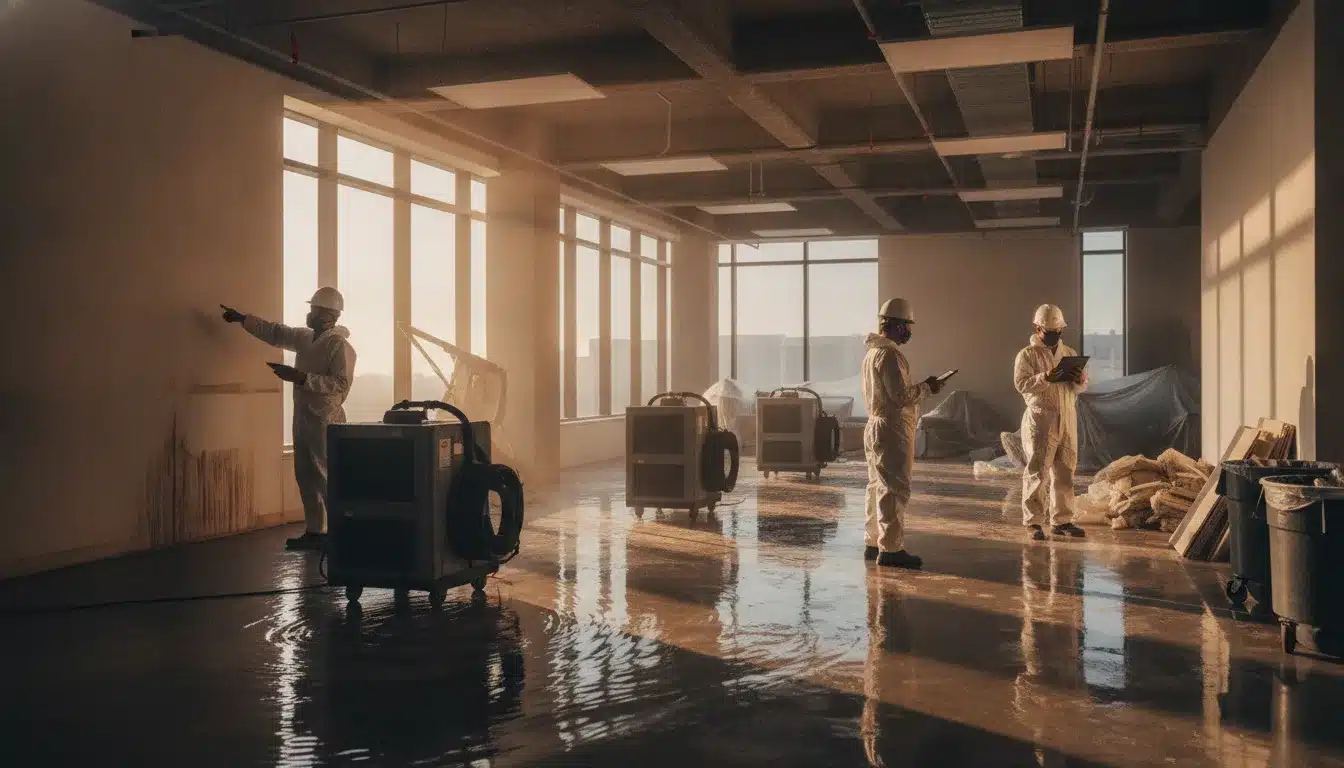
Commercial damage restoration covers water, fire, mold, and storm damage in business properties. Acting within the first 24 to 48 hours limits structural loss and keeps insurance claims on track. Knowing what to expect from the restoration process, costs, and timelines helps business owners make faster decisions and get back to generating revenue sooner.
- Water damage restoration in commercial buildings costs between $3,000 and $75,000 depending on square footage and damage class
- Mold growth begins within 24 to 48 hours of water exposure, making speed the single most important factor
- Most commercial restoration projects run 3 to 10 business days for mitigation, with full reconstruction taking weeks to months
- Documenting damage thoroughly before any cleanup starts protects your insurance claim
- Choosing a restoration company with IICRC certification and commercial experience directly affects how fast you reopen
What Commercial Damage Restoration Actually Covers
Commercial damage restoration is the process of repairing and returning a business property to its pre-loss condition after water, fire, smoke, mold, or storm damage. It is not the same as a quick cleanup. A full restoration project involves moisture detection, structural drying, debris removal, odor treatment, mold remediation when needed, and sometimes full reconstruction of walls, flooring, and ceilings.
The stakes are higher in a commercial building than in a home. You have employees, customers, inventory, equipment, and revenue all sitting in that space. Every day the doors stay closed costs money. According to the Federal Emergency Management Agency, nearly 40 to 60 percent of small businesses never reopen after a major disaster. That number is not meant to scare you. It is meant to show why fast, professional restoration work is not optional for a business that wants to survive.
In this video
- 0:00 Residential vs Commercial Storm Search Intent
- 0:32 Why Commercial Searches Look Different
- 1:33 Intent Signals That Identify Commercial Buyers
- 2:27 Volume vs Value the Core Keyword Mistake
- 3:16 What High-Intent Search Data Actually Shows
- 4:13 Three Keyword Tiers for Commercial Storm Restoration
- 5:34 The Property Manager Search Journey
- 6:24 Building Pages That Match Commercial Intent
- 7:21 One Primary Keyword Per Page Explained
- 8:17 Real-World Page Build for Property Management
- 9:25 Common Mistakes That Kill Commercial Conversion
- 10:16 What to Build First and in What Order

For complete coverage of how restoration companies operate and what to look for when hiring one, see our Commercial Restoration Companies: What to Know Before You Hire resource.
PushLeads has worked with commercial restoration companies across Asheville, NC and surrounding markets, and the businesses that recover fastest share one trait: they had a plan before anything went wrong. That means knowing your insurance policy, having a restoration vendor pre-selected, and understanding what the restoration process looks like from day one to reopening. Restoration companies that invest in a strong digital presence tend to be easier to find and vet before an emergency happens.
Want more customers from Google & AI search?
Get a free SEO audit of your site — see exactly what to fix first.
The Four Main Types of Commercial Damage
Not all commercial damage looks the same. The restoration approach changes based on what caused the damage, how far it spread, and how long it sat before anyone called for help.
What does water damage restoration involve for a business?
Water damage is the most common commercial property loss. It comes from burst pipes, roof leaks, sprinkler malfunctions, flooding, and HVAC failures. According to the Insurance Information Institute, water damage and freezing account for roughly 29 percent of all property insurance claims. For commercial buildings, the cost per claim averages significantly higher than residential because of larger square footage, specialized equipment, and business interruption losses.
The restoration process starts with water extraction using truck-mounted or portable pumps, followed by industrial air movers and dehumidifiers. Technicians use moisture meters and thermal imaging to find hidden water inside walls, under flooring, and above ceilings. Drying typically takes 3 to 5 days before any reconstruction begins. According to IICRC water damage restoration standards, proper drying must reach established moisture content levels before materials are replaced, or mold risk stays high. Understanding how much water restoration costs before work begins helps commercial property owners budget accurately and avoid surprises during the claims process.
How does fire and smoke damage restoration differ from water damage?
Fire damage restoration goes beyond putting out flames. Smoke travels through HVAC systems and settles into walls, carpets, and furniture far beyond the area of the fire itself. Restoration crews handle soot removal, odor treatment using thermal fogging or ozone equipment, and structural repair. The timeline stretches longer than water damage projects because smoke infiltration is harder to detect and remove completely.
What are the main categories of storm and wind damage?
Storm damage hits roofs, windows, doors, and facades. A tree through a roof or major wind event can leave a commercial property exposed to secondary water intrusion within hours. Restoration teams tarp and board structures first to stop additional damage, then assess what needs full replacement versus repair.

How the Commercial Restoration Process Works Step by Step
Most business owners have never been through a major property loss. Understanding the process removes the guesswork and helps you ask the right questions when you are calling restoration companies at 2 a.m. because a pipe burst in your server room.
You may also find this useful: Albi restoration software.
What happens during the initial assessment and mitigation phase?
Step one is the emergency response call. A certified restoration company should arrive within 2 to 4 hours for commercial emergencies. Their first job is stopping additional damage, not restoring what is already lost. They extract standing water, remove unsalvageable materials, and stabilize the environment. This phase is called mitigation, and your insurance policy almost always covers it as a separate line item from the reconstruction work that follows.
According to EPA mold guidance, mold colonies begin forming within 24 to 48 hours of water exposure. This is why mitigation speed determines whether your project is a three-day drying job or a three-week mold remediation project. The difference in cost is significant. Businesses that have read about how emergency restoration searches work understand why having the right vendor contact saved before a loss occurs matters as much as the restoration work itself.
What does the documentation and insurance process look like?
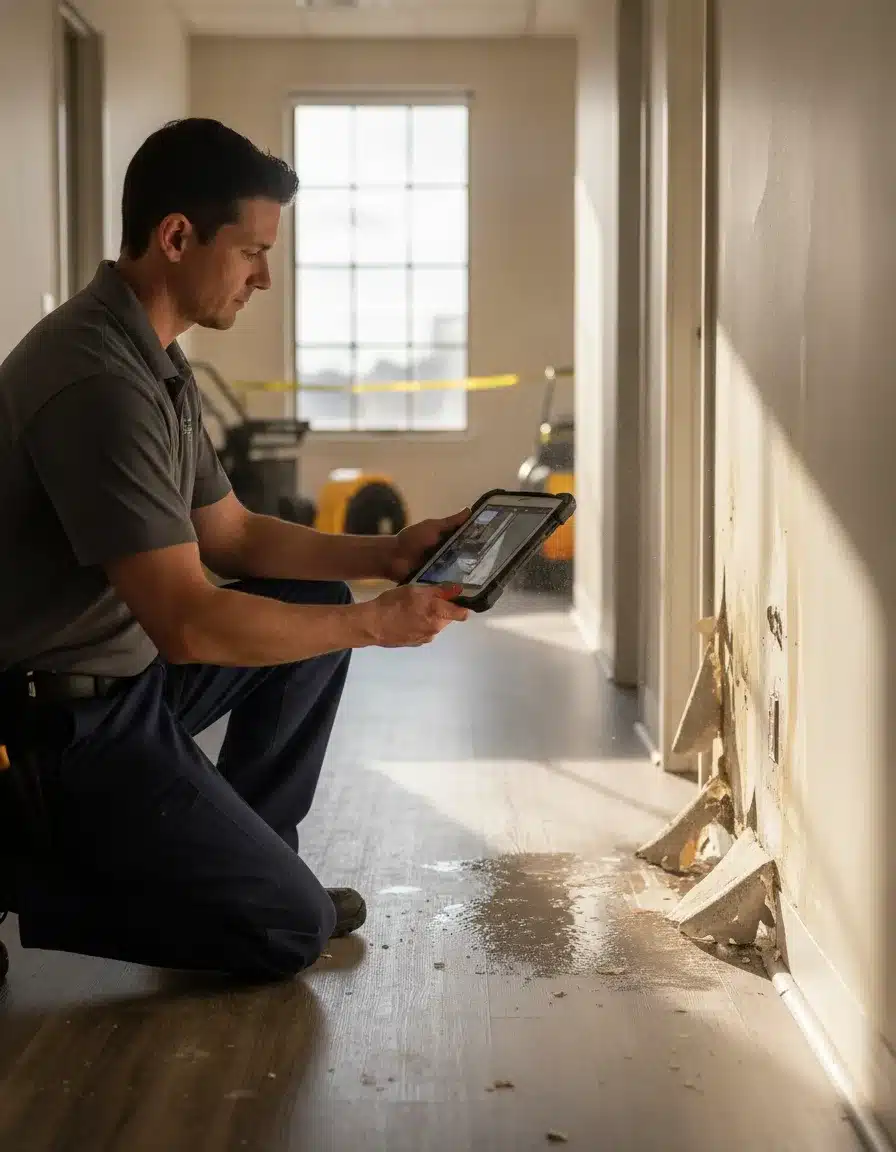
Before any restoration company removes damaged material, you need photos and video of everything. Good restoration crews document as they go, creating a damage report that supports your insurance claim. Ask for a detailed scope of work before anything is disposed of. Your adjuster needs to see what was damaged and why it needed replacement, not just a final bill.
Most commercial policies include business interruption coverage, which compensates for lost revenue during restoration. This coverage has a waiting period and a maximum period, so reading your policy before a loss happens matters more than reading it after.
Commercial Restoration Costs and Timelines
Cost ranges in commercial restoration are wide because the variables are wide. A 500-square-foot office with a small pipe leak is a very different project than a 20,000-square-foot warehouse with three feet of standing water after a storm.
See also our guide on Buy restoration franchise.
What are realistic cost ranges for commercial water damage restoration?
Water damage restoration in commercial buildings typically runs between $3,000 and $75,000 for mitigation alone, with reconstruction costs added on top. IICRC classifies water damage in four categories based on contamination level. Category 1 is clean water from a supply line. Category 3, sometimes called black water, involves sewage or floodwater and requires full personal protective equipment, hazardous material disposal, and higher labor costs. A Category 3 loss in a restaurant kitchen will cost significantly more than a Category 1 loss in a dry office space. For businesses weighing whether paid advertising or organic search is the better channel for finding a qualified restoration vendor, the comparison between water damage restoration SEO vs pay-per-click is worth reviewing before you need help urgently.
How long does it take for a commercial building to fully reopen after damage?
Mitigation and drying take 3 to 10 days in most projects. Reconstruction depends on what needs replacement. Replacing drywall, flooring, and painting in a 2,000-square-foot space might take two to three weeks. If structural components like framing, electrical, or plumbing are affected, timelines stretch to 4 to 12 weeks. Permit requirements in municipalities like Asheville, NC can add time depending on the scope of reconstruction work.
According to FEMA flood recovery resources, businesses that pre-plan their disaster recovery, including pre-selecting vendors, reduce their restoration timeline by an average of 30 percent compared to businesses that search for help after a loss occurs.
Choosing the Right Commercial Restoration Company
Not every restoration company is set up to handle a commercial loss. Residential-focused crews may lack the equipment capacity, manpower, and project management systems needed to work in an occupied or partially occupied commercial building while minimizing disruption to operations.
In this video
For the bigger picture, see our restoration SEO guide.
- 0:00 Contents Restoration Overview and Stakes
- 0:33 Who Jeremy Ashburn and PushLeads Are
- 0:48 Why Carriers Push Restore First
- 1:21 Four Disaster Types Driving Contents Claims
- 2:00 Five Stages of a Professional Contents Job
- 2:42 Textiles Electronics and Document Treatment
- 3:53 Restore vs Replace Thresholds and Costs
- 5:11 Insurance Coverage and Policy Types Explained
- 7:02 Three Mistakes That Shrink Your Claim
- 7:49 Four Fixes to Protect Your Recovery
- 8:38 Xactimate Documentation and Adjuster Approval
What certifications should a commercial restoration company hold?
Look for IICRC certification, specifically the WRT (Water Damage Restoration Technician) and AMRT (Applied Microbial Remediation Technician) credentials for water and mold work. Fire and smoke restoration work should involve an FSRT (Fire and Smoke Restoration Technician) credential. Larger companies may also hold RRP (Renovation, Repair, and Painting) certification for projects involving lead paint in older commercial buildings.
“Restoration contractors who follow the IICRC S500 standard for water damage and the S520 standard for mold remediation give property managers a documented, defensible process that supports insurance claims and protects occupant health,” according to the Institute of Inspection Cleaning and Restoration Certification.
How do you evaluate whether a restoration company can handle commercial scale work?
Ask directly: how many large-loss commercial projects have you completed in the last 12 months? What is your equipment capacity for drying? Do you have a dedicated project manager for commercial accounts? Can you work in phases to keep portions of the building operational? A company that handles mostly residential jobs may do quality work, but commercial projects require a different level of logistics and coordination. Restoration contractors who focus on attracting premium commercial clients rather than price shoppers are often better positioned to deliver the project management and communication standards large-loss work demands.

Mold Remediation in Commercial Properties
Mold remediation deserves its own section because it is one of the most misunderstood parts of commercial damage restoration. Many business owners think mold is a cosmetic issue. It is not. According to CDC mold information, mold exposure causes respiratory symptoms, allergic reactions, and in some cases more serious health effects, particularly for employees with existing conditions. An occupied commercial space with active mold growth creates liability exposure on top of the physical damage.
When does water damage become a mold remediation project?
If moisture sat in walls, flooring, or ceilings for more than 48 hours before professional drying began, the probability of mold growth is high. The presence of a musty odor, visible discoloration, or surface staining after a water event all signal that mold testing and likely remediation should be part of the restoration scope. Many property owners researching this topic also find it useful to understand what mold remediation costs before getting contractor bids, so they can evaluate quotes with confidence.
What does a commercial mold remediation project involve?
The IICRC S520 Standard for Professional Mold Remediation outlines a containment, removal, and cleaning process. Technicians set up negative air pressure containment barriers, remove affected materials, apply antimicrobial treatments, and run air scrubbers with HEPA filtration. Clearance testing by an independent industrial hygienist confirms the space is safe before containment comes down. This independent testing step protects the business owner because the same company doing the remedi
Keep Reading
Want more customers from Google & AI search?
Get a free SEO audit of your site — see exactly what to fix first.
Your path · Commercial Restoration Companies
6 articles. About 80 minutes.

- Commercial Flood Restoration: What Businesses Need to Know



Want this done for you?
Scan your site. See the gaps. Decide with numbers.
- Rankings, Google Business Profile and site-speed teardown
- Report lands in your inbox in about a minute
- No obligation · 4.9 from 67 Google reviews

