0:00 Shorts Views Dropped 10x in October
0:43 Why YouTube Content Matters for AI Search
1:43 Before and After the Drop
2:49 What We Were Posting and How Much
3:52 Five Videos Disappeared Without Warning
4:48 Analytics Mistake That Almost Misled Us
5:22 YouTube Policy Changes That Caused This
6:36 What YouTube Did Not Tell Us
7:13 What We Changed Starting November
8:52 What This Means for Contractors
Full transcript
0:00 Shorts Views Dropped 10x in October
In September, my best YouTube Shorts were getting over five hundred views each. But by late October, every new Short I posted was getting somewhere between one and forty-two views. And that same week, five of my videos just disappeared. No email from Google or YouTube, no strike, nothing in YouTube Studio. And of course, I run a marketing agency, so I’m supposed to know this stuff, but I’m still getting familiar with YouTube. But the issue is, I’m not as familiar with YouTube, and the reason why is that until real recently, posting on YouTube was kind of a waste of time, at least in my opinion, because you would post videos and comments and do all the things, and basically nothing would happen.
0:43 Why YouTube Content Matters for AI Search
You would get one or five or ten views, and maybe if you did Shorts it would make a difference. As of about last year, about December of twenty twenty-five, I started realizing, hey, YouTube Shorts and YouTube long-form content, primarily long-form content, is how you start showing up in Google’s AI overview. And so I’ve really been doing a lot of experimentation and marketing, and I ran into a wall. So basically, YouTube blocked me because I was doing too much, right? But obviously we don’t really know where the wall is or where the edge of the road is until we run off the road, and that’s kind of what happened here. So I dug in, figured out exactly what caused YouTube to be suppressing my Shorts, and I’m gonna show you exactly what we changed. So if you’re a contractor who’s using AI video tools, or you’re paying someone to run a faceless YouTube channel for you, pay attention because you might fall into the same trap.
1:43 Before and After the Drop
So what happened? So here is the before and after. My September winners were simple, my face full screen and one strong opinion in the first second, right? And these pulled about five hundred and thirty to five hundred and fifty-four views each. And then I noticed around October nineteenth that new Shorts dropped between one and forty-two views, and that was roughly ten to fifteen times drop per Short. Now, I don’t really necessarily care about Shorts, right? But I do care about Google or YouTube suppressing Shorts just ’cause I’m interested in the mechanics of how it works, right? So because a-again, we’re all trying to figure out how to show up in AI search, right? And until we all figure it out, it’s just sort of experimentation, because Google isn’t going to publish, or YouTube isn’t gonna say, "Here’s how to show up in Google’s AI overviews," or, "Here’s how to show up in Google’s AI mode." And so it’s really just me and a whole bunch of other people doing experimentations to figure it out. So anyway, back to the Shorts. What were we posting? So what changed on our end?
2:49 What We Were Posting and How Much
Well, what changed was volume and the mix. We essentially had built automation that turned blog posts into videos, and a lot of these were faceless slideshow videos with an AI voice of me in some cases. In other cases, they were actually slideshow videos of me where it’s just my voice talking without my talking head. And so we’re making Shorts from these videos, also uploading old videos from Vimeo, and over about seventy-five days, we pushed out around three hundred and seventy-seven uploads. So that was about five videos a day, and most of it came from these templates. Now, it was all unique content. It wasn’t like we were just spamming the web, making good slideshow videos with multiple screens on them and answering the question, adding value. But I’ll own that we did too much, right? Too much, too big. We were like the car that ran off the road. So hey, again, you don’t know the edge of the road until you run off the road. So testing really how far automation could go, and now we know.
3:52 Five Videos Disappeared Without Warning
Five uploads mysteriously disappeared, and here’s the part that tells you who deleted these videos. So it wasn’t really who, it was a what, right? It was YouTube. So what normally happens is if you delete a video yourself, the watch page says, "Removed by uploader." But these five videos just said, "This video is unavailable," right? So that’s what YouTube shows for a video that no longer existed, and that’s YouTube saying, "Hey bro, I deleted the video," right? And if you look at the pattern, five of these fourteen faceless sort of slideshow videos that week vanished, but zero of the other thirty-four vanished, right? So Google or YouTube kept those, and each of those videos has a video with my face on the screen, either myself or an AI avatar. So it wasn’t random. YouTube deleted the templated slideshow videos.
4:48 Analytics Mistake That Almost Misled Us
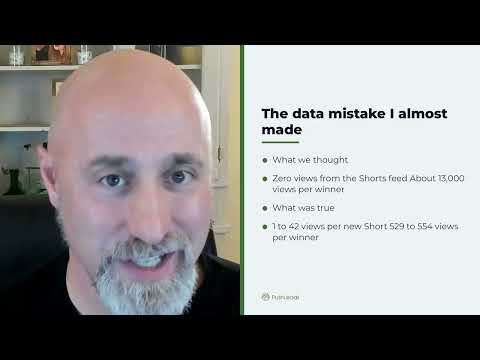
Now, the mistake I almost made, quick confession, my first read of the data said that our Shorts were getting zero views from the Shorts feed, and that my winners had done thirteen thousand. Well, both of those are wrong. The analytics table we were pulling was storing a, a rolling twenty-eight day total on every row, so we added the rows together and inflated everything about fifteen times. But hey, that’s what happens. You make mistakes. So before you panic about a drop, always check what the number actually measures. The real drop was big enough and it didn’t need my help.
5:22 YouTube Policy Changes That Caused This
So what YouTube changed? Now, on October first, twenty twenty-six, YouTube posted that the Shorts feed would favor original content and cut reach for channels that mostly re-upload or aggregate. So two details matter here. First, YouTube is judging at the channel level and by what a channel primarily posts. Second, YouTube says that templated-based changes don’t count as making something your own. So that update is aimed at people that are reposting other creations. We weren’t doing that, but a channel posting mostly templated AI-made videos looks a lot like the thing they’re filtering. The bigger match is YouTube’s spam policy. It has a category for automated or synthetic mass production. It says that testing tools and posting a few variations is fine, but flooding the platform with repetitive content is not. And their own example is a channel that’s using the same background music and repetitive AI images, and each video is reading an AI-written script. And that was basically our slideshow lane, and that policy covers pirated and illicit videos as well, so hiding them doesn’t take it out of scope.
6:36 What YouTube Did Not Tell Us
What YouTube didn’t tell us. Here’s what’s frustrating. YouTube gave us no start date for the update and no recovery timeline, and no screen in Studio tells you that your reach was cut. The one thing they did say through their own creator liaison, Renaine Ritchie, if a channel shifts towards original content, the system will reevaluate its reach. So that’s your whole recovery path right there. So if you are posting AI content or AI-generated content and not doing original content, you need to start posting more original content. Change what you post and then wait.
7:13 What We Changed Starting November
So what we changed. So here’s what we did starting November second. We turned off the faceless slideshow lane, these produced slideshow videos. We turned off the shorts that were done from there, and we turned off the old re-uploads. And now every AI video has a face on it, my face, an AI version of me, and I’m using Latent Sync to do that because if you try to do AI videos using HeyGen, it’s gonna be fifty bucks a pop because HeyGen is four dollars a minute. So a ten-minute video with HeyGen is gonna cost, I don’t know, fifty to sixty bucks, right? So that’s quite expensive. So I’m using Latent Sync when you see AI versions of my videos. And so YouTube says the label itself doesn’t limit reach. So number three, cap AI uploads to about fourteen a week, anywhere between seven to fourteen a week. And we had been posting about thirty-five videos a week, and a lot of them have been templated. And then four, I’m doing more videos of me, real me. This is real me, this video, recorded for real, bro. And then shorts only when I have a good take. So I’m not doing any templates, no brand bars. And then, so we’ll check every new short at around forty-eight hours, and is the shorts feed showing to anyone at all? That’s the first sign. So the first review is November sixteenth. If nothing moves, we’ll keep holding until mid-December before making any bigger call, making a separate channel. Of course, making a new channel is the last resort, and it’s not the first resort. So I’ll post the results either way.
8:52 What This Means for Contractors
So what this means for contractors, if someone is selling you a faceless YouTube channel or a hundred AI videos a month, ask them three things, whose face is on it, and how different is video forty from video one, and what happens to your, and what happens to your channel if YouTube decides it’s mass-produced? The fix that works is a cheap one. Make videos with your face, your phone, and your actual opinion about your trade. One real video beats fifty templated ones. So here’s the close. The full write-up and the sources and every number is on PushLeads.com, and the link is right in the description of this video. So if your views dropped in October too, and you were publishing AI templated content, tell me in the comments what you were posting. I’m curious if you’re having the same experience I am. And in the end, I don’t actually really super care about shorts, right? Because according to the data, shorts for me doesn’t actually convert people into actually leads. What I really care about is my content showing for AI search, but I also don’t want to run the car off the road, right? By doing that, you’re getting on the radar, and ultimately YouTube could delete or suspend your channel. That’s not what I want. So part of this whole process has been learning and also transparency. So I hope you enjoyed this. I’m Jeremy Ashburn with PushLeads, and I help small businesses get more leads without struggle and frustration. Talk to you soon.
Creator’s YouTube Shorts views dropped 10x after uploading 377 videos in 75 days; discovered YouTube suppresses channels for excessive volume.
Read the full written guide: Why Did My YouTube Shorts Views Drop 10x and What Fixed It?
Up next
 27:12Do AI-Narrated Videos Get Cited by AI Search? 493 Videos, Zero Citations
 10:16How much does restoration company software actually cost?
 11:06Why do my website form leads never reach my inbox?
 10:16How much does Google Business Profile optimization cost to outsource versus doing it yourself?
 11:07is buying restoration leads from lead brokers ever worth it?
 12:12How do you identify the right niche for your marketing agency?
Keep Reading
Want more customers from Google & AI search?
Get a free SEO audit of your site — see exactly what to fix first.