


Full transcript
0:00 From 0:00
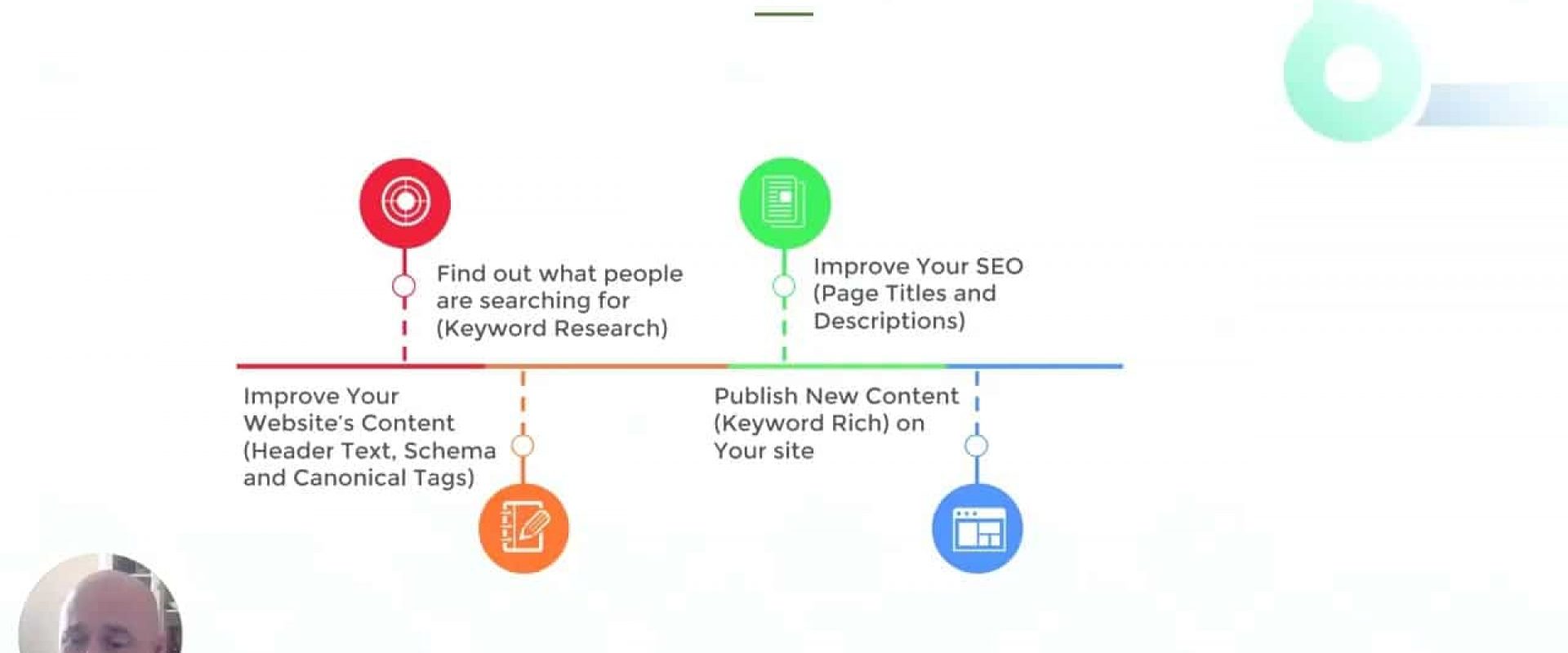
Hey, Ashley, it’s Jeremy with PushLeads as you know, and I’m making this quick little video for you to share with Fred about the results I’m getting with this one franchise. I’ve been doing SEO for 15 years So let’s just jump through a quick little case study of the results. I’ve got So FYI my background as I’ve been doing this for about 15 years full -time with my own agency I’ve a graphic design background back in the early O’s. I worked for an ad agency when I first got out I was making websites when WordPress came out at 05 and And then one of my experiments was generating $20,000 a business a month not for me But for Amazon so I decided to go full -time so that was 15 years ago I’ve got about 43 to 45 clients right now and across the southeast and so just gonna show how SEO how I do SEO to show Up for the ais and Google it really comes down to what are people looking for in Google Put that into the content in different ways, which I know you guys are probably doing I’m gonna spend most of the time talking about AI content How AI how when there needs to be content on the website in order for it to rank for AI and of course You need connections from other websites. So this is wag bar. They came to me about two years ago We made a list of keywords dog franchise dog franchise dog bar franchise, etc We in step two we made sure there were pages in the website that actually have the keywords on it, right? So if we’re going after residential mortgage broker Ashfield, North Carolina We need
1:32 From 1:32
to have pages that have that which I’m sure you guys have to some degree So that’s step two and step three. I do an SEO blueprint. This is a snapshot of what I’m doing and essentially I Create a comprehensive analysis of what your brand voice sounds like and all the pages on the website And then I come up with this This is what I’m working for a vacation rental management company And they have well over 200 plus pages and we’re optimizing the title and description And so we have with actual keywords in it. So we do this for the entire website as well in step two So it’s a really involved process But we’re making sure the titles the meta titles and descriptions are optimized for keywords and then in step three This is the main difference If you want to show over AI searches, you have to publish a lot of content So in the old days we used to do a couple blogs a week one blog a week or whatever we would put some keywords in the content We might connect Inner pages together and publish some pages But if you want to show up for AI we need to blog a little more frequently But the most important thing is making content that answers AI questions So we have to have AI prompts with the answer and in the content and we have to publish At 10 to 20 or 50 pages a month and these are all inner hidden pages. I’ll show you what I’m talking about We also need to connect these pages together So this is their blog and the skip of the blog. I know you guys were doing a blog This is an example of an
3:02 From 3:02
inner page the pet industry market analysis This inner page is about what they do. They’re a pet franchise So after publishing this page They went to the top of Google for traditional Google not AI search for pet franchise And they’re also shown for pet franchise searches and then here’s another page about the pet spending demographics This is an example of us connecting inner pages together with this called internal links We connect text links together on semantically relevant content This is a map of all the pages in the website and then this particular page has like maybe 30 to 50 incoming links Text links from other pages on the website and basically the short version of this is Study to found that if we have 50 internal links or more we get great results. So speaking of great results Let’s look at them. So what we’re looking at here is a mobile phone Somebody on a mobile phone in the u .s. And we started working with these guys back in October of 23 So we started with a one keyword at the top of Google one or four and we now have 43 searches at the top of Google And we measure what’s called visibility So as we do SEO for traditional Google we can measure that and it’s called visibility And so as we do SEO this number goes up So we started with 4% or 1.3 to 3 2% and we were around 10 % around May We started doing really good high quality incoming connections from other websites and
4:32 From 4:32
We now have visibility of 43% so I can scroll down and see all of these terms best dog franchises dog franchises And then in the newest ones have been pet franchise So I can see pet franchise Showed up basically at the top of Google around August 20th And we actually have kept it at the top of Google since the beginning of January So we measure all that and then also with AI searches So this is what they’re looking like as far as AI searches We had 73 72 searches and September 161 AI searches in November and now 336 searches AI was called mentions So up 175 searches month over month and we have 217 pages and if I look here At this one particular search. Can you provide success stories? Not us out here that the AI is pulling pages on the website that we published So really what it comes down to is unless you have interhidden pages that are talking about what you do and AI can’t Quote you can’t cite you, right? So that’s kind of part of the process So I’d say let’s have a conversation if you want to talk more and if there’s anything I can do that can be accentuate your current marketing Let’s have a conversation. I actually I obviously don’t need more clients But I will bring on clients if it’s a good fit for everybody So I’m Jeremy Ashram with PushLeads and Ashley can provide my content info and hope to hear from you soon. Thanks
Key Takeaways
Want it done for you? See our local SEO services.
A pet franchise client came to PushLeads in October 2023 with one keyword ranking in the top four on Google. Over roughly 14 months, targeted keyword research, on-page optimization, a structured internal linking strategy, and consistent content publishing pushed visibility from around 1.3 percent to 43 percent and grew AI search mentions from 72 per month to 336 per month.
- Keyword research came first: we built a master list of phrases like “dog franchise” and “dog bar franchise” before touching the site.
- Every target keyword needed a dedicated page with that keyword actually present in the content, title, and meta description.
- Publishing 10 to 50 inner content pages per month is the threshold that moves the needle for both Google and AI search engines.
- Internal linking mattered more than most people expect: pages with 50 or more incoming internal text links from semantically related pages performed significantly better.
- Visibility score went from roughly 1.3 percent to 43 percent over the campaign period.
- AI search mentions grew from 72 in September to 336 by the time of this report, a 175-mention month-over-month jump.
- AI engines can only cite your business if you have published pages that directly answer the questions people are prompting those engines with.
How One Pet Franchise Went from One Ranking to 43 Top-Google Keywords
When Wag Bar came to me about two years ago, they had one keyword sitting in the top four positions on Google and almost no measurable visibility beyond that. By following a repeatable three-step process covering keyword mapping, on-page optimization, and aggressive content publishing backed by structured internal links, that single keyword grew into 43 top-of-Google rankings and a visibility score of 43 percent. The AI search side of the equation went from 72 monthly mentions to 336 in the same window.
I want to walk through exactly what we did and why each step mattered, because this same framework applies whether you run a pet franchise, a home-services company, or a multi-location service business. The mechanics are consistent. What changes is the keyword list, the brand voice, and the volume of content you need to cover your niche properly. I have been doing SEO full time for 15 years, running my own agency with roughly 43 to 45 clients across the Southeast, and this case study is one of the cleaner examples of how the process compounds over time when you stick with it.
Most business owners I talk to have done some SEO work already. They have a Google Business Profile, maybe a blog with a handful of posts, and a website that mentions their services. The gap is almost always the same: not enough pages targeting the right phrases, weak connections between those pages, and zero strategy for appearing in AI-generated answers. This case study shows what happens when you close all three gaps at once.
Want more customers from Google & AI search?
Get a free SEO audit of your site — see exactly what to fix first.
Building the Right Keyword List Before Anything Else
Effective SEO starts with knowing the exact phrases your customers type before you write a single word of content or adjust a single title tag. For Wag Bar, that meant sitting down and mapping out every variation of their core concept: dog franchise, dog bar franchise, pet franchise opportunities, best dog franchises, and a dozen related phrases. That list became the foundation for every decision that followed.
How do I find the right keywords for a franchise business?
Start by listing every way a potential buyer might describe what you offer, then layer in location and intent modifiers. For a pet franchise, that means combining product terms like “dog bar” with commercial intent phrases like “franchise opportunity” and “franchise investment.” Tools like Google Search Console and third-party rank trackers let you see which variations already send you some traffic and which ones you are missing entirely. The goal is a prioritized list, not an exhaustive one, so you can decide which pages to build first based on search volume and competition level.
For this client, the keyword list revealed a clear split between awareness terms, where someone is just learning about pet franchises as a category, and decision terms, where someone is actively evaluating specific franchise options. We needed pages for both, but the decision terms needed to come first because they convert faster and often carry less competition than broad awareness phrases.
Why does keyword research come before website changes?
Without a keyword map, you end up optimizing pages for phrases you assume people search rather than phrases they actually use. I have seen businesses spend months polishing a homepage for a term that gets almost no monthly searches while ignoring a closely related phrase that gets thousands. The keyword list also tells you how many pages you need to build, which directly informs the content calendar and the budget conversation. Skipping this step is the single most common reason SEO campaigns stall after the first three months.
For Wag Bar, the research confirmed that “pet franchise” was an underserved term with real search volume that no one in their competitive set was targeting aggressively. That insight led directly to the page that eventually landed them at the top of Google for that phrase around August of 2023 and kept them there through January 2024 and beyond.
On-Page Optimization: Getting Keywords Into the Right Places
Once the keyword list exists, every target phrase needs a page on the website where that phrase appears in the title tag, the meta description, the page heading, and the body content. This sounds obvious, but most websites I audit are missing pages for at least half their target keywords, or they have pages that mention the topic loosely without ever using the actual phrase a searcher would type.
What should my page title tags and meta descriptions include for local SEO?
Each title tag should lead with the primary keyword for that page and stay under 60 characters so Google does not truncate it in search results. The meta description should reinforce the keyword, add a secondary related phrase where it fits naturally, and stay between 140 and 155 characters. For a vacation rental management company I work with, we built over 200 pages through this process, writing individual optimized titles and descriptions for each one. That kind of systematic coverage is what moves a site from scattered rankings to consistent visibility across an entire topic area.
You can track the impact of these changes through SEO progress reports and visibility growth metrics, which show how the percentage of your target keywords appearing in the top positions changes as optimizations roll out. For Wag Bar, visibility was sitting around 1.3 to 2 percent when we started. After the on-page work was complete and we had verified that every primary keyword had a dedicated, properly optimized page, we were already approaching 10 percent visibility by May of the following year.
How many pages does a franchise website need to rank well?
There is no single number, but the practical answer for a franchise operating in a competitive niche is that you need at least one page per distinct keyword cluster, plus supporting content pages that build context around each cluster. For Wag Bar, that translated into dedicated pages for the core franchise opportunity terms, supporting pages about pet industry statistics, pet spending demographics, market analysis, and success stories. Each of these pages served double duty: they gave Google more reasons to rank the site for related terms, and they gave AI search engines something to quote when a user asked a relevant question.
The SEO Blueprint: Mapping the Entire Site Before Publishing
Before writing any new content, I build what I call an SEO blueprint for the client. This is a comprehensive audit that captures the existing brand voice, catalogs every page on the site, and maps out what needs to be created, updated, or restructured. The blueprint becomes the working document for the entire campaign.
What is an SEO blueprint and do I need one?
An SEO blueprint is a structured plan that lists every target keyword, assigns each keyword to a specific page, documents the optimized title and meta description for each page, and identifies gaps where new pages need to be created. If you are managing more than 20 pages or targeting more than 15 keywords, you need some version of this document to avoid duplicating effort or creating pages that compete with each other for the same phrases. Without it, even well-written content tends to cannibalize rankings rather than compound them.
For the vacation rental management client I mentioned earlier, the blueprint covered more than 200 pages. For Wag Bar, it was smaller initially but grew as we expanded the content strategy into AI-focused pages. The blueprint is a living document: I update it as new content gets published, new keywords get added, and rankings shift.
How does brand voice affect SEO content quality?
AI search engines evaluate content quality partly by how consistent and authoritative the writing sounds across a site. A page that reads like it came from a different company than the homepage creates a credibility gap that both human readers and AI ranking systems notice. Building a brand voice profile at the start of the blueprint process means every page we publish sounds like it belongs on that site, which supports the topical authority signals Google and AI engines use to decide which sources to trust and cite.
Publishing at Volume: Why 10 to 50 Pages a Month Changes Everything
In the early years of SEO, publishing one or two blog posts a week was enough to move rankings. That math no longer works, especially if you want to appear in AI-generated answers. To rank in AI search, you need published pages that directly answer the questions people are prompting AI engines with, and you need enough of them to cover your topic area comprehensively.
How often should I publish new content to rank on Google and AI search?
Publishing 10 to 20 new inner pages per month is the baseline for competitive niches, and 50 per month is where you start seeing aggressive visibility gains for broader topic sets. These are not homepage rewrites or major service page overhauls: they are focused inner pages, each targeting a specific question or keyword cluster, written to give AI engines a citable answer. For Wag Bar, reaching 217 published pages was a turning point. Once the site had that level of coverage, AI search mentions started climbing steeply month over month.
The strategy behind this volume connects directly to building topical authority for local businesses and franchise brands. When a site has dozens of pages all reinforcing the same subject matter from different angles, Google and AI engines treat that site as an authoritative source on that topic rather than a peripheral one. A site with 5 pages about pet franchising is a thin source. A site with 50 or 100 pages covering every angle of pet franchising is a reference source.
What kinds of pages should a franchise publish to rank for AI searches?
The most effective page types for AI visibility are question-and-answer pages where the question matches a real prompt someone would type into ChatGPT or Google’s AI Overview, and data-driven analysis pages that give AI engines something concrete to cite. For Wag Bar, the pet industry market analysis page and the pet spending demographics page both performed well because they contained specific information that AI engines could pull when users asked broad questions about the pet industry. The success stories page also generated AI citations because it answered a common research question directly: “Can you provide success stories for this franchise?”
Internal Linking: The 50-Link Threshold That Moves Rankings
Publishing content in isolation does not produce the same results as publishing content that connects to and from other pages on the site. Internal linking is how Google understands the relationships between your pages, and it is one of the most underused tools in most small business SEO campaigns.
How many internal links does a page need to rank well?
Based on what I have observed across my client base, pages that receive 50 or more internal text links from semantically related pages consistently outperform pages with fewer links pointing at them. This does not mean stuffing links onto unrelated pages: the links need to come from pages that share a topic relationship with the target page. For Wag Bar, the most important pages in the site had between 30 and 50 incoming internal links, and those pages held the strongest rankings.
Using content silos for ranking multiple keywords is the structural approach that makes this kind of internal linking manageable. A silo groups all pages about a related topic together and creates a linking architecture where every page in the group links to the others, and all of them link up to the main pillar page for that topic. This concentrates ranking signals on your most important pages rather than spreading them randomly across the site.
What is the difference between internal links and backlinks for SEO?
Internal links are text links between pages on your own website. Backlinks are links from other websites pointing to yours. Both matter, but they do different jobs. Internal links distribute authority across your site and signal topic relationships to Google. Backlinks bring new authority into your site from outside and signal that other sources consider your content credible. For Wag Bar, I focused on internal linking heavily in the first phase and added high-quality backlinks starting around May of the campaign, which is when visibility accelerated from 10 percent toward the eventual 43 percent. You can see how backlinks and top three rankings work together in another contractor case study I published.
How do I map internal links across a large website?
The most practical approach is to treat your site as a topic map rather than a page list. Group every page by subject matter, identify the single most important page in each group as the pillar, and make sure every supporting page links back to the pillar and to closely related supporting pages. For visual thinkers, tools like Screaming Frog or Ahrefs Site Audit can generate link maps that show exactly how pages connect. I use a combination of those tools and a manual spreadsheet to track which pages in a client’s site still need more incoming links.
The Visibility Score: What It Measures and Why It Matters
Visibility is the aggregate metric I use to show clients how their SEO performance is trending across all their target keywords at once, rather than obsessing over the ranking of any single phrase. A visibility score of 43 percent means that across the full list of tracked keywords, 43 percent of them are appearing in top positions on Google for that client.
What does SEO visibility percentage mean for my business?
Visibility percentage is a weighted score that accounts for both the number of keywords ranking and where they rank. A keyword in position one contributes more to your visibility score than a keyword in position eight, even though both count as ranking. For Wag Bar, we started at roughly 1.3 percent, meaning almost none of their target keywords were ranking in meaningful positions. At 43 percent, nearly half of the keyword list is generating real top-of-page exposure, which translates directly into consistent organic traffic without paying for ads on those terms.
How long does it take to see SEO visibility improvements?
The Wag Bar timeline shows what a realistic progression looks like: we started in October 2023, hit 10 percent visibility by May 2024, and reached 43 percent after adding strong backlinks and continuing content publication through the end of the year. That is roughly 12 to 14 months from a standing start to dominant visibility. Competitive niches with more established competitors may take longer. Niches with weaker competition sometimes move faster. The consistent factor is that visibility climbs steadily when the three pillars, keyword-matched pages, internal link structure, and content volume, are all in place simultaneously.

AI Search Mentions: The New Metric Every Business Should Track
Traditional Google rankings are still the primary driver of organic traffic, but AI search is growing fast enough that ignoring it is leaving real visibility on the table. For Wag Bar, AI search mentions grew from 72 in September to 161 in November to 336 by the time of this report, a 175-mention increase in a single month.
How does my website show up in AI search results?
AI search engines like ChatGPT, Google’s AI Overviews, and Perplexity generate answers by pulling from published web pages that they have indexed and evaluated as credible sources. If you do not have a published page that directly answers the question a user is asking, the AI has nothing to quote from your site. For Wag Bar, a page we published answering “Can you provide success stories for this franchise?” was being actively cited in AI results, which is exactly the kind of answer-first content structure that gets picked up. The page existed, it answered the question clearly, and the AI used it.
What is the difference between Google rankings and AI search mentions?
A Google ranking means your page appears in the traditional list of blue links when someone searches a phrase. An AI search mention means an AI engine cited your page when generating a conversational answer to a related question. The two systems overlap but are not identical: a page can rank well in Google without being cited by AI, and a page can get AI citations without ranking in the traditional top 10. The content strategy that serves both well is publishing clear, factual, answer-structured pages rather than promotional service descriptions.
How many pages do I need to get AI search citations?
There is no published threshold from any AI search provider, but the Wag Bar data suggests that AI citations started climbing meaningfully once the site crossed 100 published inner pages and accelerated sharply after reaching 217 pages. The content needs to be specifically structured to answer questions, not just mention topics. Pages that lead with a direct answer to a clear question, then support that answer with detail, are the ones that AI engines pull from most reliably. Reviewing real SEO case studies and rankings from other verticals confirms that this pattern holds across different industries.
Google Business Profile and Local Signals for Franchise Locations
For any business with a physical location or a defined service area, the Google Business Profile is a parallel ranking system that operates alongside the main website. Getting it right accelerates local visibility independently of the website SEO work, and for franchise clients, it also sets the standard for how individual location profiles should be managed.
What should a pet franchise do to optimize its Google Business Profile?
A complete and actively managed Google Business Profile needs accurate category selection, consistent NAP (name, address, phone) information that matches the website exactly, a keyword-rich business description that uses the phrases you are targeting in your website SEO, regular posts with updates and offers, and a strategy for generating and responding to reviews. Applying Google My Business optimization strategies for service companies to a franchise model means doing this consistently across every location rather than just the flagship.
Does Google Business Profile optimization affect AI search visibility?
Yes, indirectly. A well-optimized Google Business Profile reinforces the entity signals that Google uses to understand who your business is and what it does. When those signals align with the content on your website, Google is more confident associating your brand with your target keywords, which contributes to both traditional rankings and the likelihood of appearing in AI-generated local answers. Reviews in particular contain natural language about your services that AI engines factor into their understanding of what your business is known for.
In this video
- 0:00 Why AI Search Is Changing SEO Now
- 1:26 Buddha Estates Case Study Overview
- 2:47 Human Pages vs AI Pages Explained
- 3:48 Sitemap and Pillar Page Structure
- 5:44 Visibility Gains in SEMrush
- 7:41 Why High Quality Backlinks Matter
- 8:54 Backlink Growth Over Six Months
- 10:54 What Makes a Backlink High Quality
- 13:04 GEO and the Garden Analogy
Frequently Asked Questions
How long did it take for Wag Bar to see significant SEO results?
Wag Bar started working with PushLeads in October 2023. By May 2024, about seven months in, visibility had climbed to roughly 10 percent across their tracked keyword list. After adding high-quality backlinks and continuing to publish content, visibility reached 43 percent by early 2025. The full keyword count at top positions grew from 1 to 43 over that same 14-month period. Most competitive SEO campaigns require at least six months before significant movement becomes visible.
What is a visibility score in SEO?
A visibility score is an aggregate metric that measures how frequently and prominently a website appears across a tracked list of keywords. It accounts for both the number of keywords ranking and their positions, with higher positions contributing more to the score. A visibility score of 43 percent means that across Wag Bar’s full keyword list, nearly half of those phrases are generating top-position exposure on Google. It is a more useful indicator of overall SEO health than tracking any single keyword ranking.
How many blog posts or pages does a small business need to rank for AI search?
Based on the Wag Bar campaign, meaningful AI search citations started appearing as the site approached and exceeded 100 published inner pages, with the strongest growth coming after reaching 217 pages. The content needs to be structured around specific questions and direct answers, not just general topic coverage. Publishing 10 to 50 focused pages per month is the range I recommend for businesses trying to build AI search visibility within a 6 to 12 month window.
What are inner pages and how are they different from main service pages?
Inner pages are focused, topic-specific pages that go deeper than a main service page but are not the homepage or primary navigation pages. They might cover a specific question, a market statistic, a demographic trend, or a success story related to your business. For Wag Bar, inner pages on topics like pet industry market analysis and pet spending demographics supported the main franchise opportunity pages and gave AI search engines material to cite. These pages are often not prominently featured in site navigation but are linked to extensively from other content.
Do internal links matter as much as backlinks for SEO?
Internal links and backlinks serve different functions and both matter. Internal links distribute authority across your own site and signal topic relationships to Google, helping your most important pages accumulate more ranking strength. Backlinks bring authority from outside your site and signal to Google that external sources consider your content credible. For Wag Bar, internal linking was the primary lever in the first phase of the campaign, and backlinks were added once the on-page foundation was solid, which produced the steeper visibility increases seen in the latter half of the campaign.

Can a franchise location compete with national brands in Google search?
Yes, particularly for location-specific and intent-specific searches where the national brand’s broad content strategy does not cover every variation a local searcher might use. A franchise location that builds deep content around its specific market, uses consistent local schema markup, maintains an optimized Google Business Profile, and publishes answer-focused inner pages can outrank national brand pages for queries that include local modifiers or specific franchise evaluation questions. The Wag Bar results happened in a national franchise context where targeted content creation filled gaps the brand’s general marketing did not address.
What is topical authority and why does it matter for franchise SEO?
Topical authority is the degree to which Google and AI search engines recognize a website as a reliable, comprehensive source on a given subject. A site earns topical authority by publishing many pages on related aspects of a topic, linking them together coherently, and sustaining that publishing effort over time. For a franchise business, building topical authority around the franchise opportunity itself means covering every angle a prospective franchisee might research, from investment requirements to success stories to market data, so that Google consistently associates the site with that subject matter.
How do I know if my SEO campaign is working before rankings improve?
Several leading indicators show momentum before top rankings appear. Crawl data should show Google indexing new pages regularly. Search Console impression counts, which measure how often pages appear in search results regardless of clicks, typically rise before click-through rates improve. Visibility scores, even at low percentages, should trend upward month over month. AI search mention counts, if you are tracking them, often reflect content quality improvements faster than traditional rankings do. Reviewing these signals monthly gives you a realistic picture of whether the campaign is building toward results or stalling.
Ready to Build Visibility Like This for Your Business?
The Wag Bar campaign is not a one-off result. It follows the same structured process I have used with clients across the Southeast for 15 years: start with a keyword map, make sure every target phrase has a page behind it, build a comprehensive SEO blueprint, publish content at volume, and connect every page through a deliberate internal linking structure. Add quality backlinks at the right moment, and visibility compounds.
If you are running a franchise, a multi-location service business, or any small business that wants to show up in both traditional Google results and AI-generated answers, this process is repeatable for your situation. The specific keyword list changes, the content topics change, the competitive landscape changes, but the mechanics are consistent. I bring on new clients when it is a genuinely good fit, because that is when the results are worth the investment for both sides.
If you want to talk through what this could look like for your business, reach out to me at PushLeads. I am happy to take a look at where you are starting from and give you an honest picture of what is realistic for your niche and timeline.
Keep Reading
Want more customers from Google & AI search?
Get a free SEO audit of your site — see exactly what to fix first.
Your path · What Is SEO? The Complete Guide to Search Engine Optimization for Businesses
Keep going: read these next

- Up nextSEO Analytics and Reporting Research Report: Measuring Success That Actually Drives Business Results
- AI-SEO: How Artificial Intelligence is Revolutionizing Search Rankings in 2026



Want this done for you?
Scan your site. See the gaps. Decide with numbers.
- Rankings, Google Business Profile and site-speed teardown
- Report lands in your inbox in about a minute
- No obligation · 4.9 from 67 Google reviews
 Continue reading

